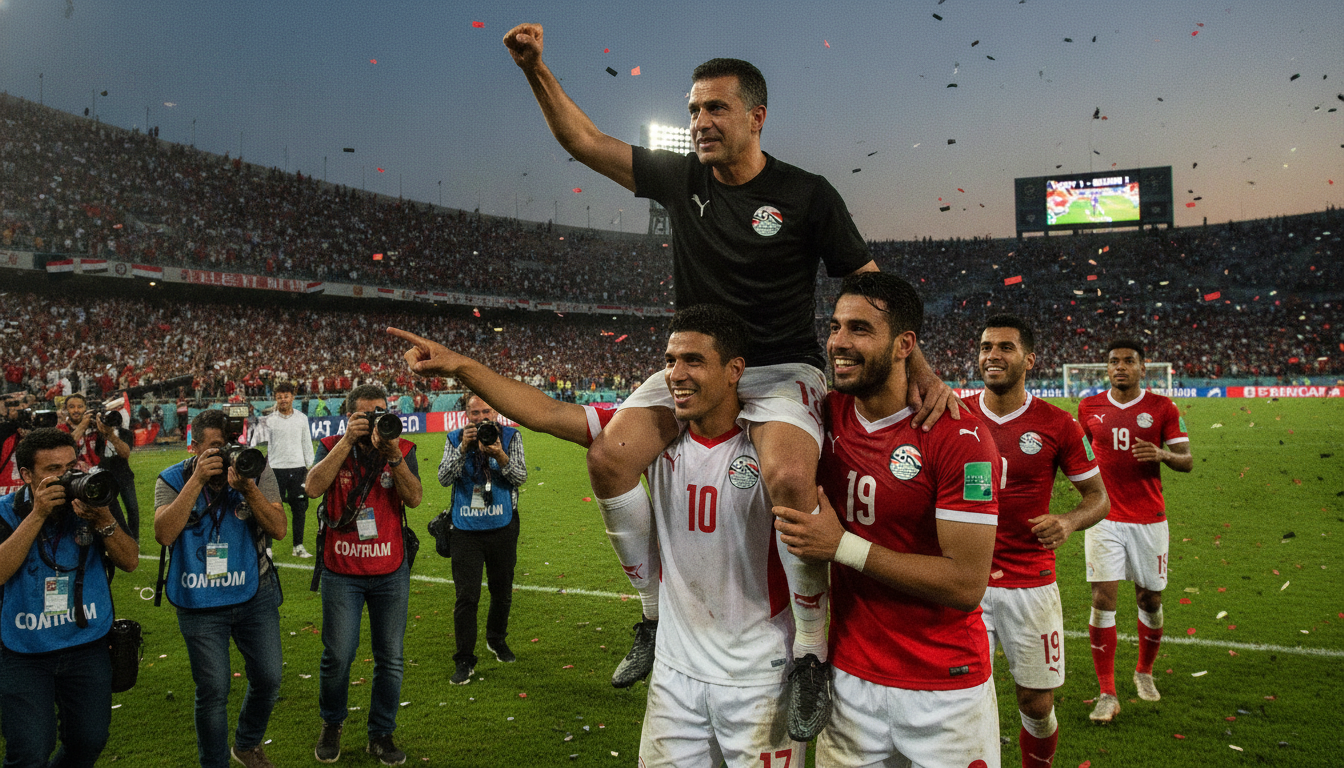
Egypt draw with Belgium: Hassan hails progress after 1-1 World Cup opener
Egypt draw with Belgium: Hossam Hassan hailed his side’s progress after a 1-1 World Cup opener, praising team unity and preparing for New Zealand on June 22.


Egypt drew 1-1 with Belgium in their opening World Cup match, a result Hossam Hassan described as the latest evidence of steady progress under his management. The Egypt draw with Belgium headline underscores a performance the coach said was built on two years of deliberate development and collective work.
The match saw the Pharaohs create several chances both before and after Belgium’s equaliser, and Hassan insisted the point earned was not a fluke but the product of a clear identity and structure inside the squad. The coach singled out the role of the technical staff and senior players in shaping a team that aims to compete with the tournament favorites.
Hassan credits two years of work
Hassan framed the result as the culmination of a process that has been evolving for the past two years, saying the team’s development is deliberate and ongoing. He credited coaches, players and staff for the work that, in his view, turned Egypt into a balanced unit rather than a side reliant on a single star.
The coach emphasised that Egypt plays with a defined identity and responsibility across the pitch, arguing this collective approach delivered the performance against a high-quality opponent. He said, "We do not play by chance," reinforcing that the draw was the result of preparation rather than luck.
Midfield adjustments shifted control
Hassan noted key tactical changes during the match that aimed to gain control of midfield and disrupt Belgium’s usual rhythm. Those adjustments, he said, allowed Egypt to push the game into phases where the visitors were pinned back and the Pharaohs fashioned the clearer opportunities late in the contest.
The coach described a second-phase plan that focused on transitional moments and overloads through the centre, which produced several chances as Egypt sought a decisive breakthrough. That tactical flexibility underlines Hassan’s claim that the squad understands roles and can adapt when the game requires different approaches.
Salah and Marmoush led the attack
Senior figures Mohamed Salah and Omar Marmoush drew particular praise for their impact on Egypt’s transitions and attacking thrusts throughout the match. Hassan highlighted their experience and movements as central to creating dangerous situations and maintaining pressure on Belgium’s defence.
Beyond those two names, Hassan stressed the collective contribution of the squad, noting that Egypt’s modern approach depends on multiple players understanding their duties. The coach’s assessment pointed to a broader pool of reliable performers rather than dependence on a single match-winner.
Match dynamics and key moments
Egypt’s opening approach was compact and organised, matching Belgium’s quality with disciplined defending and quick counters that tested the visitors on several occasions. The equaliser shifted momentum but did not erase Egypt’s capacity to fashion chances, as Hassan observed his side continuing to threaten late on.
The coach said his team pushed Belgium back into their own half in the match’s latter stages, creating what he considered the better opportunities and a scenario in which a win was within reach. That belief underlined Hassan’s satisfaction with the work rate and tactical execution despite the shared points.
Implications for Group G
The single point from the opener gives Egypt a platform in Group G and validates the squad’s qualifying form and recent performances, according to Hassan. He framed the result as valuable in the wider tournament context, where every point in the group stage can be decisive for advancement.
Hassan also stressed the need to remain grounded, noting that while the draw is encouraging it is only the opening chapter of a campaign that requires consistency. The balance between celebration and focus was central to the coach’s message as he prepared the team for the next fixture.
Focus shifts to New Zealand on June 22
Hassan was quick to turn the team’s attention to the next group match against New Zealand, scheduled for Monday, 22 June at 01:00 GMT, and underscored that preparation will concentrate on maintaining structure and sharpening transitions. He said the coaching staff will build on the tactical adjustments used against Belgium while tailoring the plan to New Zealand’s profile.
The coach made clear that his squad must stay motivated and disciplined, using the draw as evidence that their methods are working but not as a reason for complacency. Match-to-match focus, he argued, is essential if Egypt are to turn promising performances into results across the group stage.
Egypt will use the interim period to analyse the positives from the opener and address areas where fine margins can be improved, particularly in converting opportunities into goals. Hassan’s remarks indicated attention will be paid to striking balance between defensive organisation and the final third finishing that could convert draws into victories.
Wider context and qualification narrative
Hassan repeatedly referenced the qualification campaign and recent performances as the backbone of the progress he believes has been made, framing the draw as an expected step rather than a surprise. The coach’s narrative placed emphasis on continuity and the incremental building of a competitive national side.
By describing Egypt as a "modern team" that distributes responsibility across its roster, Hassan sought to shift external perceptions and underline that the group’s advancement is the product of long-term planning. That positioning aligns with a managerial approach focused on sustainable improvement rather than short-term solutions.
Egypt’s display against a team widely regarded as one of the tournament’s favourites reinforces the idea that measured tactical work and squad cohesion can yield results against top opposition. The coach’s post-match comments were designed to both celebrate and contextualise the outcome within a broader campaign objective.
The draw also offers an opportunity for younger players within the squad to gain experience under pressure and for staff to identify which tactical patterns provide both defensive solidity and attacking clarity. Hassan’s praise for the collective suggests the coaching team sees depth in personnel and tactical versatility as assets to exploit as the tournament progresses.
The reaction from inside the camp, as relayed by Hassan, centred on gratitude and an acknowledgement that the result will mean different things to different stakeholders, while also serving as a confidence boost for the players. The coach’s tone balanced optimism with caution, a stance likely to be maintained as Egypt navigate the rest of the group stage.
Egypt’s approach to the remainder of the group stage will be watched closely, with the squad’s ability to maintain the standards shown against Belgium a key variable in their chances of advancing. For now, Hassan and his players have secured a meaningful point and a blueprint to refine ahead of the New Zealand fixture.
The team returns to training with a focused plan to build on the positive elements of the opener while addressing moments where improvement is possible, particularly in transition finishing and controlling prolonged possession phases. That preparation, Hassan implied, will be decisive in converting the hopeful signs from the Belgium match into consistent results.
Egypt draw with Belgium will be referenced as an early barometer of the squad’s competitive level, and the coaching staff’s task now is to translate the performance into a string of positive outcomes. The coming fixtures will reveal whether the progress Hassan described over the past two years has matured into sustained tournament form.