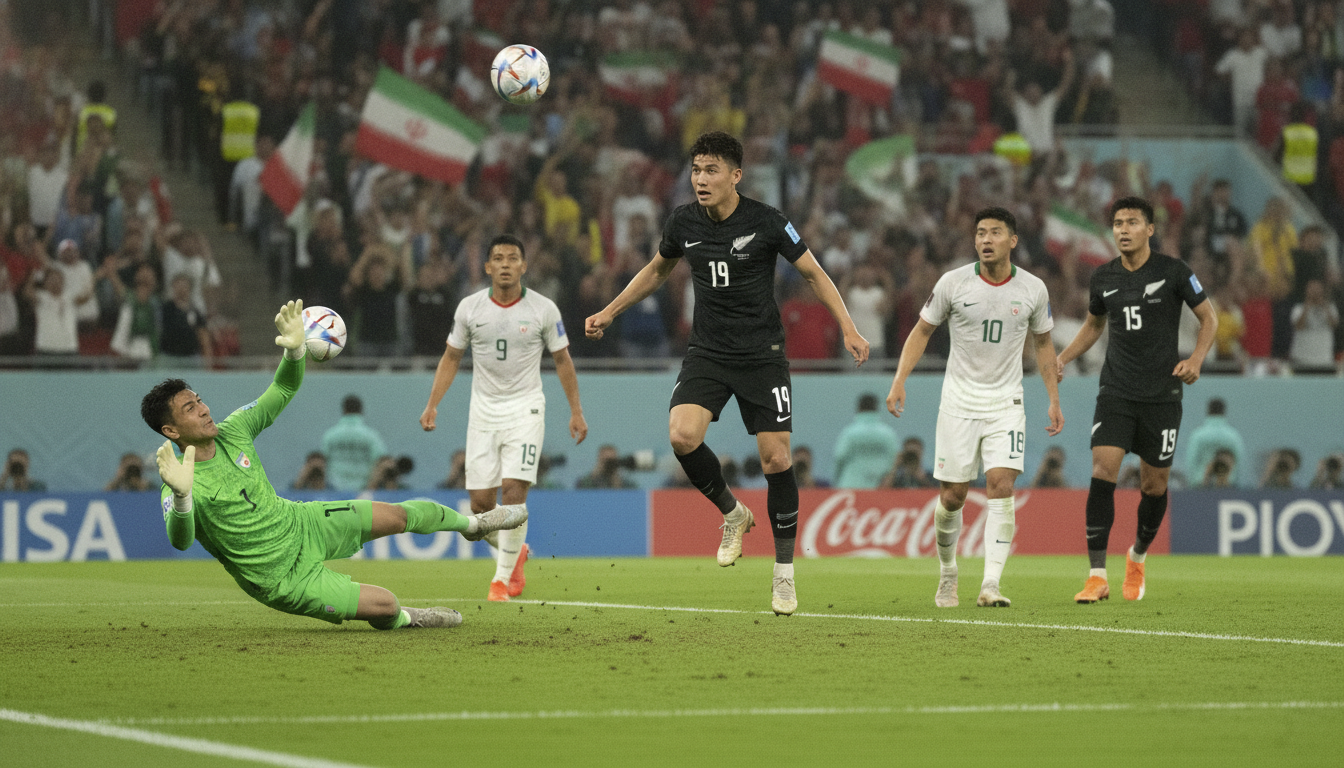
Elijah Just’s World Cup Double Earns New Zealand a 2-2 Draw with Iran
Elijah Just scored twice as New Zealand drew 2-2 with Iran at the World Cup, becoming the first All Whites player to record a World Cup brace in Los Angeles.

Elijah Just emerged as the standout figure as New Zealand salvaged a 2-2 draw with Iran in Group G at SoFi Stadium, producing the first World Cup brace in All Whites history. The winger’s two goals, both created in combination with captain Chris Wood, secured a point in a politically charged fixture and marked a personal and club milestone. The result leaves New Zealand with a valuable point from a match delayed by tension and controversy before kick-off.
Just makes history with World Cup brace
Elijah Just’s two-goal performance placed him in New Zealand football history as the first All Whites player to score twice at a World Cup finals match. The brace also carried added significance for his club, as he became the first player from Motherwell to find the net at this World Cup.
The goals changed the narrative of a match that might otherwise have been remembered largely for off-field tensions, instead centering discussion on Just’s finishing and New Zealand’s offensive threat. For a squad often cast as underdogs on the global stage, the historic brace delivered a rare moment of individual and national acclaim at football’s biggest tournament.
How the goals unfolded on the pitch
Just opened the scoring when he volleyed home from inside the penalty area after a precise pass from Chris Wood, finishing a well-worked move that had opened space on the right flank. The volley was both technically assured and clinically executed, underlining Just’s composure in front of goal on a high-pressure stage.
After Iran levelled, New Zealand regained the lead early in the second half with a second combination between Wood and Just. Wood slid a measured pass into space and Just hammered the opportunity home, demonstrating timing and power that troubled Iran’s defence throughout the contest.
Tense atmosphere at SoFi Stadium before and during the game
The match in Los Angeles was played against a fraught backdrop, with sections of the crowd expressing discontent with events related to Iran before kick-off. Some spectators booed Iran’s national anthem and others celebrated the opening goal in ways that reflected political grievances, adding an uncomfortable edge to the occasion.
Match officials and organisers managed the environment on and off the field, but the atmosphere remained charged and occasionally distracting for players and staff. Despite those external pressures, both teams continued to contest the game with intensity, and New Zealand’s two goals came amid a match that never lost its competitive edge.
Player and team response after the result
Following the match, Just described the point as hard-earned and framed it as evidence of his side’s threat at this level, saying, “I think we showed today that we’re a dangerous team.” His remark reflected a broader team assessment that earning any point at a World Cup requires concentration and resilience.
New Zealand’s players highlighted the importance of seizing moments when they come and of converting pressure into tangible results. The draw was taken as a sign that the All Whites can compete against well-organised opponents and that attacking combinations, particularly between Wood and Just, will be central to their strategy moving forward.
Club milestone and personal background for Just
Elijah Just’s double carried significance beyond the national team: he became the first Motherwell player to score at this World Cup, a milestone for the Scottish club’s profile on the international stage. The accomplishment links his club form with his international impact and underscores the role club opportunities play in preparing players for major tournaments.
Born in Palmerston North on New Zealand’s North Island, Just has a multicultural background, with a Chinese mother and a German father. Now plying his trade in Scotland, he represents a modern example of New Zealand’s diverse footballing pathway and the international opportunities that have helped shape his rapid development and composure at this level.
Immediate implications for New Zealand’s World Cup campaign
The 2-2 draw leaves New Zealand with a point that can be both valuable and fragile in the context of a short group stage, where margins are slim and goal difference can prove decisive. The result demonstrated New Zealand’s capacity to score against a quality opponent, but it also highlighted areas — defensive concentration and game management — that the side will need to sharpen.
For the All Whites, the match offers a template: capitalise on quick transitions and the interplay between wide players and the captain, while tightening defensive phases during set pieces and counter-attacks. How the team builds on this point will hinge on recovery, tactical adjustments and the ability to translate attacking intent into consistent results over the remaining fixtures.
New Zealand can draw encouragement from a display that combined historic individual achievement with collective resilience, but the team must now convert moments of promise into points if it is to advance from a competitive Group G.