Umar Sadiq’s Dip in Form at Valencia Raises Questions Over Tactical Fit and Confidence
Umar Sadiq’s form has dipped at Valencia. We examine his recent displays, tactical role, stats since February and what the club can do to revive his scoring.


Sadiq’s Recent Performances Draw Criticism
Umar Sadiq has seen his influence at Valencia diminish in recent weeks as the team struggles for consistency. His performances against Oviedo and Elche have been singled out for their lack of impact, with the striker failing to impose himself in matches where he started. The alternating pattern of starts and substitute appearances has done little to restore momentum for the 29-year-old forward.
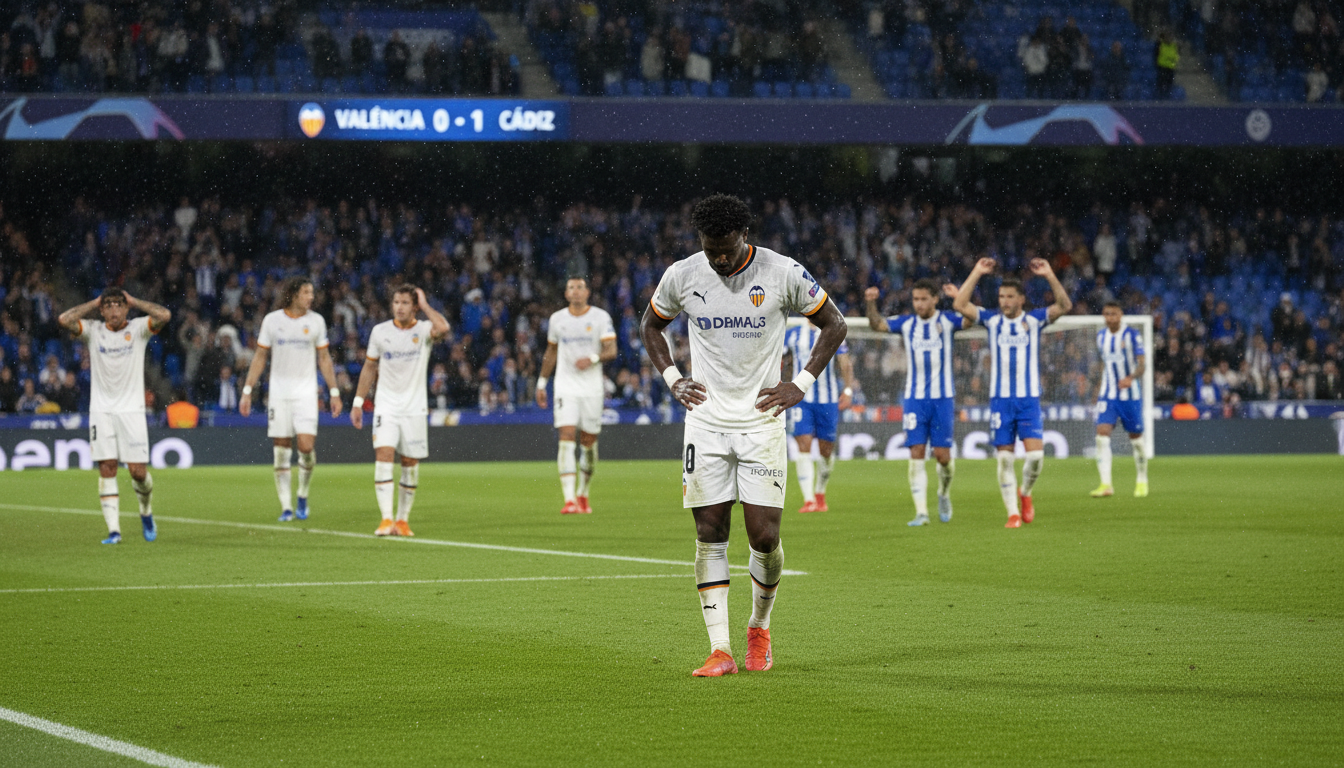
Sadiq’s visible frustration after being replaced in the second half at Elche underlined a wider malaise that has settled over both player and team. Teammates and coaching staff have endured a collective dip in form, but Sadiq’s struggles are notable because the club brought him in to add a clear goal threat. The absence of regular goals has increased scrutiny on his tactical role and mental sharpness.
Tactical Deployment and Match-Day Responsibilities
Valencia’s coaching staff have varied Sadiq’s role between leading the line as a traditional centre-forward and asking him to perform wider or deeper functions. Those adjustments have occasionally produced unfamiliar positional demands and visible uncertainty in decision-making during matches. Against Oviedo, for example, the forward’s movement and choice under pressure appeared misaligned with the coaching plan, contributing to a subdued attacking performance.
The club’s recent switch between different attacking profiles has at times left Sadiq without clear reference points on the pitch, reducing his effectiveness in and around the penalty area. When Hugo Duro was introduced and capitalised on opportunities, it highlighted how alternate profiles can change the game dynamic and underscore a striker’s current form. Valencia will need to clarify Sadiq’s role to maximise his physical presence and finishing ability in the final third.
Statistical Decline Since Mid-February Goal
Sadiq’s last goal for Valencia came in the derby against Levante in mid-February, and scoring has dried up since then. Beyond that solitary league strike, he registered key contributions earlier in cup competitions, but his attacking returns have been meagre across recent fixtures. In the period since that Levante goal he has managed only two assists, against Celta and Alavés, and has not found the net again.
The numbers tell a broader story: shots on target and expected goals metrics for Sadiq have declined, and his touches in the opposition box have become less frequent. Those trends suggest both a tactical mismatch and a confidence issue, as fewer high-quality chances are reaching him. For a striker recruited to increase Valencia’s goal output, the statistical regression is a pressing concern.
Squad Context and Managerial Choices
While Sadiq has struggled, the problem at Valencia cannot be reduced to one player alone; the team’s collective form has been inconsistent. Other forwards and attacking midfielders have also failed to provide regular support, leaving the centre-forward isolated at times. Managerial choices—rotations, substitutions, and tactical tweaks—have influenced who gets minutes and how the front line functions.
The decision to bench Sadiq in some matches after poor showings has created a loop where limited minutes impede rhythm, and inconsistent rhythm affects performance. Coaches must balance short-term tactical responses with the need to restore a forward’s confidence, especially with the season’s decisive fixtures approaching. How the staff manage minutes and roles for Sadiq will be pivotal to whether he regains his earlier impact.
Options for Reviving Sadiq Before the Run-In
There are concrete steps Valencia can take to help Sadiq rediscover his scoring touch, starting with clearer match instructions that play to his strengths. Simplifying his role to focus on penalty-area presence, link-up play with wingers, and aerial threats could yield quicker returns than asking him to operate as a multi-positional attacking outlet. Consistent starts in that defined role would also allow rhythm and confidence to rebuild.
On the mental side, targeted coaching and film work aimed at decision-making in the final third could address tactical hesitancy. The club’s sports science and psychology teams can support recovery of form through confidence-building drills and measured minutes to avoid burnout. Finally, tactical tweaks elsewhere in the team to deliver higher-quality service into the box would reduce the burden on Sadiq to create chances by himself.
Implications for Valencia’s Short-Term Plans
If Sadiq does not return to form, Valencia face both competitive and strategic dilemmas heading into the closing stages of the season. The team needs consistent goal contributions to secure league objectives and to restore momentum that has stalled under recent results. Reliance on a single striker who is visibly struggling could force the coach to explore alternative lineups or to prioritise different attacking partnerships.
Conversely, a timely resurgence from Sadiq would relieve pressure across the squad and give Valencia a clearer plan for the future. Restoring his scoring form would also validate the recruitment strategy that brought him to Mestalla, and provide greater options in match-day selection. The remainder of the campaign will be a test of whether Sadiq and the coaching staff can align quickly enough to make a meaningful impact.
Umar Sadiq’s form at Valencia is a matter of immediate interest because it intersects with tactical clarity, team cohesion, and the club’s short-term ambitions. The coming weeks will show whether tactical refinement, consistent selections, and confidence work can turn a worrying run of displays back into the kind of attacking presence the club anticipated when signing him.