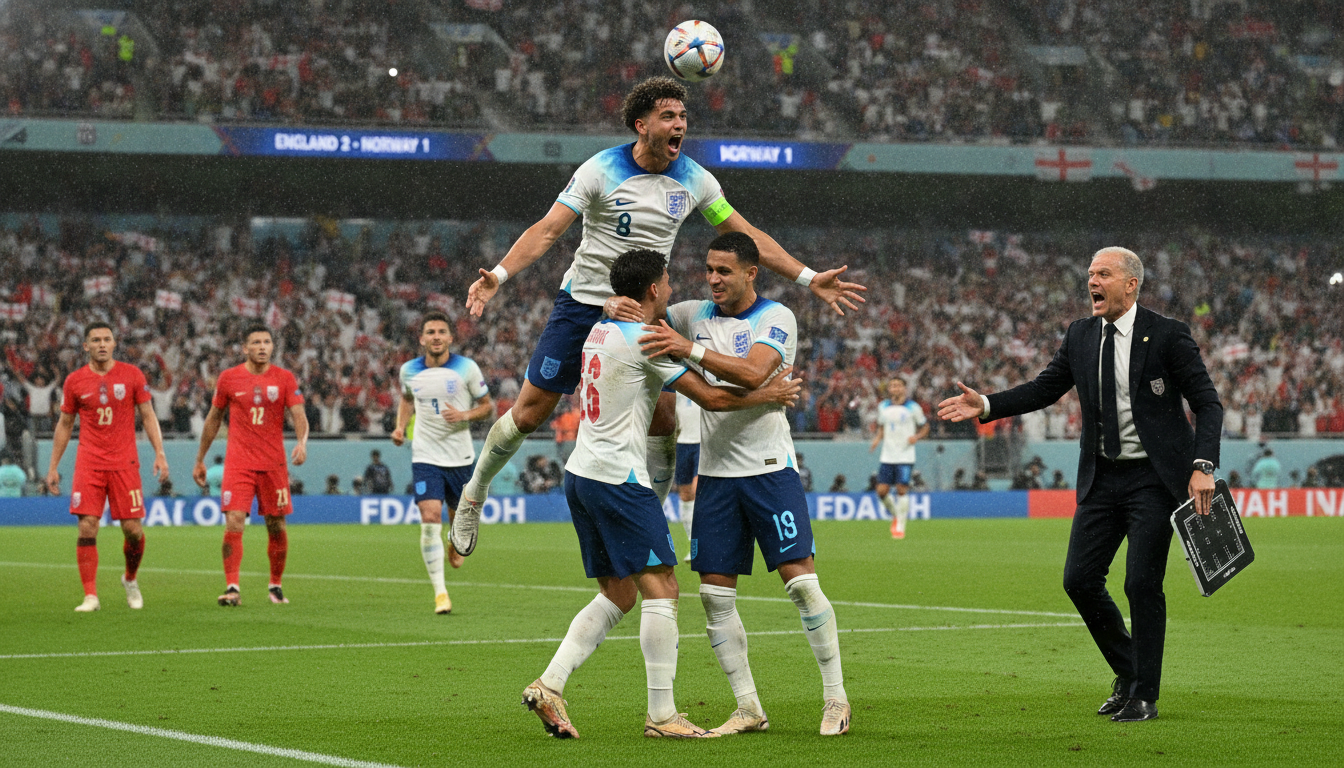
England beat Norway 2-1 after extra time as Bellingham double sends Three Lions into semi-finals
Jude Bellingham scored twice as England beat Norway 2-1 in Miami, rallying to reach the semi-finals; manager Thomas Tuchel criticised a "sloppy" performance.


Bellingham’s brace overturns early deficit
England beat Norway 2-1 in extra time after a dramatic quarter-final in Miami on Saturday, July 11, 2026, with Jude Bellingham the decisive figure. Bellingham levelled in first-half stoppage time and then struck the winner three minutes into extra time, guiding England into the last four. The match extended England’s run to the semi-finals for the fourth time in tournament history and marked the team’s first appearance at this stage since 2018.
Bellingham’s double was both a statement of personal form and a relief for a side that struggled for long spells during the 120 minutes. He took his chances clinically against a Norway side that defended resolutely and created early problems for England’s backline. After the final whistle, Bellingham praised his teammates’ resilience, saying, “We showed character and perseverance when things weren’t working, and we found a way to win.”
Norway stunned England with Schjelderup opener
Norway took a shock lead in the 36th minute when Andreas Schjelderup delivered a flighted cross from the left that eluded Jordan Pickford and drifted in at the far post. The goal exposed England’s vulnerability to well-executed set-ups and wide deliveries and set the tone for a tense remainder of the half. Norway’s early successes stemmed from quick transitions and high intent on the flanks, forcing England to chase possession and reset their shape.
That lead stayed intact until stoppage time when England finally found a clear route through Norway’s defence. The concession underlined a defensive lapse for England, while giving Norway a confidence boost that kept them competitive deep into the second period. The Scandinavian side’s disciplined structure and moments of real threat turned the quarter-final into a tightly contested knockout affair.
Late equaliser and extra-time clinical finish
England’s momentum shifted in first-half stoppage time when Bellingham produced a composed finish to restore parity, altering the match’s psychological balance. The equaliser relieved mounting pressure and allowed England to approach the second half with renewed belief. From the restart, both sides exchanged chances but neither could force a breakthrough before the end of regulation time, sending the fixture to extra time.
The decisive moment arrived early in the extra period when Morgan Rogers’ effort was spilled by Norway goalkeeper Ørjan Nyland and Bellingham was first to react, tapping home the rebound. The intervention highlighted England’s persistence in the attacking third and Bellingham’s knack for being in the right place at the right time. That finish settled a match that had swung between tactical chess and bursts of spontaneous drama.
Tuchel: performance ‘sloppy’ despite win
Manager Thomas Tuchel was candid in his assessment after the match, describing the display as “sloppy” even though the result favoured England. He pointed to misplaced passes, periods of disjointed build-up and a lack of consistent intensity that allowed Norway to take the initiative at times. Tuchel’s criticism underlines the manager’s expectation for higher standards as England prepare for an even sterner test in the semi-finals.
Tuchel’s post-match tone suggested concern over the squad’s application rather than its quality, emphasising that resilience alone will not be sufficient against top opponents. While the victory provides momentum, the manager insisted on immediate attention to detail in training sessions ahead of the next fixture. His message to the players was clear: results are vital, but the performance level must match England’s ambitions.
Norway’s campaign and tactical lessons
Norway leaves Miami with plaudits for a disciplined display that carried them deep into the knockout phase, reflecting the progress of their squad in high-pressure fixtures. Schjelderup’s opener and the team’s compact shape for large stretches highlighted tactical coherence and clinical execution in transition. Despite the defeat, Norway’s ability to challenge one of the tournament favourites will be taken as a positive sign for their future competitive prospects.
The match also served as a reminder for England about vulnerabilities they must address, particularly defending crosses and managing moments of individual error. Ørjan Nyland’s fumble proved costly, but the underlying issue remained England’s susceptibility to set-pieces and direct deliveries. Opponents with pace on the wings and aerial proficiency will study the quarter-final for exploitable areas.
Preview: England face Argentina in Atlanta on Wednesday
England now turn their attention to a semi-final date with Argentina in Atlanta on Wednesday, July 15, 2026, a fixture that promises both tactical intrigue and high stakes. Argentina reached the last four after a dramatic win over Switzerland that also required extra time, meaning England will meet a side carrying momentum and experience in tight encounters. The upcoming match will be England’s chance to confront a different style of opposition that blends technical midfield control with striking potency.
Tuchel will likely prioritise sharpening his side’s ball circulation and defensive organisation ahead of the trip to Atlanta, while Bellingham and England’s attacking group must maintain their composure in the final third. With the tournament entering its business end, small margins and individual moments of quality are expected to determine which side reaches the final.
England’s progression also carries historical weight: this is the national team’s fourth appearance in a major tournament semi-final and the first time since the loss to Croatia in 2018. That gap frames the significance of Wednesday’s match for supporters and players alike, magnifying the stakes and the scrutiny on both selection and tactical choices.
Implications for squad dynamics and tournament outlook
Bellingham’s leadership on the pitch has become central to England’s tournament identity, providing goals, intelligent movement and composure under pressure. His ability to convert key opportunities has given the team an attacking edge even when overall play has been uneven. For the squad, the victory will reinforce belief but also expose the need for improved consistency to progress beyond the semi-final hurdle.
For Tuchel, the quarter-final offers both reassurance and warning: his tactics can produce results, but the margin for error narrows as the competition advances. Managing fitness through extra-time fixtures and balancing squad rotation will be critical in the coming days. England’s next opponent presents different tactical challenges and will test whether Tuchel can quickly tighten the areas he flagged as problematic after Miami.
The result will reverberate through England’s preparations, influencing selection decisions and training emphasis ahead of the trip to Atlanta. As the tournament heads into its final phase, the blend of individual brilliance and collective refinement will determine whether England can convert a gritty victory into a run for the title.
England’s supporters will leave Miami buoyed by the win and mindful of the work ahead, as the team seeks to convert character into the consistent performances required to go all the way.