Fernando Morientes weighs in on Real Madrid presidency, Haaland talk and Spain’s World Cup hopes
Fernando Morientes shares thoughts on the Real Madrid presidential race, Erling Haaland speculation and Spain’s World Cup hopes as fans prepare to vote.


Morientes frames election as healthy debate ahead of voting
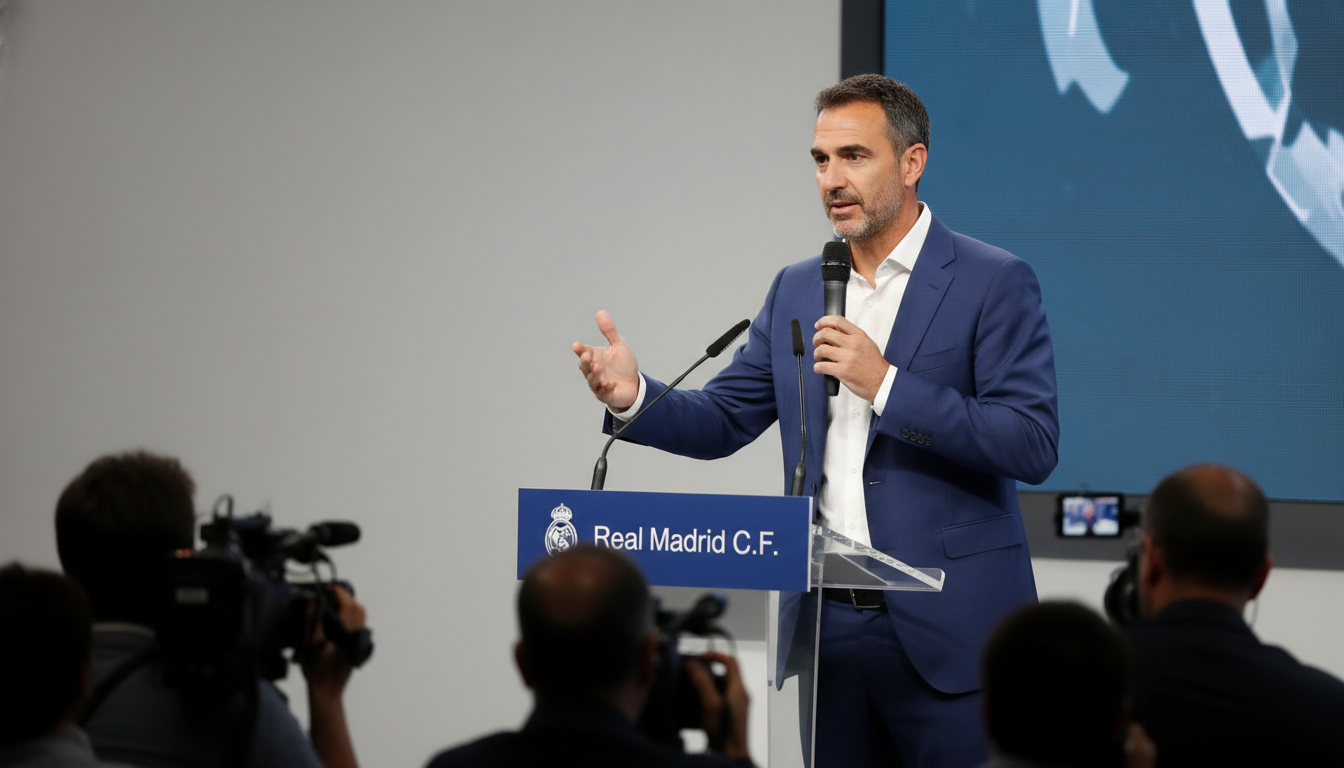
Fernando Morientes said he is following the Real Madrid presidential contest with keen interest and described the campaign as a positive, democratic process. He told reporters he enjoys seeing club members engage in debate and believes both slates want what is best for the club. Morientes emphasized that the discussion reflects a living institution rather than a destabilizing force.
He confirmed he has not been offered a formal role by any candidate and remains focused on his broadcasting work. The former striker acknowledged the personal difficulty of not being a club member and therefore not having a guaranteed vote in the election. He said he would reserve his decision and decide no earlier than the night before the ballot.
No formal approach, no guaranteed vote for Morientes
Morientes reiterated that, despite his long association with Real Madrid as a player, he has not been contacted to join any campaign team. He explained that while several former teammates appear on one list, he has not been involved in those discussions. He also noted the administrative hurdles he has faced in becoming a socio, describing the process as complicated.
The ex-striker made clear that his lack of a membership card means he is not currently in a position to cast a vote, though he has tried to obtain the right. He said he would watch how events unfold and make a final decision late in the process rather than announcing any public alignment in advance.
On the Haaland question: adaptation over accommodation
Asked about Enrique Riquelme’s proposal to pursue Erling Haaland, Morientes cautioned that any high-profile signing must fit the club’s collective structure. He argued that great forwards can usually find chemistry with top teammates, but that roles need clear definition to preserve balance. He insisted that, should a player like Haaland arrive, the newcomer would have to adapt to Real Madrid’s style rather than the club reshaping itself around one signing.
Morientes stressed the coaching staff’s role in integrating talent and selecting combinations that work on the field. He framed the eventual outcome as dependent on a mix of recruitment, retention and the manager’s tactical choices. That, he said, is what makes the electoral debate about transfers particularly relevant to supporters.
Legacy players on a candidate list draw attention
The presence of iconic former players on one candidate’s slate—names such as Raúl, Iker Casillas and Fernando Hierro—has fueled speculation and interest among the fan base. Morientes acknowledged that the inclusion of club legends creates narrative weight for that candidacy, but he stopped short of suggesting that lineage alone should determine the vote. He maintained that credentials, plans and the ability to execute projects matter more than nostalgia.
He also observed that the media spotlight on former players can both help and complicate a campaign, as expectations grow around promises linked to big signings or rapid organizational change. For Morientes, voters should examine the feasibility of proposals and the administrative competence backing them.
Spain’s national team outlook and World Cup preparation
Turning to the international stage, Morientes said he believes Spain and France occupy a higher tier than most other nations going into the World Cup, largely because of individual quality across their squads. He praised Luis de la Fuente’s knowledge of Spanish players and defended the coach’s capacity to manage the squad effectively. Morientes said selection debates are inevitable but that the coaching staff knows the group well.
As a broadcaster with World Cup experience, Morientes singled out a couple of names he has been impressed with recently, citing the technical promise and versatility of established and emerging players. He argued that in a 22- to 25-man list, the margin for error is small and every selection has a clear rationale tied to role and balance.
Assessing forwards: Nico, Lamine, Ferran and Oyarzabal
Morientes highlighted the attacking options Spain will bring, naming Nico and Lamine as two of the most disruptive talents in the tournament field. He described them as players capable of unsettling defenses and changing games with individual runs and finishing. At the same time, he expressed hope that teammates such as Ferran Torres and Mikel Oyarzabal could outscore him at the World Cup, signaling both competitiveness and admiration.
He also noted that Oyarzabal’s contributions go beyond the label of a pure number nine and that his work for the team has helped diffuse debates over a conventional centre-forward. Morientes praised the pragmatic approach that values form, versatility and tactical fit over rigid positional dogma.
Tactical balance and coach’s decision-making under the spotlight
Morientes returned to the theme of tactical balance, insisting that great players must have clearly defined responsibilities to avoid clogging spaces or duplicating runs. He said a manager’s clarity about roles is what ultimately determines whether an attacking trio functions or falters. In his view, the successful integration of marquee signings and existing stars is as much managerial as it is a matter of player goodwill.
He warned that public debate ahead of major tournaments or elections can create expectations that the coaching staff or incoming administration may not be able to meet immediately. Nevertheless, Morientes argued that open discussion of options — from transfer targets to squad composition — is healthy for the game and for club governance.
Morientes’ perspective shaped by playing and broadcasting careers
Drawing on his experience as a top-level striker and now as a commentator, Morientes offered a measured view of both club politics and international competition. He said his vantage point allows him to see how media narratives and technical analysis intersect, producing different pressures for players and administrators. This dual perspective informs how he assesses proposals, signings and squad selections.
He also emphasized that personal history with a club does not necessarily translate into a desire to intervene in its governance. For Morientes, love for Real Madrid means wanting stability, smart decision-making and competitive teams, not necessarily holding a formal position.
Morientes said he will continue to follow developments closely and promised to keep his options open until he can vote, if circumstances allow.
The upcoming voting and the World Cup present immediate milestones for Spanish football, and Morientes’ comments underline how interconnected club politics and international ambitions have become. He urged supporters to judge candidates and players on evidence and plans rather than headlines, and to allow the sporting side to guide expectations in the weeks ahead.