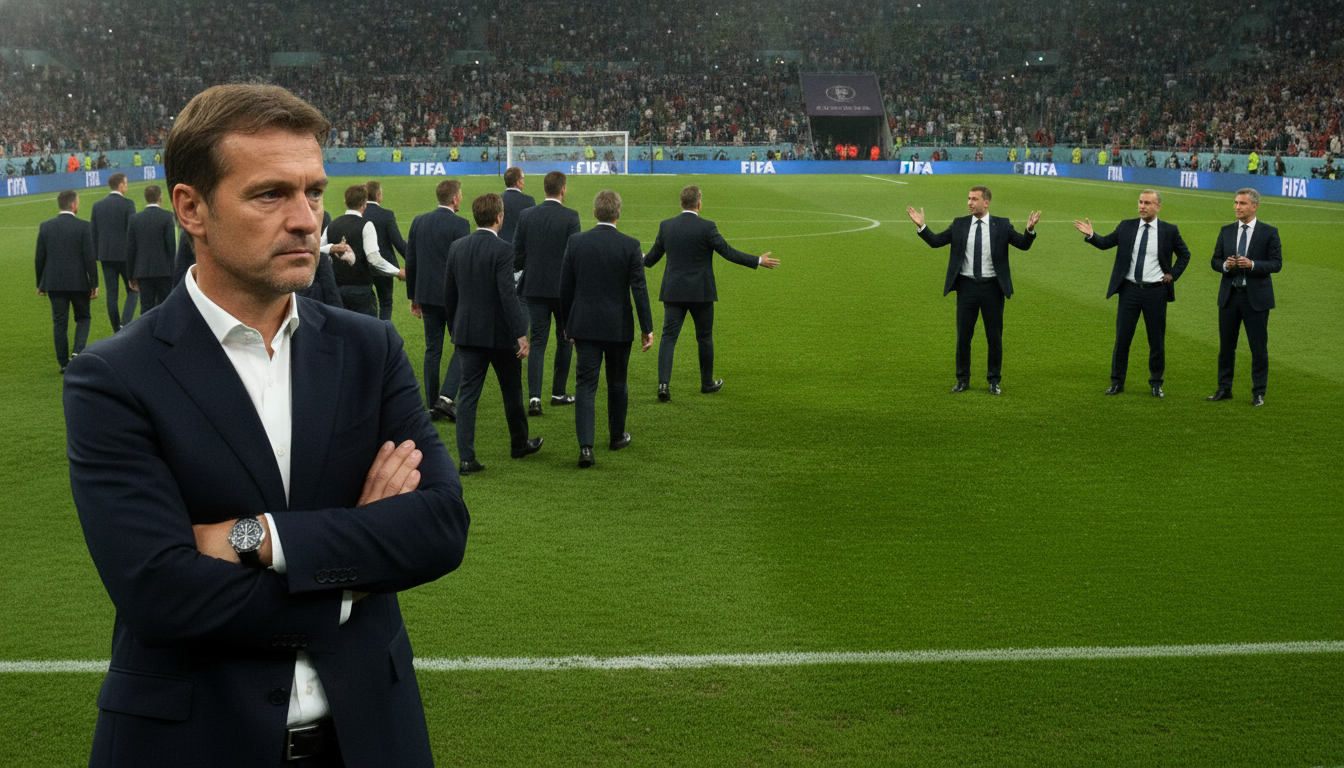
FIFA private stake sale sparks clash with UEFA after US-hosted World Cup
FIFA private stake sale provokes UEFA boycott threat from 55 members, igniting debate over World Cup commercialisation, governance and rising US investment in global football.
FIFA’s proposal to sell a private stake in its tournament business has prompted an immediate political and commercial backlash across European football. The move, which would involve private capital taking an ownership interest in the World Cup and related competitions, was announced only weeks after the tournament staged in the United States concluded. European associations say the plan crosses a line between sporting governance and investor-driven commerce, while proponents argue it reflects a wider shift toward American-style sports finance.
The clash has exposed tensions over who controls the game’s premier events and how revenue from global competitions should be managed. UEFA’s 55 national associations responded with a unanimous threat to withdraw from FIFA tournaments if the proposal proceeds, setting up a high-stakes confrontation between the sport’s governing bodies. The dispute is being watched closely by clubs, broadcasters and investors who are weighing the long-term commercial and legal consequences.
FIFA’s proposed deal and what it would include
FIFA intends to monetize its tournament rights by offering a private investor a stake in the unit that packages and sells World Cup media, sponsorship and hospitality. Proponents say this would unlock immediate capital for development and expansion while aligning the organisation with global investment practices. The sale would not transfer governance of competitions, according to initial descriptions, but it would give private parties financial participation in the cash flows generated by the World Cup cycle.
Critics counter that introducing private equity into the heart of international tournament economics risks prioritising returns over sporting integrity and equitable distribution of funds. The proposal follows a broader trend of US-style investment entering football, from club takeovers to sponsorship deals and media partnerships. That context is central to understanding why UEFA’s leadership and its member federations reacted so strongly and so quickly.
UEFA’s unanimous boycott threat and its reasoning
UEFA’s 55 member associations voted without opposition to threaten a boycott of FIFA-run tournaments if the stake sale moves forward. Their position stressed that global competitions are not commodities to be packaged primarily for investors but are events built on national representation and collective governance. The bloc argued the move would undermine the sport’s institutional framework and shift leverage away from associations that rely on World Cup revenues to fund domestic development.
The scale and unanimity of the vote are striking because UEFA has typically sought to preserve dialogue with FIFA rather than public confrontation. By framing the protest as a collective boycott threat, European federations have escalated the dispute into a question of participation — a flashpoint that could force a negotiation or a prolonged rupture. For many national associations, the concern is not only principle but also the practical implications for revenue-sharing and competition calendars.
The role of US investment and changing commercial models
Observers and commentators have pointed to the growing footprint of American capital in football as the backdrop to this controversy. Over recent years, US private equity, sports investors and media conglomerates have taken stakes in clubs, leagues and broadcast rights, reshaping commercial models previously dominated by regional and member-driven arrangements. Supporters of the sale argue that professionalising the commercial arm of FIFA could raise revenues and bring new commercial expertise to global competitions.
Skeptics worry that an investor with a stake in the World Cup business would seek to maximize returns in ways that conflict with long-standing principles of sporting governance. That could include restructuring tournament formats, accelerating global expansion, or reallocating revenues in favour of more commercially valuable markets. The debate is, in part, a debate about whether football’s financial future should be steered by market disciplines typical of US sports finance or by its traditional federative institutions.
Reaction from commentators and media figures
Prominent voices in the sport have weighed in, describing the dispute as an early test of football’s so-called “American century.” Roger Bennett, the founder and CEO of the Men in Blazers Media Network, framed the conflict as emblematic of the broad influence of US capital in shaping the modern game. Commentary has noted the irony that a major commercial proposal arrives so soon after a World Cup that brought global attention to the sport and was largely hosted in the United States.
Media coverage has amplified concerns about governance and transparency, with analysts asking how a sale would be structured, who the likely bidders might be, and what safeguards would protect the sport’s competitive balance. Stakeholders are calling for clarity on the terms of any transaction, including how long-term revenue sharing would be preserved and how decision-making rights would be allocated between public federations and private partners.
Potential legal, governance and financial consequences
If UEFA follows through on a boycott, the immediate consequence would be a fragmentation of top-level international competition, with potential knock-on effects for clubs, broadcasters, sponsors and players. A mass withdrawal from FIFA events could force litigation, arbitration or emergency governance talks to determine whether federations can be compelled to field teams in competitions run by a body that has taken private capital. The legal architecture of FIFA and UEFA — and the statutes that bind members — will be tested in any standoff.
Financially, the sale proponents argue the transaction would provide FIFA with upfront capital that could be invested in infrastructure, grassroots programs and expanding the sport in emerging markets. Opponents counter that the distribution of proceeds could be skewed, benefitting elite markets at the expense of smaller associations. The uncertainty alone could disrupt existing commercial partnerships and depress the market value of media or sponsorship deals until governance questions are answered.
What happens next and the wider implications for global football
The immediate next steps are likely to be negotiation and legal review, as both sides seek leverage and clarity. FIFA will need to detail the terms of any private stake sale, including valuation, governance safeguards and revenue distribution mechanisms, to persuade hesitant federations. UEFA and its members may pursue both political pressure and legal remedies to block or reshape a deal they view as incompatible with their principles.
Beyond the immediate dispute, the episode raises fundamental questions about the future architecture of football finance. If the sale proceeds with robust protections for sporting governance and equitable revenue sharing, it could become a template for modernising funding of major tournaments. If it fails amid a prolonged rupture, the outcome could reinforce federation control and slow the march of private capital into the governance of the game. Either way, the confrontation marks a defining moment in how global football reconciles its commercial ambitions with its institutional traditions.
Spain celebrated the World Cup victory with open-top parades and public festivities while the governance row unfolded in boardrooms and conference halls. The juxtaposition — a global festival of the sport on the field and a bitter dispute over its commercial future off it — highlights the tensions that now define football’s transition into a more investor-driven era.
The resolution of this clash will shape not only the immediate commercial landscape but also the rules and norms that govern international sport for years to come.