Football Kenya Federation says worst is over after FIFA‑CAF mediation
Football Kenya Federation says the crisis is easing after a joint FIFA and CAF delegation brokered a truce, with leaders pledging unity ahead of AFCON co‑hosting and development plans.


The Football Kenya Federation (FKF) declared that the acute internal dispute that has roiled the federation in recent months has entered a de‑escalation phase following mediation by a joint FIFA and Confederation of African Football (CAF) delegation. FKF president Hussein Mohammed said the meeting restored momentum and opened a pathway to implement the federation’s development agenda. The president framed the talks as an opportunity to move quickly on promised projects and to resolve internal governance matters that have distracted the body.
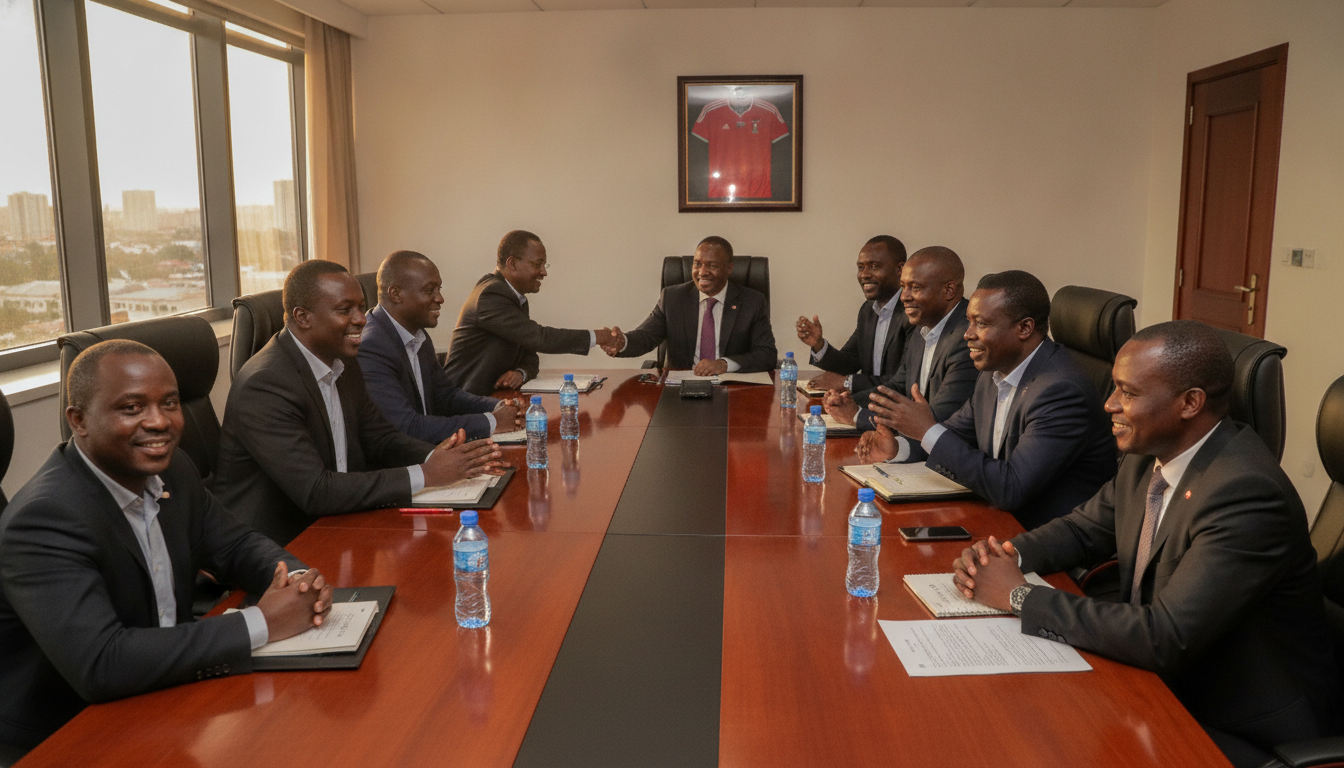
Mediation meeting restores momentum at Football Kenya Federation
The mediation session brought together senior FKF officials and the international delegation in a meeting that Hussein described as “critical” to restarting stalled programs. Participants agreed on the need to shift from internal wrangling to practical delivery, especially on initiatives that had formed part of the leadership’s manifesto. The president said the tone of the meeting was constructive and that the federation is now positioned to “hit the ground running” on a range of planned interventions.
Those in attendance included members of the national executive committee (NEC), a group whose divisions had paralyzed decision‑making in recent months. FKF acknowledged the political split within the NEC, which has been divided between supporters of the president and those aligned with his deputy. Delegates left the meeting with a mutual pledge to prioritize the federation’s wider responsibilities over factional disputes.
FIFA and CAF delegation members and remit
The mediation team combined regional and global football governance figures tasked with assessing FKF’s internal situation and recommending a way forward. The delegation was led by Cecafa president Paulos Weldehaimanot and included FIFA Regional Office lead Davis Ndayisenga, Mohamed Elshawarby from FIFA’s Member Associations Governance Services, CAF legal counsel Nadim Magdy, and Ahmed Harraz, FIFA team lead for Member Associations Governance Services. Their presence signalled both regional concern and global oversight of FKF’s governance.
Delegates spent time meeting with FKF’s top brass to understand the contested decisions and to encourage compliance with statutes and best practice. The stated objective was to help the federation reassert institutional stability while ensuring that preparations for upcoming events and development commitments were not jeopardized. Observers noted that the mix of legal, governance and regional representation meant the mission had both advisory and supervisory capacity.
NEC divisions and the personalities involved
Tensions inside FKF reached a flashpoint after a NEC meeting chaired by deputy president MacDonald Mariga moved to suspend Hussein over allegations relating to procurement. The split saw NEC members align on either side of a leadership contest that combined personal rivalry with substantive complaints about governance. That division, combined with public skirmishes at the federation headquarters, undermined confidence among stakeholders and threatened operational continuity.
Hussein and Mariga represent competing centres of influence within Kenyan football, and the dispute spilled into boardroom politics and courts as each faction sought vindication. FIFA’s intervention, which included a directive to reinstate Hussein on grounds that the suspension meeting was improperly convened, underscored the extent to which internal procedures had been questioned. The mediation sought to rebuild trust among NEC members and reestablish functioning governance channels.
Suspension over insurance tender and legal fallout
The immediate catalyst for the crisis was an allegation that the president was complicit in awarding an insurance contract valued at Ksh 42.4 million to a brokerage firm that lacked the necessary licence. The tender related to insurance cover for players and staff involved in last year’s African Nations Championship (CHAN), and concerns about procurement protocols prompted the NEC action. Those procedural and compliance questions rapidly escalated into formal disciplinary measures and legal challenges.
The suspension — described by some critics as a coup — produced a prolonged period of uncertainty that extended into courtrooms and the public domain. FIFA’s assessment concluded the meeting that suspended Hussein did not meet constitutional requirements, and the world body ordered his reinstatement. The mediation meeting followed that directive and focused on reconciling the factual disputes around the tender while establishing safeguards to prevent future procedural breaches.
AFCON co‑hosting raises urgency for unity
A central theme in the mediation was the looming responsibility of co‑hosting next year’s Africa Cup of Nations, a duty that several attendees said made unity imperative. Delegates emphasised that the scale and visibility of the AFCON project require an operational federation free from internal distraction. Hussein told the meeting that the stakes for Kenyan football, and for the nation’s reputation as a co‑host, compelled NEC members to set aside personal differences and collaborate.
Participants agreed that disruptions inside FKF could jeopardise event preparations, from logistical planning to stakeholder coordination and compliance with CAF and FIFA requirements. The prospect of a successful AFCON was used as a unifying rationale to focus the federation on deliverables rather than disputes. NEC members reportedly accepted the need to harmonise efforts to ensure Kenya meets both hosting obligations and broader football development targets.
Next steps for FKF governance and development agenda
Following the mediation, FKF officials outlined an intent to return to a development agenda that includes grassroots programs, infrastructure planning and commercial partnerships. Hussein said the federation aims to implement projects promised during the leadership’s campaign and to revisit internal procedures to prevent future governance lapses. The mediation also highlighted the need for stronger procurement oversight and clearer decision‑making protocols at NEC level.
The delegation urged FKF to adopt transparent timelines for reforms and to involve independent advisers where appropriate to rebuild public confidence. NEC members will be expected to resume routine governance work and to coordinate closely with CAF and FIFA on compliance matters tied to tournament hosting. Stakeholders inside and outside Kenyan football will be watching whether the ceasefire translates into durable institutional change or merely a temporary lull.
A measured reaction from clubs, coaches and players followed the mediation, with many welcoming the return to a more stable operating environment. For sponsors and partners, the priority is predictability and professional administration of the sport, especially given the commercial implications of AFCON and other regional competitions. Restoring that confidence will require visible governance improvements and consistent implementation of agreed projects.
The mediation marks a significant step toward resolving the acute governance crisis that has shadowed FKF since the April boardroom clashes at Kandanda House, but it does not erase the underlying grievances that produced the dispute. Moving forward, tangible actions on procurement transparency, strengthened NEC procedures and a focus on event delivery will be necessary to convert the present détente into long‑term stability. Time will tell whether the commitments made in the mediation session translate into sustained progress for Kenyan football.