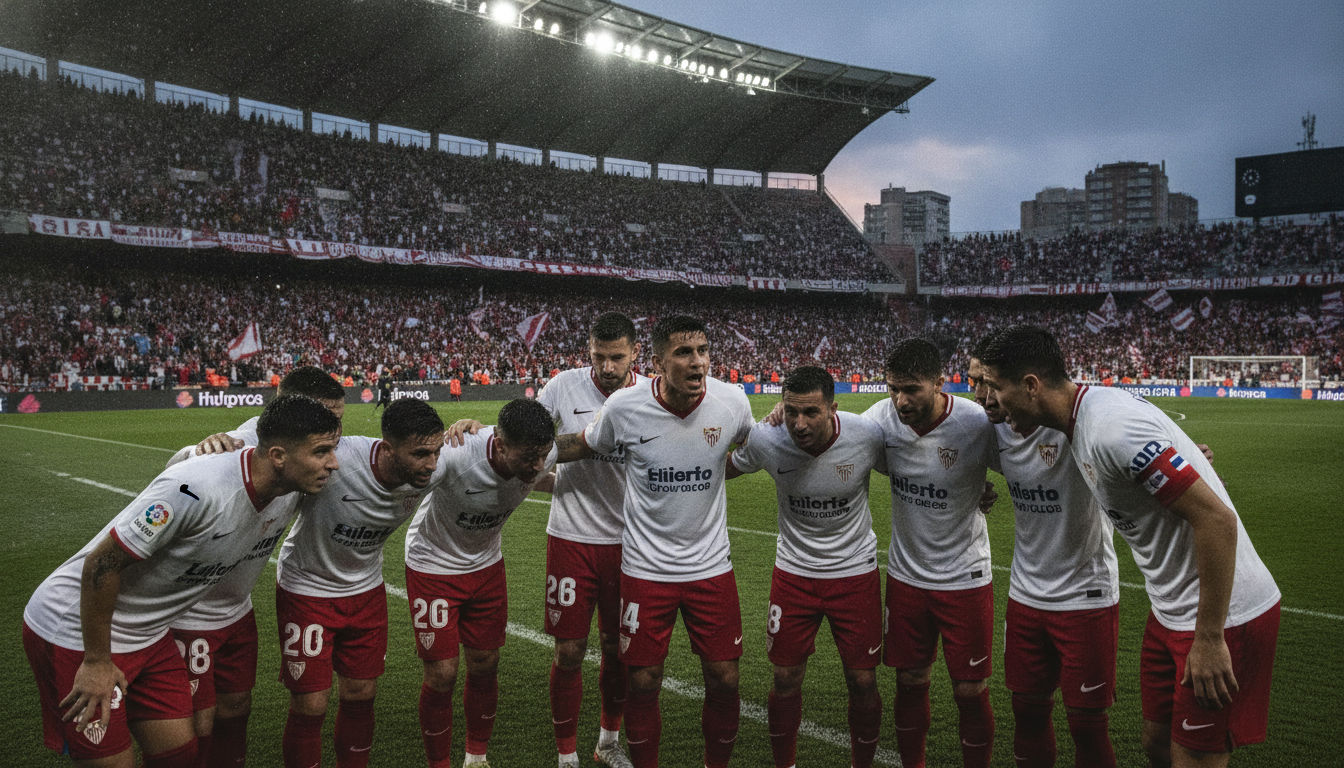
Gabriel Suazo Emerges as Sevilla Leader in First Season, Outlining Captaincy and Crisis Mindset
Gabriel Suazo has become a key leader at Sevilla, describing his captaincy style, crisis approach and deep connection with fans at Ramón Sánchez‑Pizjuán proudly.


Suazo’s swift rise to leadership at Sevilla
Gabriel Suazo has established himself as a central figure at Sevilla during his first season, earning the trust of teammates and staff alike. The Chilean international discussed his role and responsibilities in a wide-ranging interview with Banda Deportiva. He credited past experiences in Chile and France with helping him adapt quickly to the demands of wearing the armband in Andalusia.
Suazo said he leads primarily by example, committing fully in training and matches to set standards for the dressing room. That approach, he explained, was noticed by team members and helped justify his selection as one of the club captains. His position as a left-sided defender and his international background give him a vantage point from which to influence both defensive shape and team mentality.
The transition to leadership was not sudden, he emphasized, but the product of listening and learning from colleagues and coaches. Suazo stressed that effective leaders know when to speak and when to observe, tailoring their interventions to preserve teammates’ confidence. That balance, he argued, has made his presence in the squad constructive rather than directive.
How Suazo defines leadership by action
In conversation, Suazo rejected grandstanding and described leadership as consistent behavior rather than loud instruction. He explained that telling a teammate how to play is less effective than demonstrating intensity and commitment on the training ground. Those daily rituals — arriving prepared, competing at every session, and showing respect — form the core of the leadership he brings to Sevilla.
He also addressed the responsibility of speaking to individuals when necessary, adding that such conversations must be handled carefully to avoid damaging performance. Suazo said the ability to listen is as important as the ability to correct, noting that leadership often involves shielding teammates from unnecessary pressure. He believes that maintaining personal authenticity — not adopting a false persona upon arrival at a club — is a key reason players accept him as a leader.
The left-back made clear that the captain’s armband does not grant authority to order others around; it requires humility and the readiness to accept criticism. That philosophy resonates in a squad navigating high expectations at a club with Sevilla’s European pedigree. For Suazo, the aim is to influence through steady actions that shape the team’s culture over time.
Managing a relegation fight with optimism
Suazo reflected candidly on a difficult spell when Sevilla found themselves in a relegation battle, describing the emotional toll of those weeks. He said his response was to keep interactions positive: offering embraces, warm greetings and visible calm in the dressing room the day after a defeat. Those gestures, he maintained, are not about denying frustration but about channeling it productively to prevent negativity from taking hold.
He acknowledged that personal disappointment and competitiveness fuel his standards; nonetheless, his choice to show a smile and composure is deliberate. Suazo argued that visible optimism after setbacks can lift teammates and reset the group’s focus for the next training session. He believes resilience is built through consistent emotional management combined with practical work on the field.
The player also pointed out that people sometimes misinterpret public images, such as photographs of him smiling after a loss. For Suazo, the smile is a tool — a way to reconnect and remind teammates that the collective response matters more than individual upset. That mindset helped Sevilla navigate the immediate crisis and stabilized the dressing room atmosphere.
Learning from mistakes to build confidence
A central tenet of Suazo’s approach is accepting errors as part of growth, both individually and collectively. He described confidence as something forged in trying circumstances — in matches where a misplaced pass leads to a goal and the team must respond. Rather than hiding from mistakes, Suazo said he trains to correct them and uses those moments to strengthen the group’s collective intelligence.
He framed resilience as an internal dialogue that encourages accountability without fear, which he sees as essential for long-term performance improvement. When asked about his own development, Suazo pointed to specific corrective work in training and a willingness to be the first to admit responsibility. That attitude, he believes, has helped younger players feel safe to take risks and learn.
The Chilean international emphasized that building trust requires visible effort: recovering lost ground, making extra sprints, and showing the same intensity in practice as in matches. This practical demonstration of standards, combined with honest conversations, creates a feedback loop that improves individual technique and team cohesion. Over the course of the season, Suazo said he has watched confidence grow as players accept mistakes and address them head-on.
The Ramón Sánchez‑Pizjuán atmosphere and South American echoes
From the first day he walked into Ramón Sánchez‑Pizjuán, Suazo said he felt something familiar that reminded him of South American stadium culture. The intensity of the anthem, the sight of scarves and the sustained vocal support struck him as comparable to moments he experienced at Colo‑Colo in Chile. That connection, he added, made his adaptation to Sevilla feel immediate and emotionally resonant.
Suazo contrasted the energetic noise at Sevilla with other European venues where fan presence can be more subdued, noting that the constant, passionate backing in Seville amplifies the matchday experience. He believes that such atmospheres contribute to player motivation and can influence the outcome on tight nights. The defender described the stadium as “a wonder” that elevates both individual performance and collective belief.
That bond with supporters also informs how he approaches responsibility on the pitch, he said, feeling obliged to reflect the fans’ commitment through his own actions. Suazo acknowledged that wearing the club crest comes with expectations, and the crowd’s passion fuels his desire to repay them with consistent displays of effort. For a player rooted in South American football culture, the parallels at Ramón Sánchez‑Pizjuán have made Sevilla feel like a natural fit.
Suazo’s role beyond the armband and the season ahead
As the season progressed, Suazo found himself taking on duties that extend beyond matchday leadership, including mentoring and representing the squad in off-field matters. He believes that leadership includes caring for teammates’ well‑being and helping younger players navigate the pressures of professional football. Those responsibilities, he said, are part of creating a stable environment where performance can thrive.
Looking ahead, Suazo emphasized the importance of continuing to build trust, improving game-specific weaknesses and maintaining the emotional balance that helped the team through tough spells. He expressed a desire to keep influencing through example rather than words, focusing on the incremental improvements that reward consistent effort. That long-term view aligns with Sevilla’s ambitions to compete domestically and in Europe while fostering internal growth.
The Chilean also touched briefly on his relationship with social media, noting a preference for actions over statements and a careful approach to public platforms. He suggested that measured use of social channels helps maintain focus and prevents unnecessary distractions for himself and the squad. In his view, the truest measure of leadership remains what happens on the training ground and during matches.
Gabriel Suazo’s first season in Seville has been defined by a pragmatic, action‑led style of leadership that balances personal accountability with emotional intelligence. His combination of on-field intensity, willingness to absorb responsibility and a genuine connection to the club’s supporters paints the picture of a player ready to make a sustained impact at Sevilla.