Germany vs Ivory Coast: Germany advance 2-1 but Nagelsmann faces selection headaches
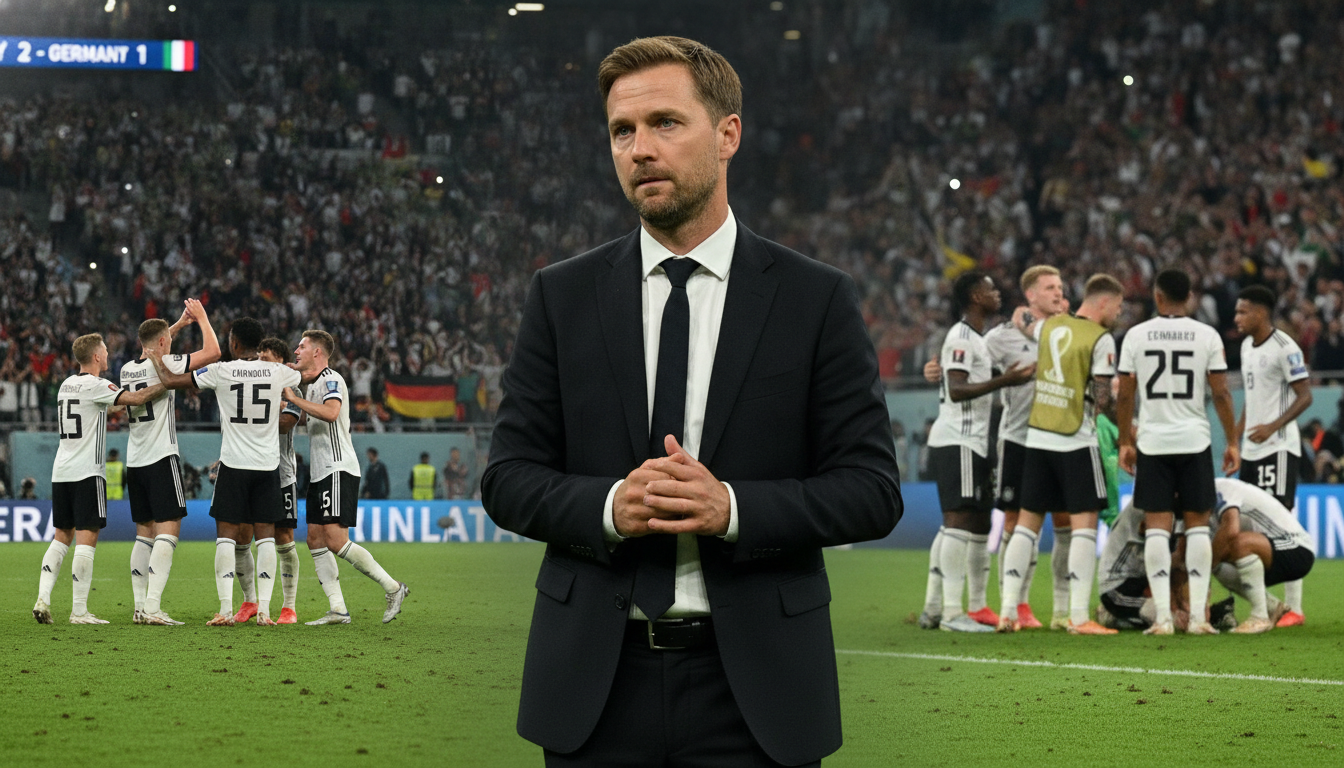
Germany vs Ivory Coast ended 2-1 as Germany reached the next stage of the 2026 World Cup, but the victory raised fresh questions about Julian Nagelsmann’s attacking setup and player choices.

Substitutes Turned the Tide
Germany’s bench made the decisive difference after a sluggish start, with second-half introductions altering the team’s tempo and attacking threat. The substitutes injected directness and vertical intent, forcing Ivory Coast to adjust and opening spaces that the starting lineup had struggled to find.
The pattern illustrated a depth advantage for Germany: when the initial plan faltered, fresh legs supplied the necessary ignition to break down a compact Ivorian defence. That impact will encourage Nagelsmann to view the bench as a strategic weapon rather than solely a late-game contingency.
That shift also exposed a managerial tension between settled starters and match-specific needs, suggesting that substitution strategy and timing could be decisive in tighter knockout ties. Opponents at the latter stages will likely probe Germany’s ability to start quickly and maintain intensity without relying on personnel changes.
Starting Attack Struggled to Break Through
Against Ivory Coast, Germany dominated possession for long periods but produced too few high-quality chances from their opening XI. The attack lacked the incisive combinations and unpredictable movement that usually unsettle well-organised defences, leaving the team dependent on moments of inspiration rather than sustained penetration.
Ivory Coast’s defensive organisation and physicality tested Germany’s forward group in ways the earlier match did not, highlighting vulnerabilities when possession is sterile. While territorial dominance can control a game, World Cup progression often depends on efficiency inside the final third, an area where Germany’s starters fell short.
The mismatch between control and cutting edge will demand adjustments in training and perhaps personnel, with a greater emphasis on creating clearer scoring opportunities from build-up play. For Nagelsmann, the challenge is translating possession superiority into reliable goal threats against stronger opponents.
Leroy Sané’s Place in the Lineup Faces Scrutiny
Leroy Sané was conspicuously subdued in the starting XI and failed to offer the decisive end product Germany needed in the first half. Despite clear technical gifts and pace, his influence on the game’s outcome was limited, renewing debate over whether reputation is outweighing current form in selection decisions.
Sané’s continued inclusion despite underwhelming displays raises selection questions, especially with alternative wide options that might deliver higher work-rate or end-product. National team managers often balance experience and form, but tournament football typically rewards players who can consistently affect the scoreboard and create chances.
If Germany are to deepen their World Cup run, Nagelsmann may need to prioritize effectiveness over continuity, bringing in attacking players who provide defensive support and sharper finishing. The door appears open for competitors to stake a claim, particularly if the starting winger pool continues to lack decisive contributions.
Felix Nmecha Emerging as Germany’s Midfield Linchpin
Felix Nmecha has been one of the tournament’s standouts for Germany, combining defensive discipline with progressive passing to anchor possession and transition phases. His performances against varied opponents have shown tactical intelligence, the ability to shield the back line, and composure when driving play forward.
Nmecha’s influence has given Germany a reliable fulcrum in midfield, helping to smooth transitions between defensive consolidation and attacking intent. He has provided balance by covering space intelligently and by linking midfield progressions into the final third at crucial moments.
That emergence reduces pressure on more creative teammates and gives Nagelsmann a clear midfield option to build around in upcoming matches. As opponents study Germany’s midfield patterns, Nmecha’s continued consistency will be vital to maintaining control in tighter, higher-stakes fixtures.
Tactical Questions Nagelsmann Must Resolve
The match exposed several tactical dilemmas for Julian Nagelsmann, from choice of starting forwards to the team’s approach when facing physically robust opponents. Germany’s initial plan relied on possession dominance, but the lack of vertical thrust suggested a need for clearer tactical contingency plans from kick-off.
Adjustments to pressing triggers, full-back positioning and the balance between central and wide creativity could be considered to improve chance creation without sacrificing defensive solidity. Nagelsmann will also weigh the timing of substitutions more carefully, given how the bench shifted momentum in this game.
Selection philosophy will be tested as the tournament progresses: whether the coach sticks with established starters on the basis of reputation, or rotates more aggressively to reward form and matchups. Those decisions will shape not only starting XIs but also the team’s psychological rhythm during knockout matches.
Group Position and What Comes Next for Germany
With the win against Ivory Coast, Germany have secured progression from the group and can now plan the final group match with strategic flexibility. Advancement removes immediate pressure, but the manner of the victory means lessons from the performance cannot be ignored as opponents grow tougher.
The final group fixture offers an opportunity to refine tactics, give minutes to fringe players, and test alternative attacking combinations without jeopardizing qualification. How Nagelsmann uses that match will indicate whether he trusts his starters to bounce back or prefers to continue experimenting with the lineup.
Looking ahead to the knockout rounds, Germany must convert possession into consistent goal threat while preserving the defensive cover that has so far kept them competitive. Opposition scouting reports will focus on Germany’s transition vulnerabilities and the relative predictability of their opening attack.
Germany’s 2-1 win over Ivory Coast advanced them through the group, but the performance underlined that results and reassurance can coexist with unresolved selection and tactical questions.