Germany drop to 12th in FIFA rankings after shock World Cup exit
Germany slip two places to 12th in FIFA world rankings following a Round of 32 penalty defeat; Spain rise to the top after lifting the World Cup.

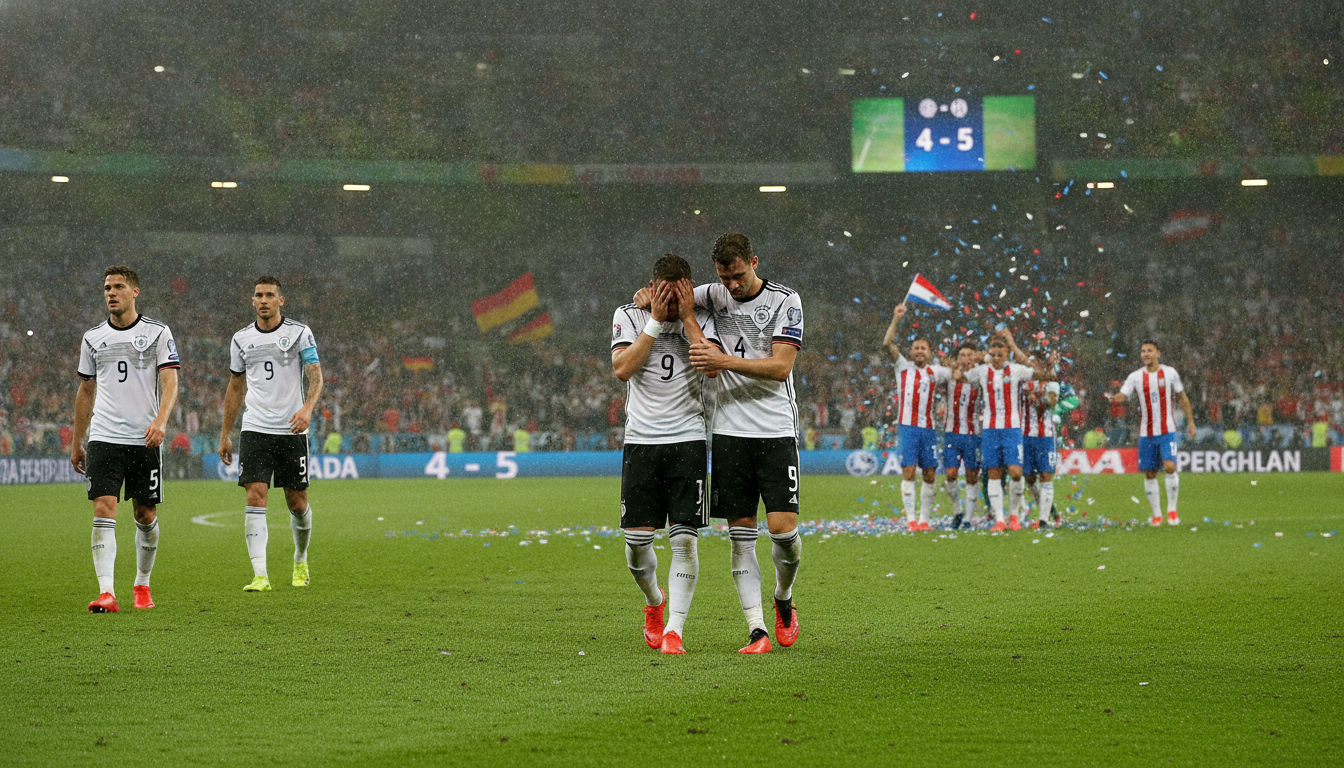
Germany’s unexpected early elimination from the 2026 World Cup has seen the national team tumble to 12th in the latest FIFA world rankings. The drop, from 10th to 12th, follows a Round of 32 loss on penalties to Paraguay that ended a campaign many expected to be deeper. This movement in the standings reflects the immediate impact major tournament results still exert on the ranking calculus.
The German Football Association now faces the first public assessment of a disappointing summer, with the rankings providing a clear measurement of the national side’s standing among global competitors. Officials, coaching staff and supporters will all be watching how this slide influences future seeding and perceptions heading into upcoming qualifiers and international windows.
Germany fall to 12th after World Cup exit
Germany’s exit on penalties cost the squad vital ranking points and left a tangible gap between expectation and outcome. FIFA’s ranking formula awards points for competitive matches and tournament progress, so early departures from major events can produce swift declines. The DFB’s drop from 10th to 12th is modest numerically but symbolically significant given the nation’s historic standing in world football.
Players and staff alike will note that rankings moves are cumulative and can be reversed only through consistent positive results. For Germany, rebuilding ranking momentum requires immediate competitive focus and results against similarly placed opponents. With future fixtures on the calendar, the next international window becomes critical for repair and restoration.
Paraguay penalty defeat reverberates in rankings
Germany’s loss to Paraguay on penalties in the Round of 32 directly contributed to the points shortfall that produced the ranking slide. Knockout exits via shootout carry the full weight of elimination in tournament progression, and the margins for error are razor thin. That single match outcome therefore had outsized effects on the DFB-elf’s standing among the world’s teams.
Beyond the numbers, the defeat raises questions about squad depth and tournament preparation under pressure. Penalty shootouts are often described as a lottery, yet they also expose systemic shortcomings in everything from selection to match-day psychological readiness. Germany’s early exit will likely spark an inward review of those areas.
Spain ascend to top after World Cup triumph
Spain’s victory in the 2026 World Cup has propelled them to the summit of the FIFA world rankings, marking a shift at the very top of the game. Tournament success delivers the largest possible points gains under FIFA’s system, and Spain’s title run ensured they replaced Argentina as the highest-ranked nation. The ascent reflects both a successful tournament strategy and sustained quality across multiple competitive cycles.
For other leading nations, Spain’s rise is a reminder of how quickly fortunes can change at the elite level. Holding the top ranking will now place heightened expectations on Spain to maintain performance standards. Meanwhile, rivals will be analyzing Spain’s tournament blueprint for lessons on squad management and tactical innovation.
Movers and shakers: Mexico, Colombia, Morocco and Brazil
Mexico and Colombia both moved ahead of Germany in the latest list, benefitting from deeper tournament runs and positive results that added ranking points. Mexico’s quarter-final appearance handed them a notable boost, while Colombia’s form during the tournament allowed them to climb into the top 11. These upward moves underline how single tournaments can recalibrate mid-table positions among national teams.
Morocco and Brazil also improved their positions, with Morocco climbing into the top five and Brazil rising as well. Those gains are tied to competitive consistency and knockout-stage performances that rewarded both teams with tangible ranking returns. For nations clustered in the mid-to-upper tier, incremental point gains from tournament progress are crucial to improving seeding and future matchups.
European shifts: Portugal, Belgium and the Netherlands
Portugal’s drop of two places and the swap between Belgium and the Netherlands illustrate the fluidity inside Europe’s highly competitive tier. Portugal slipped as other nations capitalized on more favorable tournament outcomes, while Belgium and the Netherlands traded positions amid otherwise modest changes. European teams’ rankings are particularly sensitive to head-to-head tournament results given the density of strong sides on the continent.
These incremental shifts will affect pot assignments for draws and can influence perceptions ahead of qualifiers and friendly schedules. For federations aiming to protect or improve their seeding, the lesson is clear: every match at a major finals or qualifying campaign carries longer-term ramifications. Small swings in ranking can have outsized effects on tournament pathways.
Implications for seeding and future qualification draws
Germany’s descent to 12th will have practical consequences when FIFA and confederations set up draws for future competitions. Seeding is tied closely to ranking positions, and a lower placement can seed a team into a tougher pot or lead to more challenging qualifying routes. The DFB will be mindful that ranking status affects not just reputation but the pathway to future tournaments.
For opponents, a lower-ranked Germany may appear more approachable on paper, which could alter tactical approaches and preparation by other national teams. Conversely, the German setup will likely redouble efforts to reclaim a higher seeding by targeting fixtures that deliver maximum ranking points. The strategic scheduling of friendlies and qualifiers will therefore take on renewed importance.
Coaching, selection and the national program’s next steps
Internally, the German Football Association will be assessing coaching strategy, squad composition and development pipelines in light of the World Cup outcome and the ranking fall. Major tournaments often expose both strengths and weaknesses across national programs, from youth integration to senior team rotation. Decisions in the coming weeks about training camps, player call-ups and coaching direction will be watched closely.
Longer-term, Germany’s footballing infrastructure and talent system remain among the world’s most respected, but the immediate task is restoring competitive momentum. That will involve blending experienced internationals with emerging prospects and ensuring that tactical clarity and mental resilience are prioritized. The federation’s public statements and scheduling choices will signal its intent to recover lost ground.
Stakeholders will also consider how to leverage the domestic calendar and youth development to produce a more robust pipeline. German clubs continue to be a source of international talent, and collaboration between club and country could accelerate the team’s return to higher rankings. Successful integration of homegrown players often underpins sustained international success.
Fan reaction and media scrutiny at home
Supporters and media in Germany have absorbed the early exit and ranking drop with frustration and scrutiny, reflecting high domestic expectations for the national team. Coverage has ranged from measured analysis to calls for immediate changes at the managerial level. Public debate will likely intensify as officials outline the federation’s plan for recovery.
A national side’s ranking is not only a technical metric but also a barometer of public confidence. For fans, World Cup performance and ranking status are entwined with national pride and expectations of competitiveness. The German federation will need to manage both the sporting and communicative aspects of rebuilding trust and optimism.
Germany faces an immediate challenge to arrest the slide and rebuild toward previous heights, but the nation’s deep talent pool and institutional strength provide a foundation for recovery. The next fixtures will be decisive in shaping whether this ranking drop becomes an anomaly or the start of a longer-term adjustment. Results on the pitch will determine the speed and extent of Germany’s return up the FIFA world rankings.