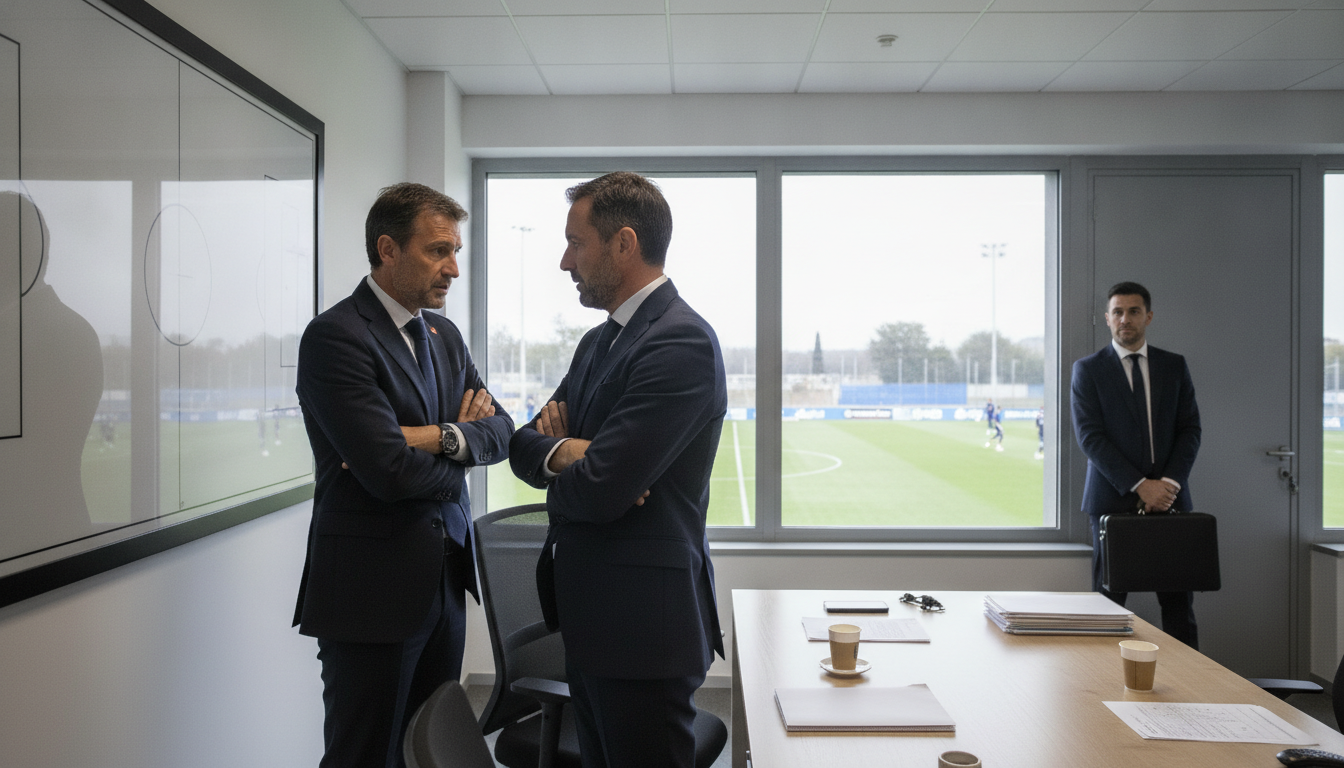
Getafe’s coaching future in doubt as Bordalás rebuffs reduced renewal offer
Getafe’s managerial future is uncertain as José Bordalás resists a reduced renewal offer, with Fabio Celestini positioned as a likely successor amid preparations for the 2026–27 season.


The Getafe coaching situation has become the central topic at the Coliseum as the club races to decide who will lead the team into the 2026–27 campaign. José Bordalás, the club’s current manager, received a renewal proposal that would have reduced his terms and has left negotiations strained. With the transfer window open and a European campaign on the horizon, president Ángel Torres is pressing for a rapid resolution to allow planning to proceed.
Board seeks a clear answer on Bordalás this week
Getafe’s president wants clarity before the week is out so sporting plans can move forward whether Bordalás remains or departs. The urgency stems from the club’s need to finalize pre-season dates, training staff and transfer targets ahead of a Conference League qualifying round in late August. Internal discussions have focused on minimizing disruption to player recruitment and fitness programming.
If Bordalás opts not to accept the revised terms, the board has contingency plans ready to implement immediately. That timetable reflects the club’s fourth season in European competition and the compressed calendar that comes with balancing domestic and continental commitments. A decision now would give the incoming or continuing coach crucial weeks to imprint a tactical identity before competitive football resumes.
Celestini held as managed option for next two seasons
Fabio Celestini is listed by the club as the primary alternative should Bordalás leave, with sources indicating an agreement has been prepared for the next two campaigns. The Swiss coach’s profile has been studied by sporting directors as a plausible fit to manage both LaLiga demands and European qualifiers. His possible arrival would signal a deliberate shift in the club’s approach while maintaining the objective of consolidating Getafe’s place in continental competition.
Installing Celestini would also allow the club to begin shaping a specific tactical and recruitment plan aligned with his methodology. The technical team and directors have reportedly considered how he would integrate with existing squad structures and which positions would require reinforcement. That planning must be synchronized with the transfer strategy to ensure coherence heading into a compact pre-season.
European qualification frames preseason and transfer priorities
Getafe’s fourth season in Europe reshapes the calendar and intensifies the transfer market urgency for the club. A preliminary round in late August will clash with LaLiga preparations, forcing the club to finalize a competitive squad earlier than in seasons without continental duty. The dual demands of European fixtures and domestic competition raise the premium on depth, especially in defensive cover and midfield rotation.
The club’s sporting department views the transfer window as one of the most consequential in recent years because of the need to balance short-term competitiveness with sustainable squad construction. Decisions on sales and renewals will directly affect budget flexibility and the ability to sign players suited to either Bordalás’s pragmatic style or Celestini’s tactical preferences. This balancing act is central to the club’s plan to avoid fatigue and ensure European participation does not derail the LaLiga campaign.
Confirmed signings and early business for the squad
President Ángel Torres has signaled that several recruits are already secured even if their identities remain confidential to the public for the moment. Announcements so far include the arrivals of Martín Satriano, Mario Martín and Matías Boselli, moves that reflect a mixture of attacking options and midfield reinforcement. The club also extended David Soria’s contract, keeping an experienced goalkeeper in place as a foundation for the season ahead.
Those initial signings provide a base on which the sporting department can build, but the roster still requires prioritised additions across multiple positions. Pre-season will be used to evaluate new faces and integrate them with returning players, while the final squad list may be influenced by late departures or loans. The athletic and technical staff must accelerate integration work if European qualifiers come early.
High-profile departures and contract talks shaping market strategy
Getafe faces meaningful decisions over potential sales and contract renewals that will shape the club’s financial and sporting trajectory. Mauro Arambarri and Luis Milla are under scrutiny as possible departures that could generate transfer income, while Djené’s contract renewal remains a key priority to maintain defensive stability. Meanwhile, the future of gifted forward Uche is unresolved and could become a pivotal case in the coming days.
Those personnel questions are intertwined with the managerial outcome, because the preferred coach will influence which players are retained, sold or targeted. A change on the touchline commonly prompts a re-evaluation of the squad’s tactical fit, and Getafe’s directors are preparing lists that reflect both scenarios. The club must juggle competitive needs with budgetary discipline to ensure continuous progress.
Ángel Torres’s timeline and the club’s strategic objectives
President Ángel Torres has been explicit about wanting closure soon so the club can focus on tactical plans and market activity for the new campaign. His objective is to have the sporting roadmap settled in time to arrange a pre-season that prepares the team for the dual demands of LaLiga and European qualifiers. The board’s insistence on a prompt resolution is also intended to reassure players and agents who are monitoring Getafe’s direction.
Beyond the immediate coaching question, the leadership’s broader aim remains clear: to consolidate the club’s status in Europe while sustaining competitiveness domestically. That strategy includes strengthening the squad in targeted areas and ensuring the coaching staff has the resources to pursue the club’s objectives. The next fortnight will be decisive for translating those aims into concrete agreements.
Impact on players, training staff and pre-season scheduling
A managerial change at this stage would ripple through preparations, altering training regimes, tactical drills and likely staff appointments. Players recruited for a particular system may need retraining to adapt to a successor’s demands, and backroom hires are often aligned to a manager’s preferred sports science and analytical setup. The club’s sporting department is reportedly drawing up contingency training programmes to minimize disruption.
Timing is especially critical because a late appointment compresses the period available for friendly matches and tactical work, which is essential when juggling early European fixtures. The coaching staff will have limited windows to evaluate fitness levels and tactical cohesion before competitive matches begin. For this reason, club decision-makers are pressing all parties to finalize positions quickly.
Final paragraph with no title before it.
Getafe enters a decisive phase where negotiation dynamics, transfer choices and calendar pressures converge, and the club’s next steps will define whether continuity under José Bordalás is preserved or a new era under Fabio Celestini begins. The outcome will determine how Getafe balances domestic ambitions with its fourth European campaign and how quickly the squad can be assembled and prepared for a congested schedule. The coming days are likely to shape not just a season but the club’s trajectory for the immediate future.