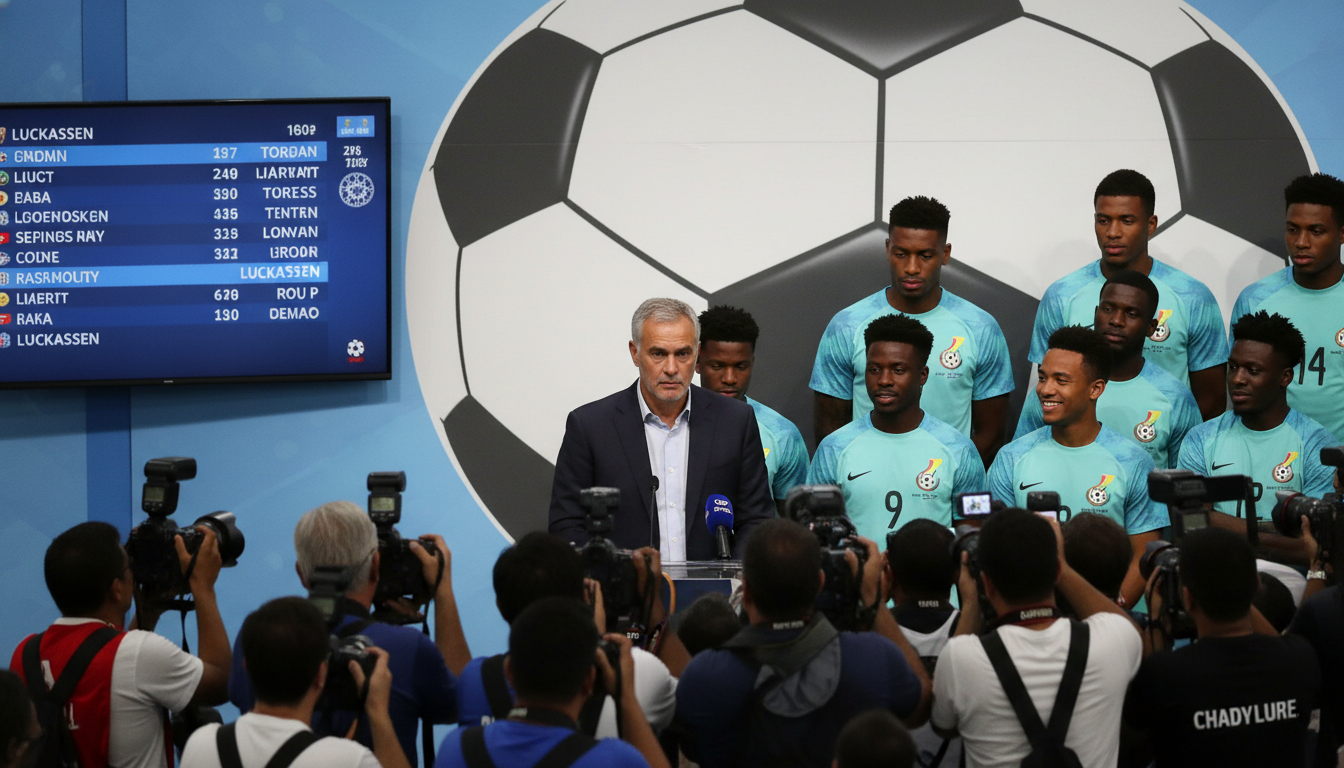
Carlos Queiroz names Ghana World Cup squad for 2026 with 26 players and several debutants
Carlos Queiroz names a 26-man Ghana World Cup squad for 2026, featuring several debutants, a late defensive change and a Washington pre-tournament training camp.

The Ghana World Cup squad has been confirmed by head coach Carlos Queiroz, who unveiled a 26-player roster to represent the Black Stars at the 2026 FIFA World Cup in Canada, Mexico and the United States. Queiroz said the selections followed detailed analysis of eligible players and form across club competitions. (ghanafa.org)
Queiroz finalises 26-man Ghana World Cup squad
The final list balances experience and youth, blending established internationals with a notable group of first-time call-ups. Several veterans retained their places to provide leadership across the spine of the team, while younger faces were chosen for pace and potential on the flanks and in attack.
Queiroz indicated the squad reflects a strategic assessment aimed at coping with the physical demands and tactical variety of the expanded World Cup format. The coach’s choices suggest a preference for players who can adapt to multiple systems and offer transitional speed. (ghanafa.org)
Goalkeeping choices and added member
The three goalkeepers selected for the tournament are Benjamin Asare, Lawrence Ati-Zigi and Joseph Anang, with Solomon Agbasi named as an additional squad member to provide further depth. Ati-Zigi returns as an experienced option between the posts, while Asare and Anang bring recent form and promise at club level.
Queiroz’s goalkeeping panel combines match experience with youth and squad versatility, a configuration intended to handle the long tournament schedule and potential injury contingencies. The technical staff will now focus on preparing the keepers for different attacking profiles they will face in Group L. (ghanafa.org)
Defensive reshuffle after Djiku injury
A late adjustment to the backline came after Alexander Djiku was ruled out with a hamstring injury expected to keep him sidelined for at least six weeks. Derrick Luckassen, currently plying his trade in Cyprus, was called into the squad as Djiku’s replacement, giving Queiroz an experienced alternative in central defence.
The loss of Djiku removes a familiar partnership option but Luckassen’s inclusion preserves the squad’s balance and adds a player with international exposure who can slot into a variety of defensive pairings. The GFA confirmed the injury timetable and the subsequent change to the roster in its announcement. (ghanafa.org)
Young debutants offer fresh options
The squad will feature a significant number of World Cup debutants, with names such as Jerome Opoku, Kojo Oppong Peprah, Abdul Mumin, Benjamin Asare, Joseph Anang, Kwasi Sibo, Augustine Boakye, Caleb Yirenkyi, Christopher Bonsu Baah, Ernest Nuamah, Brandon Thomas‑Asante and Prince Kwabena Adu among those set to make their first appearance at the finals. These selections underline Queiroz’s willingness to integrate in‑form younger players into the tournament roster.
Analysts note that the debutants bring a mix of technical variety and speed, particularly in forward positions where Nuamah and Bonsu Baah can provide direct threat. The influx of new faces increases tactical options for counterattacking setups and gives the Black Stars additional rotation choices across a congested fixture list. (gbcghanaonline.com)
Preparation plan: Cardiff friendly then Washington camp
Ghana will complete a warm‑up friendly against Wales in Cardiff on June 2 before flying to Washington to continue final preparations ahead of the tournament’s kick‑off on June 11. The planned training schedule aims to fine‑tune match fitness and chemistry while adapting to travel and venue specifics ahead of the group stage.
Queiroz will use the Wales match and the subsequent Washington camp to assess combinations and set defensive responsibilities, as the team prepares for its opening game on June 17. The GFA confirmed the friendly and the travel plan as part of the official squad release. (ghanafa.org)
Group L opponents and opening fixture details
Ghana has been drawn into Group L alongside Panama, England and Croatia, with the Black Stars scheduled to open their campaign against Panama on June 17. The group pits differing styles against one another, from Panama’s physical, counterattacking approach to England’s set‑piece and pressing strengths and Croatia’s midfield control.
The order of opponents will require tactical flexibility; the Panama match offers a first opportunity to secure points, while the England and Croatia fixtures will test Ghana’s defensive compactness and transitional speed. Queiroz’s selections appear designed to meet those varied challenges across three high‑intensity matches. (ghanafa.org)
The squad list shows a mixture of domestic and Europe‑based players across all lines, with fullbacks, midfield enforcers and wide attackers providing multiple game‑state solutions. The inclusion of naturalised or recent national team converts has also broadened the pool of skills at Queiroz’s disposal.
Midfield selections blend experienced operators with younger midfielders who offer tempo and vertical passing. Thomas Partey anchors the middle with the capacity to shield the defence and recycle possession, while players such as Elisha Owusu and Augustine Boakye give alternative profiles for quicker transitions.
In attack, Ghana will be able to call on a mix of target‑men and wide runners. The front three options include established scorers and emerging talents who can occupy defenders and create space for midfield runners. Queiroz’s offensive plan is likely to layer pressing triggers with swift transitions into wide channels.
Set‑piece detail and defensive organization are expected to be central to Ghana’s game plan, particularly against teams with superior individual talent. The defensive unit will need to maintain discipline on England’s and Croatia’s set plays, while exploiting opponents’ transitional vulnerability on the counter.
Fitness and squad management will be critical given the condensed nature of the tournament and long travel distances between venues. Rotation of attackers and measured minutes for key starters will be part of a pragmatic approach to sustain competitiveness through the group stage.
There is cautious optimism among supporters and pundits that the blend of youth and experience gives Ghana an unpredictable edge. The debutants offer dynamism and an element of surprise, while the veterans bring structure and international tournament know‑how.
Ghana departs for North America with realistic targets: to compete vigorously for qualification from Group L and to build a cohesive unit capable of progressing to the knockout rounds. The next two weeks of preparation, including the Cardiff friendly and the Washington camp, will be closely watched as the final pieces of Queiroz’s tactical puzzle fall into place.