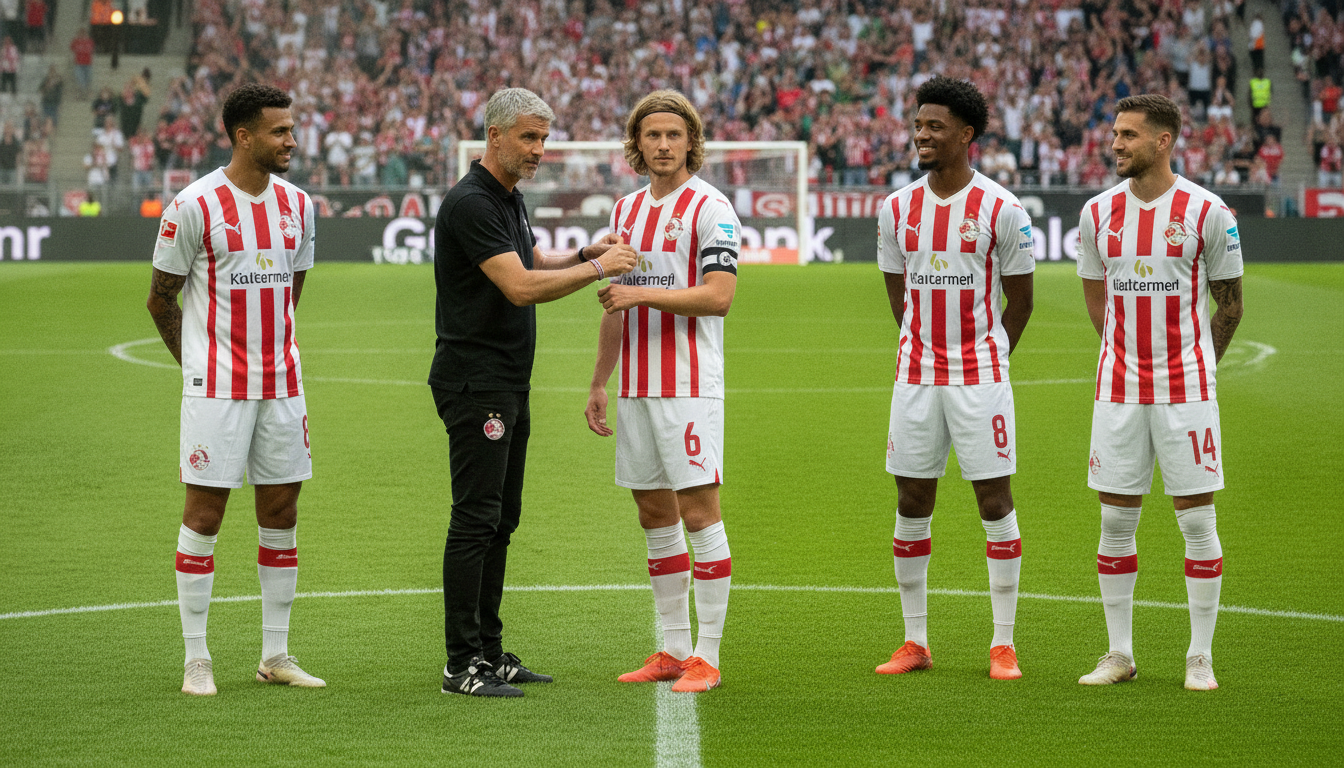
Nicolai Remberg announced as HSV captain ahead of 2026/27 Bundesliga season
Hamburger SV named Nicolai Remberg club captain for the 2026/27 Bundesliga season, with Albert Sambi Lokonga and Nicolas Capaldo as vice-captains. Remberg’s appointment is central to HSV’s leadership plans as they seek improvement after finishing 13th last term.


Remberg appointed HSV captain for 2026/27
Hamburger SV confirmed Nicolai Remberg as club captain in a staff announcement ahead of the new Bundesliga campaign. The 24-year-old midfielder takes over the armband from Yussuf Poulsen and will lead the dressing room into the coming season.
Remberg, who served as captain in two matches during the previous campaign, becomes the club’s 33rd official captain since the Bundesliga’s inception in 1963. The club framed his elevation as part of a broader plan to sharpen standards and collective drive on the pitch.
In his public remarks, Remberg described the captaincy as a special milestone and stressed consistency and personal development as central to his leadership. He pledged to lead through performance, accountability and steady support for teammates both during matches and off the field.
Vice-captaincy assigned to Sambi Lokonga and Nicolas Capaldo
HSV named Albert Sambi Lokonga and Nicolas Capaldo as the two vice-captains who will back Remberg across the season. The club emphasized complementarity in the leadership group, pairing Remberg’s on-field standards with Sambi’s tactical acumen and Capaldo’s emotional influence.
Sambi Lokonga arrives with a reputation for game intelligence and midfield control, qualities the club expects to feed into match management and locker-room planning. Capaldo brings intensity and connection with teammates, traits that club officials said will help maintain cohesion under pressure.
The trio will form a leadership nucleus intended to steer matchday decision-making and daily training standards while integrating the experience of more senior squad members. HSV framed the appointments as a multi-layered approach designed to distribute responsibility across roles.
Yussuf Poulsen to remain influential despite relinquishing armband
Yussuf Poulsen, who wore the captain’s armband last season, will step away from the formal captaincy but remain a senior figure inside the squad. Club representatives said Poulsen’s international experience and presence will continue to benefit younger players and the leadership group.
Poulsen’s change of role is presented as a strategic adjustment rather than a demotion, with the forward expected to offer mentorship and situational guidance. Team sources suggest Poulsen will remain involved in leadership conversations and act as a conduit between the coaching staff and players on matchdays.
Maintaining Poulsen’s voice within the squad preserves continuity as HSV look to refine their identity under head coach Merlin Polzin. The club’s move to balance new and established leaders is intended to smooth the transition and safeguard dressing-room unity.
Coach Merlin Polzin outlines reasoning for the leadership group
Head coach Merlin Polzin articulated the qualities that guided his selections, highlighting standards, mentality and varied leadership skills. Polzin cited Remberg’s daily drive and high expectations for himself as a key factor in choosing him as captain.
Polzin described Sambi Lokonga as a strategist whose reading of the game benefits team structure, while he identified Capaldo as an emotional anchor who lifts standards and atmosphere. The coach also signalled that Poulsen’s experience remains a resource for the group and the wider squad.
By assembling a diverse leadership core, Polzin aims to create a resilient culture that can respond to tactical demands and the pressures of the Bundesliga. The coach stressed that leadership is not confined to armbands and that responsibility will be shared across the squad.
Context of HSV’s squad and last season’s performance
HSV enter the 2026/27 season looking to build on a 13th-place finish in the previous Bundesliga campaign. The club has prioritized internal development and targeted additions to tighten margins in close matches and convert draws into wins.
Squad continuity, combined with a clearer leadership structure, forms the club’s short-term blueprint for improvement. Management and coaching staff have signalled that establishing a consistent matchday identity and raising weekly training standards are immediate priorities.
The leadership appointments also dovetail with tactical work in preseason, where Polzin has been testing formations and combinations to maximize the strengths of the midfield and attack. Remberg’s role as a central midfielder gives him daily influence over transitions and on-field organization.
What the captaincy means for Remberg and the team
For Nicolai Remberg, the armband is both recognition of recent progress and a platform for further development as a young leader. Club officials and teammates expect him to set the tone through preparation, intensity and tactical focus.
His ascent is likely to increase responsibility in defensive organization, build-up play and communication with teammates across all lines. Remberg will also be expected to act as an intermediary between the coaching staff and the playing group, relaying standards and expectations.
For the team, the appointment represents a shift toward collective accountability with several internal voices driving standards rather than relying on a single figurehead. The model aims to keep senior players engaged while empowering emerging leaders to take ownership of daily standards.
Implications for the Bundesliga campaign ahead
HSV’s updated leadership structure arrives as the club targets steadier league form and greater consistency in results. The hierarchy is designed to shore up performance in tight fixtures where in-game leadership and tactical adjustments often decide outcomes.
If Remberg, Sambi Lokonga and Capaldo deliver steady leadership on matchdays and in training, HSV could see improved organization and sharper responses to opposition pressure. The coaching staff will monitor how the new dynamic affects decision-making, concentration and resilience across the season.
Success will depend on the leadership group’s ability to maintain standards across a long campaign and to support reinforcements who may arrive before the transfer window closes. The club’s management views the move as part of a wider plan to elevate competitive standards and accelerate on-field progress.
Hamburger SV’s selection of Nicolai Remberg as captain, backed by Albert Sambi Lokonga and Nicolas Capaldo, marks a deliberate step to distribute leadership responsibilities while retaining the experience of Yussuf Poulsen. The club and coaching staff will look to this new configuration to improve consistency and performance as HSV seek to climb the Bundesliga table in 2026/27.