Humphrey Aroko Signs for FC Copenhagen and Will Spend 2026 on Loan at FC Rosengard
Humphrey Aroko joins FC Copenhagen and will spend 2026 on loan at Swedish second-tier side FC Rosengard after a breakout season with Kariobangi Sharks.


Aroko signs with FC Copenhagen and is loaned to Rosengard
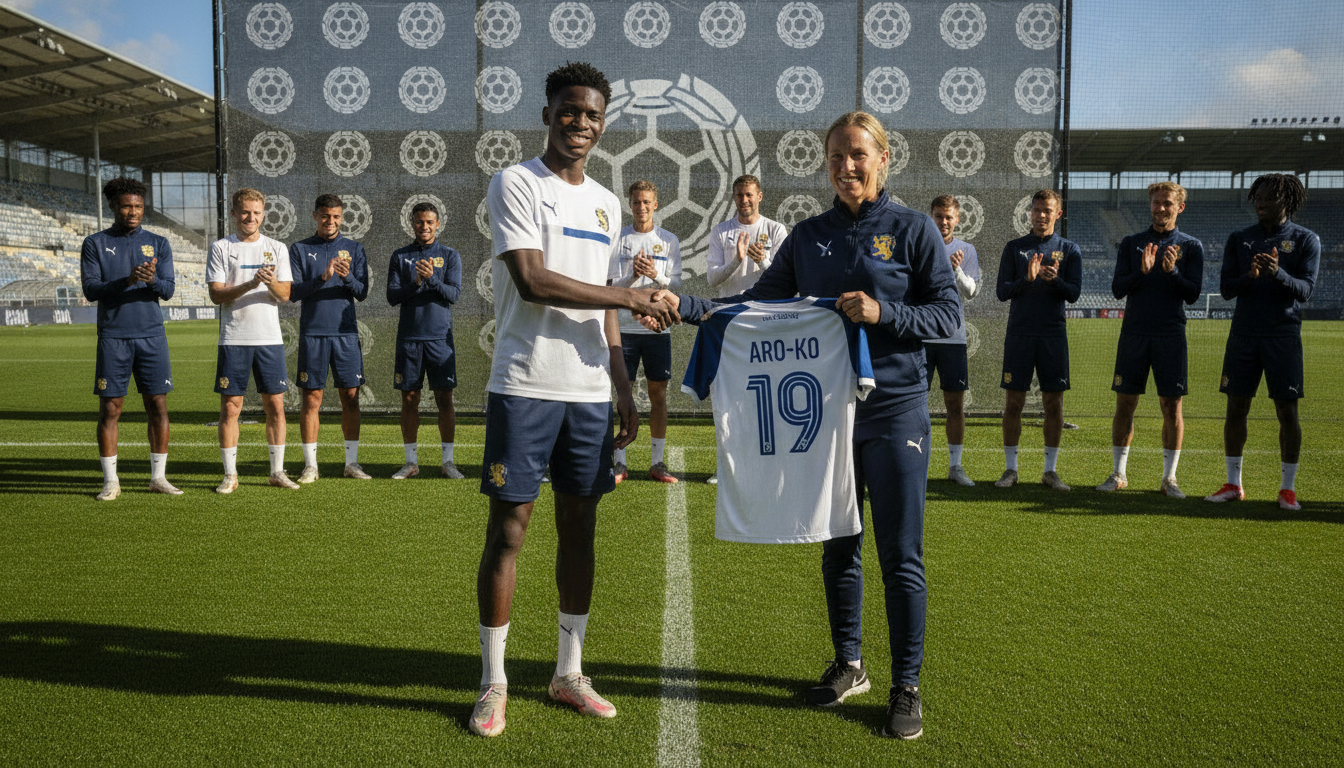
Kariobangi Sharks forward Humphrey Aroko has been signed by Danish club FC Copenhagen and immediately loaned to Swedish second-tier side FC Rosengard. The move, confirmed by Sharks owner and former Football Kenya Federation president Nick Mwendwa, represents a major step in the 18-year-old’s career trajectory. Aroko, who turned 18 this year and will be 19 next year, arrives at Europe’s doorstep following a season that attracted significant domestic attention.
Mwendwa revealed the transaction in an interview on the Dr King’ori podcast and described the arrangement as an opportunity for Aroko to gain playing time and adapt to European football. The loan to Rosengard is planned for one year, providing the teenager a platform to adjust to a new environment while remaining under Copenhagen’s long-term control. Club officials in Copenhagen are expected to monitor his development closely before deciding on any immediate integration into their senior squad.
Breakout 2025/26 season for Kariobangi Sharks forward
Aroko comes into the move off the back of a productive 2025/26 campaign in which he scored 19 goals across all competitions for Kariobangi Sharks. Those numbers stood out in an otherwise difficult season for the club, which was relegated at the end of the campaign. Despite the team’s struggles, Aroko’s consistency and finishing ability made him one of the league’s most eye-catching young talents.
His most memorable performance came in the FKF Cup Round of 32, when he netted four goals in a 4-0 win over Kenyatta University Hardnuts. That display, and a series of other decisive contributions, helped cement his reputation as a leading young prospect within Kenyan football. Scouts and agents watching domestic fixtures noted his composure in front of goal and capacity to influence games even when his side was under pressure.
Rosengard pathway and historical context
The loan places Aroko at FC Rosengard, a Swedish club known for developing young players and providing a stepping stone into higher levels of European football. Rosengard has been linked with the early playing roots of several notable names and is respected within Scandinavian scouting networks for its focus on youth integration. The move follows a common strategy where larger clubs secure talent and send prospects to smaller, development-focused sides to accelerate their adaptation.
This pathway is intended to combine regular first-team minutes with an environment that pushes tactical development and physical readiness for northern European leagues. For Aroko, who has primarily played in the Kenyan Premier League, the Swedish second tier will present a different tempo and tactical demands. The loan is structured to give him exposure to those challenges while maintaining the security of a contract held by a club that competes regularly in continental competitions.
Copenhagen’s role and potential European exposure
FC Copenhagen, a club that regularly features in UEFA club competitions, represents a significant platform should Aroko return to the Danish side in the future. Playing for Copenhagen would offer exposure to scouts, television audiences and higher-level opponents across Europa and Champions League qualifiers. That possibility is part of the appeal for young players signed by clubs with continental visibility; successful loan spells can fast-track a pathway into major competitions.
The immediate objective, however, is development rather than instant first-team inclusion at Copenhagen. The Danish club’s approach with younger signings typically involves measured integration, ensuring players meet physical and tactical thresholds before stepping into a senior role. For Aroko, progression will be judged on adaptability, consistency and his ability to translate raw goal-scoring into contributions against different defensive styles.
Club and public reaction in Kenya
Kariobangi Sharks’ management framed the transfer as a validation of the club’s youth program and player pathway ambitions. Owner Nick Mwendwa described Aroko as the club’s standout young performer this season and expressed confidence that exposure in Sweden will benefit both player and club. Local supporters and observers reacted positively on social channels, viewing the move as another example of Kenyan talent attracting European interest.
The transfer also comes amid reflection across Kenyan football on how to sustain and export promising players despite inconsistent club finances and infrastructure. Sharks’ decision to facilitate the move while retaining contractual ties reflects a growing trend in which Kenyan clubs seek to monetize talent while preserving future sell-on value. Fans and pundits noted the move could encourage other clubs to sharpen development programs and scouting links with Europe.
Implications for Kenyan talent development and scouting
Aroko’s move is likely to be viewed by agents, academies and clubs in Kenya as a case study in bridging domestic performance with European opportunity. The pathway — domestic breakout, international signing, loan to a development-focused European side — has become a common route for players from emerging football nations. Success in Rosengard could open doors for Aroko and provide a template for Kenyan clubs aiming to position their prospects for overseas moves.
For Kenyan football administrators, the transaction highlights the importance of competitive structures, regular youth competitions and support systems that prepare players for cultural and professional transitions abroad. Players moving to Scandinavia often confront language barriers, climatic differences and higher physical demands, so off-field preparation and mental support are as critical as technical readiness. If clubs and federations invest in these areas, the number of successful exports could rise steadily.
What Aroko must show to advance in Europe
On the field, there are clear benchmarks that will determine whether Aroko can return to Copenhagen or attract interest from other European clubs. Consistent goal-scoring, adaptability to tactical systems, physical resilience and defensive work-rate are among the attributes scouts will monitor. He must also demonstrate the ability to influence games against a variety of opponents, including sides that approach matches with high-intensity pressing or compact defending.
Off the field, professionalism, language acquisition and cultural adjustment will play a significant role in his progression. Young players who acclimate quickly to training routines, recovery protocols and club expectations often fast-track their way into senior setups. The support structure at Rosengard and continued oversight from Copenhagen will be important in smoothing that transition and setting realistic performance targets for the season.
Kariobangi Sharks and Aroko’s representatives will no doubt set periodic review points to assess progress during the loan. Copenhagen’s scouts and technical staff are likely to monitor match footage and in-person performances to determine whether a mid-loan recall or a second loan at a higher level is warranted. The one-year term offers a balance between giving the player time to settle and maintaining flexibility for Copenhagen’s talent-management strategy.
Aroko’s age and developmental ceiling will keep him on the radars of clubs seeking affordable, high-upside forwards. If he can translate his domestic finishing into consistent contributions in Sweden, he could become part of a wave of East African players establishing themselves in Scandinavia before moving to higher-profile leagues. That pathway has worked for players from other regions and remains a viable route for those who combine talent with rapid professional growth.
The move also underscores a growing interconnectedness between African academies and European clubs, where data, video scouting and agent networks accelerate decision-making. Clubs in Scandinavia are increasingly willing to take calculated risks on raw talents with the potential to develop into profitable assets. For Aroko, the loan to Rosengard is both a test and an opportunity to demonstrate that Kenyan forwards can adapt, score and contribute at a European level.
Humphrey Aroko’s next 12 months will be closely watched by supporters in Kenya, scouts abroad and by the player himself as he navigates life as a Europe-based professional. If he can maintain the scoring touch and improve his all-around game, the pathway from Rosengard back to Copenhagen — and onto a larger continental stage — will remain open. The season ahead will be pivotal in determining whether this promising teenager can convert domestic promise into a sustainable European career.