Arsenal reach Champions League final after narrow win over Atletico Madrid
Arsenal reach Champions League final after edging Atletico Madrid, sealing a place in the Budapest showpiece with a disciplined performance that left fans and pundits celebrating at the Emirates.


Arsenal clinch final spot with a narrow, disciplined victory
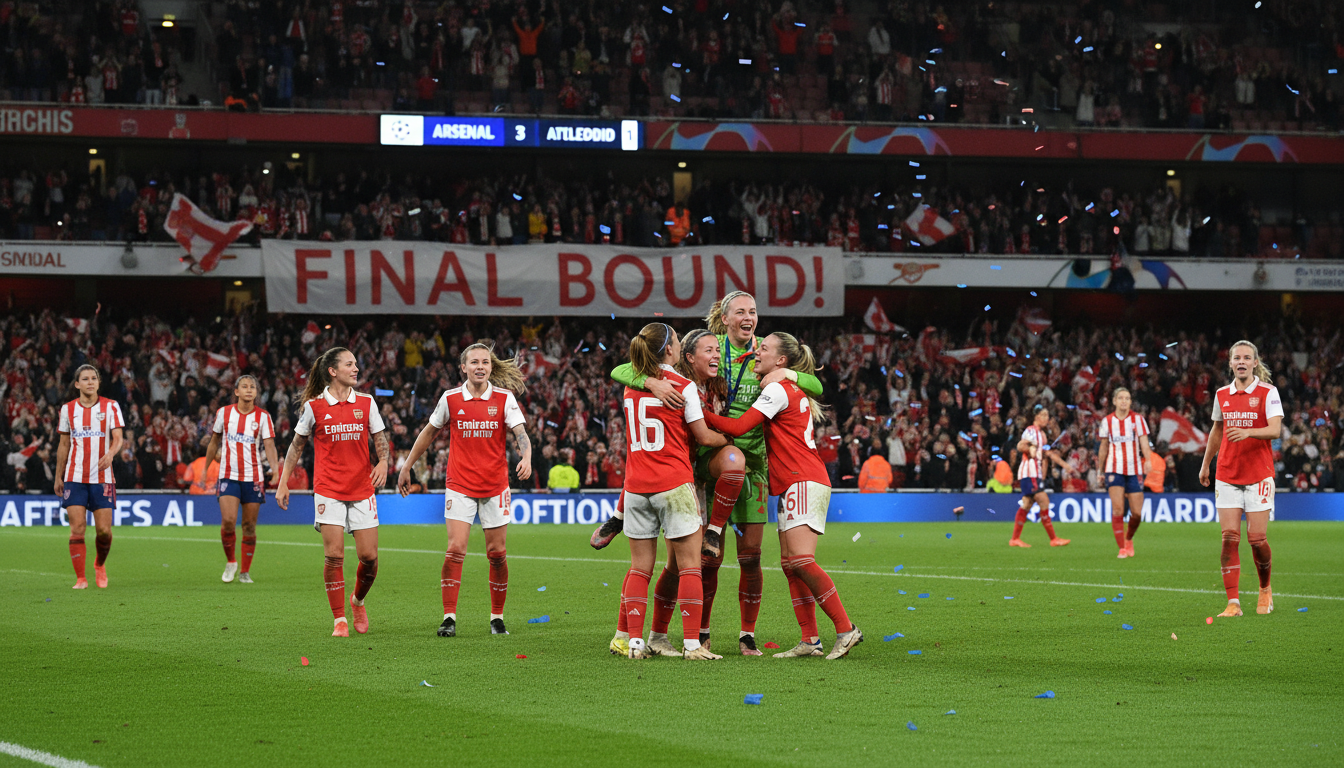
Arsenal reached the Champions League final after a tense and narrowly decided semi-final against Atletico Madrid, a result that triggered scenes of elation at the Emirates. The club’s progression was built on a compact defensive display and moments of attacking precision that frustrated Diego Simeone’s side. Pundits and former internationals immediately hailed the achievement as a landmark in the club’s recent European revival. Manager Mikel Arteta described the night as historic and revealed how agonising choices over his starting lineup contributed to the outcome.
Key moments that shaped the tie
A handful of decisive passages swung the tie in Arsenal’s favour, with the hosts managing the game tempo and stifling Atletico’s preferred intensity. Arsenal’s ability to protect narrow leads and close down key channels limited Atletico’s supply lines and reduced their threat on the break. Tactical substitutions and a focus on defensive solidity prevented a prolonged Atletico onslaught late in the match. Those interventions underpinned a result that ultimately booked Arsenal’s place in the Champions League final.
Arteta defends selection decisions after tight win
Mikel Arteta acknowledged that he agonised over his team selection before kick-off and pointed to those deliberations as central to the victory. Decisions on personnel and formation were made with Atletico’s physicality and pressing patterns in mind, according to Arteta’s post-match reflections. The manager insisted his choices were informed by meticulous preparation and the need to balance defensive resilience with attacking potency. That strategy earned plaudits from analysts who said the selection paid dividends in a game of fine margins.
Defensive organisation and individual contributions
Arsenal’s defensive structure was a recurring theme as analysts unpacked the match, with commentators highlighting the team’s compact shape and coordinated pressing. The backline and midfield shielded the defence effectively, reducing Atletico’s ability to create clear-cut chances. Goalkeeper displays and timely interventions at key moments preserved the narrow lead and kept the tie under control. Across the squad, players embraced defined roles that limited space for Atletico’s front line and helped Arsenal manage game phases.
Opposition reaction and what it means for PSG or Bayern
Atletico Madrid will leave the tie reflecting on missed opportunities and the narrow margins that separate success from elimination in Europe’s elite competition. With Arsenal now set to face either Bayern Munich or Paris Saint-Germain in the final in Budapest, the club and its supporters are already preparing for a different tactical challenge. Vincent Kompany, whose team was preparing to face PSG in the other semi-final, discussed his plans ahead of that decisive night and underlined the importance of getting tactical details right for a final. The prospect of meeting Bayern or PSG frames a contrasting strategic test for Arsenal, who will need to adjust to the specific threats and strengths of either opponent.
Immediate reaction from the club and broadcast pundits
Broadcasters and former professionals reacted instantly to Arsenal’s progress, noting the significance of reaching a Champions League final for the club’s trajectory. On the post-match shows, analysts emphasised how Arsenal combined youth, tactical discipline, and experience to navigate a high-pressure semi-final. The atmosphere inside the stadium and amongst the fanbase was captured by scenes of jubilation and relief after a long European campaign. Club officials and players paid tribute to the supporters and set out an intention to prepare carefully for the final challenge ahead.
Arsenal’s route to the final illustrated a broader development under Arteta, with the manager now facing the task of keeping his squad focused and healthy for the elite encounter. Balancing recovery, training intensity, and tactical preparation will be critical in the coming weeks. The technical staff must make decisions on rotation and match-readiness without revealing too much about their tactical approach. How Arteta navigates these selections will be scrutinised as the final approaches.
The tactical blueprint that served Arsenal in the semi-final emphasised compactness and discipline, but the manager will likely refine attacking plans to exploit the vulnerabilities of Bayern or PSG. Whether the final becomes a tactical chess match or an attacking spectacle will depend on both match-ups and the decisions made in training. Arsenal’s players have shown adaptability during the season, and that flexibility will be a valuable asset in preparing for a one-off final in Budapest.
Off the pitch, qualification for the Champions League final carries commercial and reputational significance for Arsenal, boosting their profile across Europe. The club’s marketing and operations teams will now shift focus towards logistics, fan travel, and staging an appropriate club presence in Budapest. For supporters, the trip to the final represents an opportunity to witness a rare and significant event in the club’s modern history.
In the immediate term, attention will turn to recovery protocols and the final selection puzzle, with medical staff and performance analysts working to optimise player condition. Arsenal’s physical management in the days between the semi-final and the final will be scrutinised because marginal gains often decide single-match finals. Arteta’s ability to maintain player sharpness while avoiding fatigue will be a key factor in the run-up to the showpiece.
The narrative of Arsenal’s season now incorporates a European peak, offering a fresh benchmark for the squad and the managerial team. Reaching the Champions League final is both an end to a long campaign and a starting point for new ambitions. The club’s hierarchy will weigh lessons from the semi-final as they seek to capitalise on the current momentum.
For Atletico Madrid, the defeat will prompt reflection on tactical execution and squad management across the tie. Diego Simeone’s side remain a formidable European presence, and their campaign will be assessed through the prism of what might have been in a closely contested affair. Atletico’s performance under pressure will be evaluated in training rooms and boardrooms alike as they plan for future continental campaigns.
Fans, pundits, and neutrals will now focus on the final’s tactical narratives: whether Arsenal can impose the same defensive discipline and selective attacking that delivered the semi-final win. The upcoming opponent—be it Bayern Munich with their structured power game, or PSG with their star-laden attack—will shape Arsenal’s preparation and match-day tactics. The final in Budapest promises to be a test of strategy, nerve, and execution.
Now that Arsenal have reached the Champions League final, the fine margins of European competition will come into even sharper focus for the club. The next steps involve detailed opponent analysis, careful squad management, and a clear plan for how to approach a single-match final. For supporters and players alike, the prospect of lifting European silverware is an intoxicating one that will dominate the club’s calendar in the weeks ahead.
Arsenal will arrive in Budapest with confidence from their semi-final performance but with an awareness that the final will demand even greater precision and resilience. Preparations will intensify as the club maps out scenarios against either Bayern or PSG, and management will seek to ensure the team peaks at the right moment. The culmination of this season’s European journey now sits within sight, and Arsenal’s challenge is to seize it.