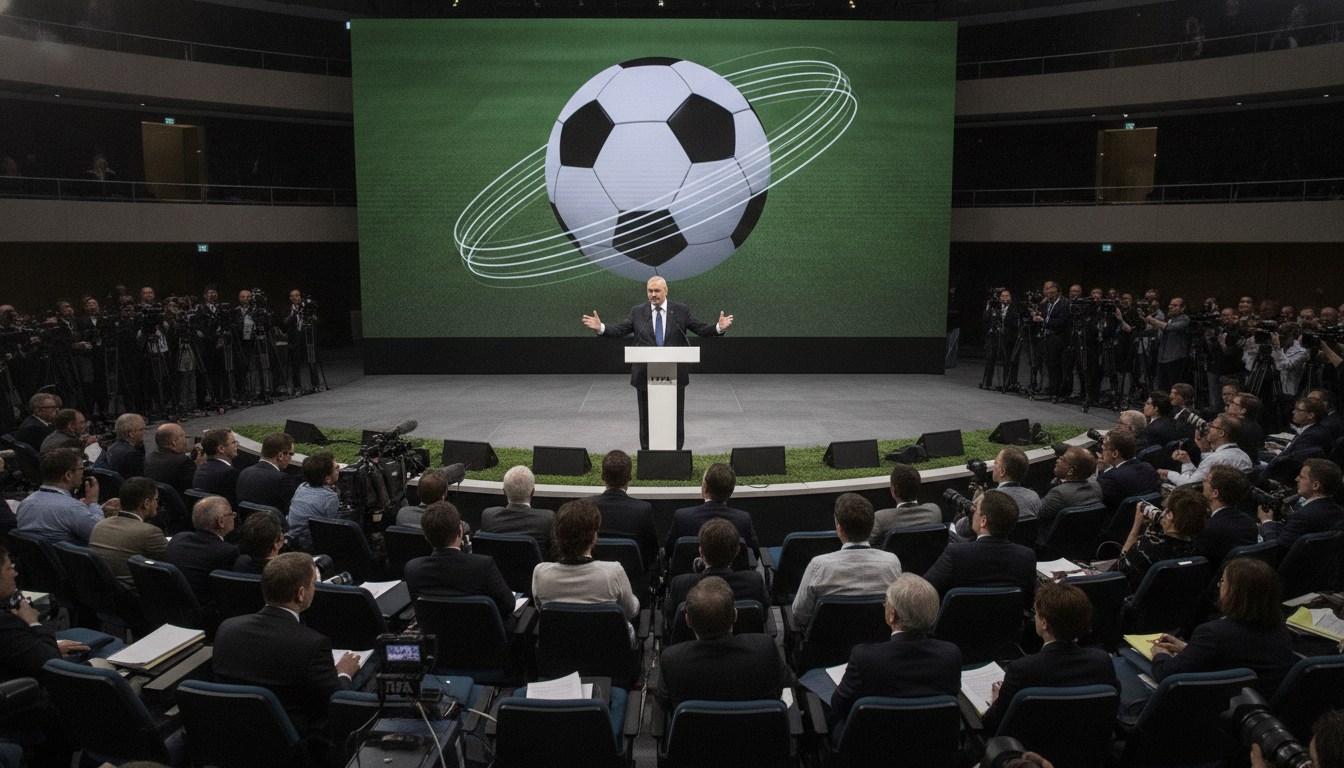
Infantino defends World Cup in open letter, accusing critics of spreading "hate" and falsehoods
Gianni Infantino defends World Cup in an open letter on July 27, 2026, saying critics missed the tournament’s unity, safety and celebration of millions of fans.


Infantino’s open letter and central message
On July 27, 2026, FIFA president Gianni Infantino published an open letter defending the recent World Cup, saying detractors had overlooked the positive moments experienced by fans and players.
Infantino wrote that critics were “so consumed by hate and criticism” that they failed to see what organisers described as a safe, joyful tournament across the United States, Canada and Mexico.
The letter framed the event as a success for inclusion and security and directly challenged media and online narratives that questioned FIFA’s handling of the competition.
Infantino framed his response as a rebuttal to what he described as false rumours spread “behind pens and papers” and on screens, positioning FIFA staff as those working on the ground to deliver the tournament.
He emphasized the absence of major incidents in stadiums and public venues, saying the event delivered “100 per cent safety and security” while celebrating football.
The tone of the letter mixed defence of operational delivery with appeals to the shared experience of millions who attended or watched the matches.
FIFA’s assessment of safety, attendance and atmosphere
FIFA and Infantino highlighted large crowds, high levels of fan engagement and broadly peaceful matchday environments as evidence of tournament success.
Organisers pointed to packed stadiums and a sustained global television audience as signs that the competition resonated with supporters from diverse backgrounds.
Infantino framed those outcomes as proof that the event had met its objectives of bringing people together and showcasing the sport on a continental scale.
Observers noted that such positive assessments are part of FIFA’s broader narrative after staging a multi-country World Cup, where coordination across borders and venues is unprecedented at this scale.
The organisation’s message focused on operational metrics — crowd management, security protocols and transport coordination — rather than more controversial external issues.
FIFA’s public statements stressed that billions of viewers and millions of spectators experienced the tournament’s spectacle without the levels of disorder that some critics predicted.
Criticism over visas, access and conflict-related concerns
Despite FIFA’s defence, the tournament drew scrutiny over access barriers and diplomatic complications, issues Infantino acknowledged indirectly in his response.
Debate centred on U.S. visa restrictions that affected some supporters and officials, creating logistical and reputational challenges for organisers and national associations.
Humanitarian and rights groups, along with journalists, raised questions about teams and individuals from conflict-affected regions and whether tournament arrangements adequately addressed those sensitivities.
Those criticisms argued that operational success in stadiums does not absolve wider political, legal or moral concerns linked to international travel and treatment of affected communities.
Critics also stressed that the experience of fans and delegations could vary widely depending on nationality and administrative obstacles, complicating claims of universal inclusion.
FIFA has said it worked to resolve specific visa issues and co‑operate with host governments, but those disputes remained a focal point for media coverage and public debate.
Media reaction and responses from civil society
The open letter provoked an immediate mix of supportive and critical reactions from media outlets, commentators and civil society organisations.
Some commentators welcomed the emphasis on safety and celebration, while others accused FIFA of downplaying legitimate concerns and diverting attention from unresolved problems.
Advocacy groups called for transparent reviews of disputed incidents and clearer commitments to ensure equal access for all fans and officials in future tournaments.
Media coverage reflected a broader split: outlets focusing on the spectacle and sporting narratives emphasised Spain’s victory and fan culture, while investigative reporters examined visa denials and access issues.
Infantino’s choice to address critics directly underscored the increasingly adversarial dynamic between FIFA and segments of the press over governance and accountability.
Civil society actors urged that discussions about inclusion extend beyond rhetoric and translate into verifiable policy changes and safeguards.
Potential implications for FIFA governance and public trust
Infantino’s public defence raises questions about how FIFA will manage its reputation and stakeholder relationships going forward.
A forceful rebuttal can shore up support among fans who experienced the tournament positively, but it may also harden critics who seek independent scrutiny and concrete remedies.
Rebuilding or sustaining public trust typically requires both clear operational successes and demonstrable responsiveness to the concerns raised by rights groups, governments and media.
Independent reviews, improved transparency around decision-making and open engagement with affected communities are among the steps stakeholders say would address lingering doubts.
For FIFA, balancing celebratory narratives with accountability measures may prove essential as it prepares for future competitions and faces heightened public expectations.
How the governing body handles follow-up inquiries and whether it embraces third-party assessments will shape perceptions of its willingness to learn from controversy.
Next steps and what stakeholders are asking for
National associations, host governments and fan organisations have signalled interest in after-action reports that detail how logistical and diplomatic problems were handled.
Calls for clearer visa protocols, contingency planning for teams from conflict zones and stronger communication channels between organisers and supporters are likely to intensify.
Many stakeholders also want commitments to preserve the positive aspects of the tournament — cross-border collaboration, fan engagement and safety — while addressing unequal access.
FIFA has the opportunity to present a formal account of lessons learned and to outline concrete policy adjustments that respond to specific criticisms.
Observers say that sustained dialogue with independent experts, supporters’ groups and human rights monitors would be an important step toward resolving outstanding issues.
How FIFA integrates those voices into planning processes for future events will be critical to preventing similar disputes and to restoring broader confidence.
Looking ahead, the governing body will need to reconcile its message of operational success with the complex realities outside stadiums that shaped much of the public debate.
Infantino’s letter marks an assertive attempt to control the narrative, but it also opens a wider conversation about governance, fairness and the responsibilities of sport on the global stage.
The coming months are likely to produce further scrutiny, responses from affected parties and, possibly, formal evaluations that will test FIFA’s commitment to transparency and reform.
As public discussion continues, stakeholders on all sides will watch whether promises in words are matched by verifiable actions and whether future tournaments can combine spectacle with demonstrable equity and access.