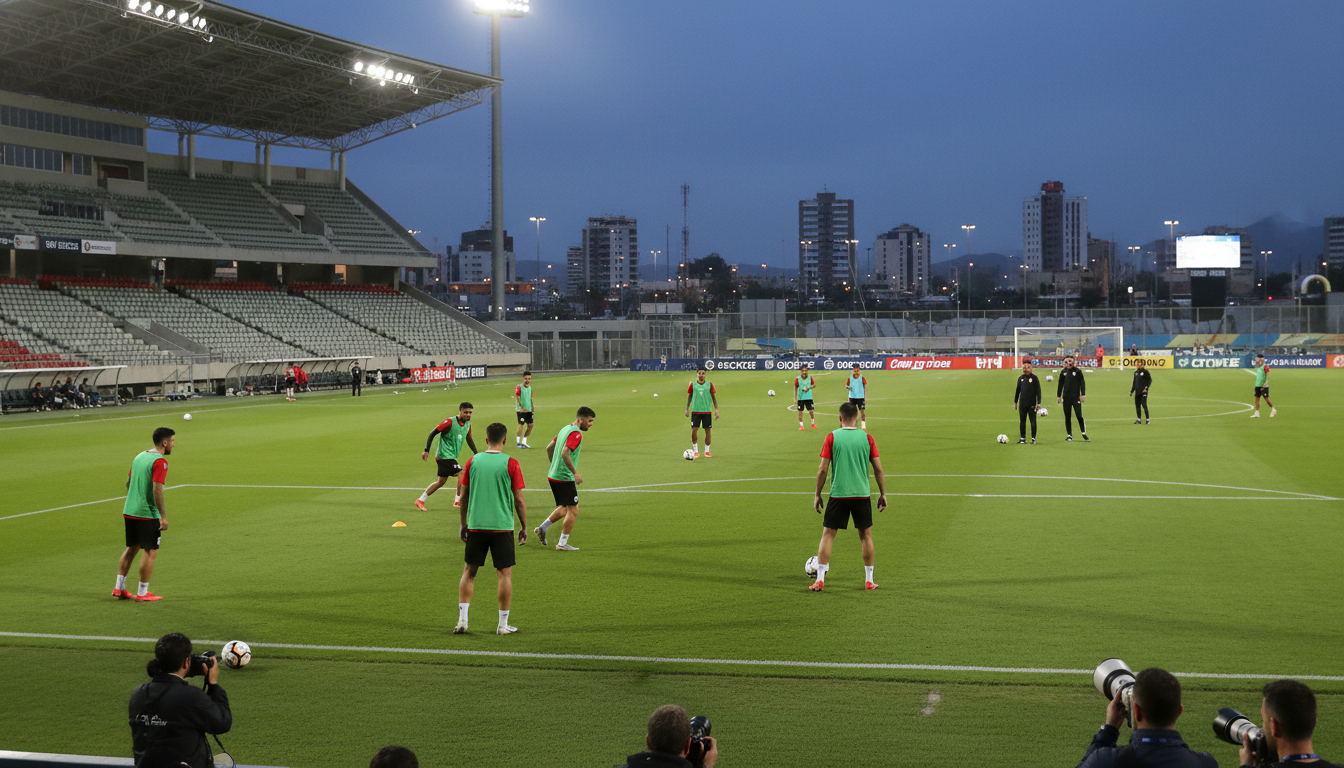
Mexico Agrees to Host Iran World Cup Training Base in Tijuana
Mexico confirms Iran World Cup training base move to Tijuana after FIFA says the U.S. preferred the team not remain overnight on American soil during the tournament.


Mexico accepts Iran training base request
Mexico’s president, Claudia Sheinbaum, confirmed on Monday that her government has agreed to host the Iran World Cup training base in Tijuana for the upcoming tournament. Sheinbaum said a FIFA representative had informed Mexican authorities that the United States preferred the Iranian squad not to stay overnight on U.S. territory, and Mexico accepted the request without objection.
The announcement formalizes a shift from the team’s originally planned summer preparations in the United States to a base just south of San Diego. FIFA also confirmed the relocation to Tijuana, underscoring that the team will continue to play its group-stage matches in U.S. venues.
FIFA confirmation and logistical outline
FIFA’s confirmation of the move clarified that the relocation applies to Iran’s training and overnight accommodations, not the venues for their group matches. Iran is scheduled to play New Zealand in Inglewood on June 15, Belgium in Inglewood on June 21, and Egypt in Seattle on June 26, and will travel to the U.S. for those fixtures while using Tijuana as its summer base.
Moving a national team’s base across an international border requires coordination on transport, security, and training access. Organizers will need to timetable cross-border transfers to align match-day arrivals with immigration processing and training sessions, while ensuring the squad maintains recovery and preparation routines.
Political and security backdrop
The change in base comes amid heightened geopolitical tensions that have influenced logistical decisions around the tournament. Organizers and local authorities in both Mexico and the United States framed the move as a precaution tied to the broader security environment surrounding Iran and its regional interactions.
Sheinbaum said Mexico had no objection to hosting the Iranian team and portrayed the decision as a practical response to FIFA’s concerns. Mexican authorities will now work with FIFA, local security forces, and the Iranian delegation to set protocols for arrivals, training operations, and movement between Tijuana and U.S. match venues.
Operational impacts on the squad and tournament schedule
Using Tijuana as a training base while playing in U.S. stadiums will add travel complexity for Iran’s delegation, but it also offers operational advantages. Tijuana’s proximity to the San Diego area shortens cross-border transfers to southern California venues and allows the team to train in a consistent, controlled environment.
Coaches and support staff will need to factor in border crossing times, customs procedures for equipment, and contingency plans in case of delays. Medical and sports science teams will be tasked with ensuring players’ recovery windows are not compromised by travel, which could affect pre-match preparations for the Inglewood fixtures.
Local and regional responses to the relocation
Tijuana officials welcomed the attention and economic activity a World Cup training base can bring, while stressing readiness to host an international delegation. Local authorities are likely to coordinate with federal agencies to manage security and hospitality requirements, and civic groups have indicated interest in the opportunities the presence of an international team can provide for community engagement.
On the U.S. side, organizers and the host venues in Inglewood and Seattle will maintain responsibilities for match security and stadium operations, even as Iran’s overnight base is in Mexico. The arrangement highlights the multi-jurisdictional cooperation required for an international tournament staged across neighboring countries.
Implications for fans and travel logistics
Fans planning to follow Iran to matches in the United States will face a straightforward match-day experience but should be aware of the team’s base location when considering travel itineraries. Supporters traveling from Tijuana to U.S. venues will need proper travel documents and should allow extra time for border crossings on match days.
Ticket holders and tour operators should monitor official statements from FIFA and national associations for any guidance on fan zones, team training open sessions, and hospitality arrangements. The cross-border setup may present unique fan engagement options in Tijuana and the San Diego region, including training viewings or cultural exchanges organized by local authorities.
Tournament organizers’ next steps
FIFA and local organizing committees must finalize transport schedules, accreditation procedures, and security plans to ensure smooth movement between the team’s base and match venues. Coordination with immigration authorities will be crucial for expedited transfers that respect both Mexican and U.S. regulations.
Organizers are also expected to confirm training schedules, pitch access arrangements, and media protocols so that the Iranian team can prepare effectively while meeting tournament broadcasting and reporting needs. Contingency planning for delays or changes will be part of standard operational briefings ahead of the group-stage fixtures.
The relocation of Iran’s World Cup training base to Tijuana represents a pragmatic, if logistically intricate, solution that keeps the team close to its match venues while addressing concerns raised by tournament stakeholders. Mexico’s willingness to host the squad underscores the cross-border cooperation involved in staging a World Cup across multiple countries.
Preparations now shift from announcement to execution, as FIFA, Mexican authorities, and the Iranian delegation work to translate the decision into day-to-day arrangements that allow the team to focus on competition.