Italy’s World Cup absence exposed by Materazzi as Italy lags on infrastructure and planning
Marco Materazzi says Italy’s World Cup absence exposes failures in planning and infrastructure, urging investment after comparing facilities with Morocco.
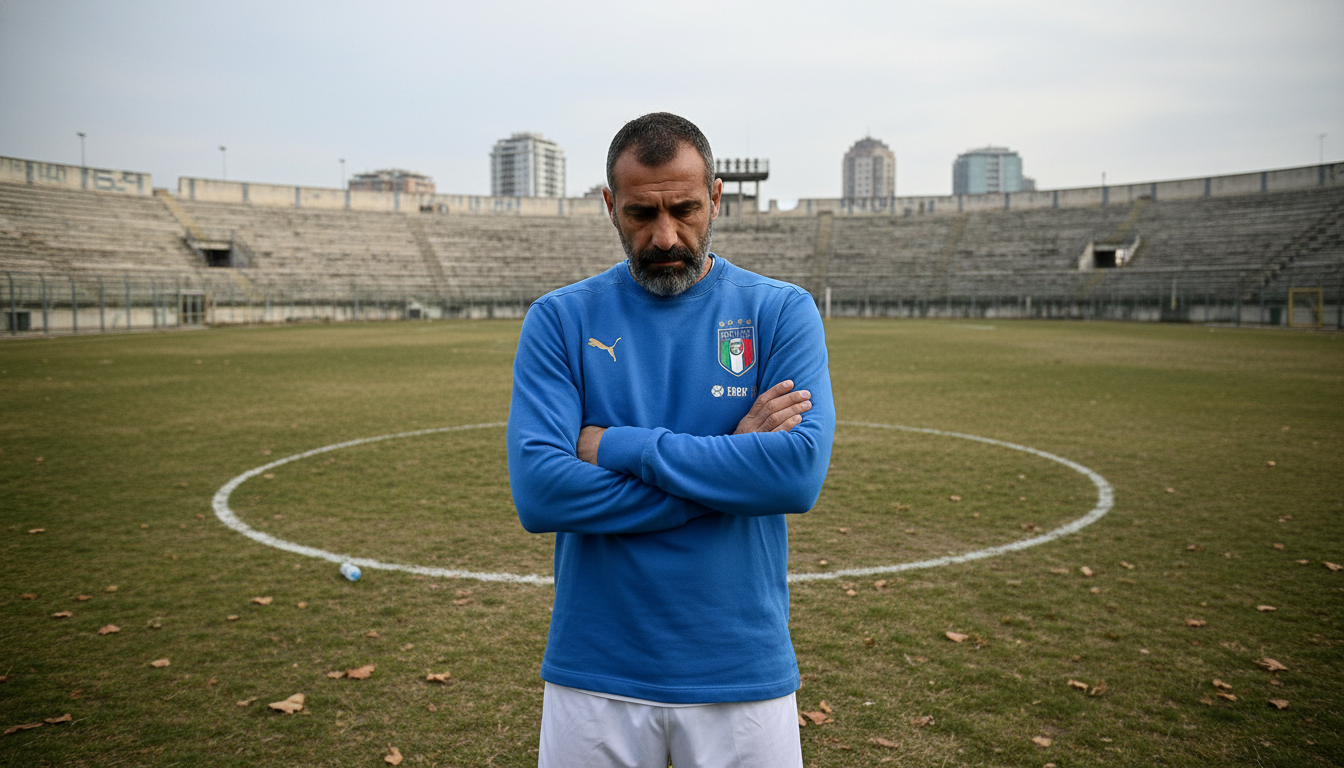
Italy’s World Cup absence has become a focal point for debate after former defender Marco Materazzi said the Azzurri are paying the price for short-term thinking and weak infrastructure. Materazzi, a 2006 World Cup winner, told reporters that rival nations have built systems and facilities that prepare them for sustained success, and that Italy has lagged behind. His comments come after the national team failed to qualify for the 2018 and 2022 tournaments and again missed this year’s expanded 48-team World Cup, a drought prompting fresh scrutiny. The conversation has shifted from squad selection to structural reform across the federation and domestic game.
Materazzi frames the problem as planning and infrastructure failure
Materazzi argued that Italy’s problems run deeper than coaching or player selection and are rooted in a failure to invest in long-term facilities and planning. He contrasted Italy’s situation with leagues and federations in England, Spain and Germany that he said prioritize stadium quality, training centres and strategic development. His assessment focused on the need for forward-looking infrastructure that supports youth development, women’s football and year-round training programmes. That diagnosis has revived calls for a national strategy to restore Italy’s competitiveness on the global stage.
Three World Cup cycles without Italy underlines the scale of the issue
Italy’s absence from three consecutive World Cups — 2018, 2022 and the expanded 2026 tournament — has transformed a sporting disappointment into a national sporting crisis. Missing major tournaments erodes continuity in player development, reduces competitive opportunities for emerging talents, and narrows the scouting window for national team managers. The break in regular global competition also affects commercial revenues and diminishes the allure of the national jersey for younger generations. Federation leaders now face the twin tasks of diagnosing past failures and mapping a path that prevents a repeat.
Materazzi’s comparison with Morocco highlights stark facility differences
During a recent visit to Morocco, Materazzi described facilities he encountered in Rabat and used them as a benchmark for what modern national centres can look like. He described multiple full-size pitches, housing, and dedicated spaces for women’s teams that signalled a coordinated, long-term investment model. The contrast between a concentrated training complex abroad and fragmented domestic facilities at home was a central point of his critique. That comparison has prompted renewed debate in Italy about the value of centralized training hubs versus club-owned resources.
Domestic structural problems: stadiums, club-federation coordination and investment
Observers point to several domestic structural issues that feed into international decline: outdated stadiums, inconsistent investment in youth academies, and limited coordination between clubs and the federation. Unlike some European counterparts where clubs have modern, revenue-generating arenas and consolidated youth pathways, many Italian teams operate with older venues and fragmented developmental setups. The absence of widely accessible, federation-backed training centres makes nationwide talent identification and consistent coaching standards harder to achieve. Addressing those gaps requires both public and private capital as well as strategic alignment among governing bodies.
Impact on player development and the talent pipeline
A stagnant infrastructure has measurable consequences for player development across age groups and for women’s football, an area Materazzi specifically highlighted when noting separate pitches in Morocco. Young players need high-quality surfaces, coaching resources and year-round competitive structures to progress from academy prospects to international-level professionals. When domestic environments are uneven, talented individuals face inconsistent coaching philosophies and fewer elite training hours. The knock-on effect is a national pool that is shallower than it could be, limiting selection choices for national coaches and reducing international competitiveness.
Governance, accountability and the federation’s role
The Italian Football Federation (FIGC) and club leaderships share responsibility for any national decline, and governance reforms are now part of the public conversation. Effective reform typically requires clear accountability, transparent investment plans and measurable benchmarks for progress. The federation can play a convening role by incentivizing infrastructure upgrades, helping fund regional training centres, and coordinating coach education programmes. Success will depend on credible commitments from federations, government agencies and private investors working to a shared timetable rather than ad hoc projects.
Short-term fixes and long-term investment needs
Short-term solutions such as new coaching hires, tactical changes, or player recalls can offer temporary relief but will not erase structural deficiencies. True recovery demands sustained capital investment and strategic planning over multiple four-year cycles so that youth cohorts develop in a consistent system. That means linking stadium modernization projects to community programmes, creating federated centres for women’s and youth football, and setting national targets for coaching qualifications. International examples show that patient, joined-up investment produces deeper talent pools and more resilient national teams.
Italy’s World Cup absence has forced a national conversation about priorities that extend beyond the next coach or the next qualifying campaign. Former players like Materazzi have amplified a message many in Italian football have feared: that neglecting infrastructure and forward planning undermines the game’s future. Rebuilding will require coordinated action by clubs, the federation and public authorities, anchored in clear targets and timelines to restore Italy’s standing on the international stage.