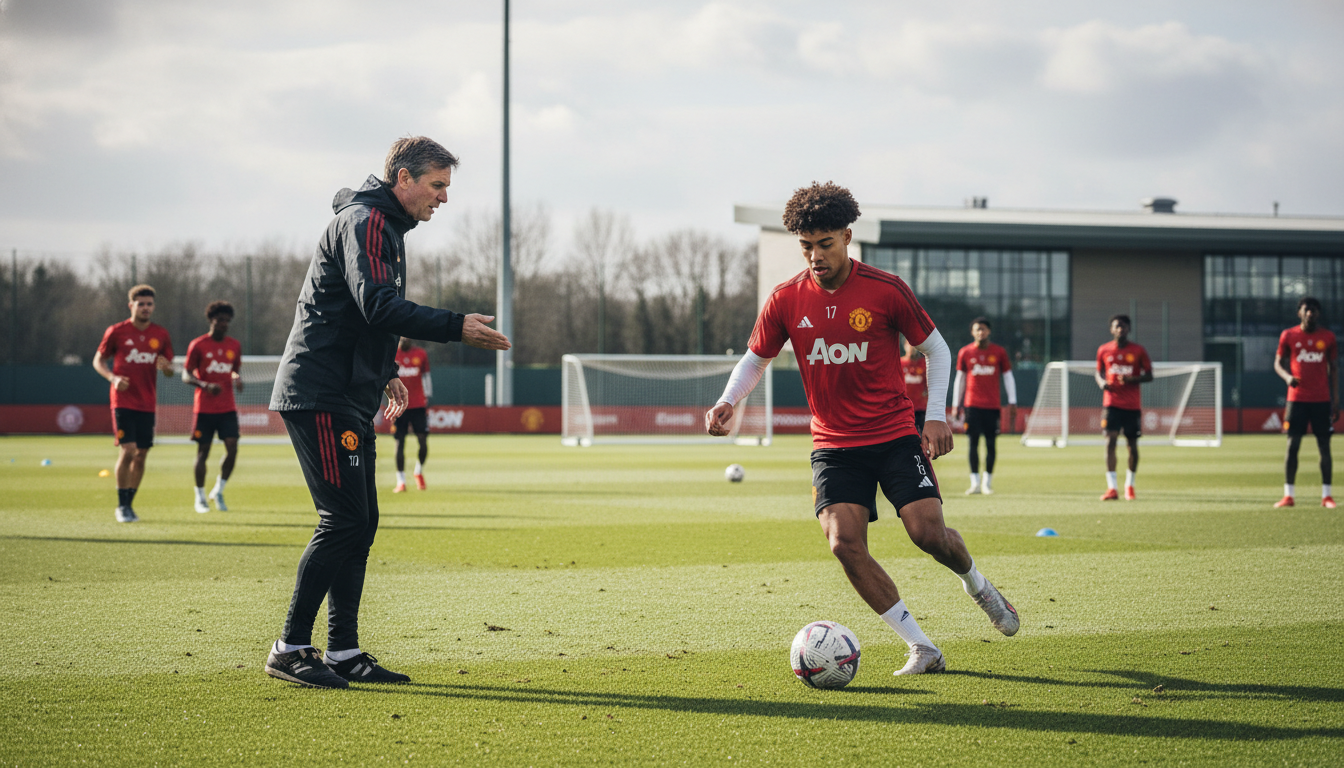
Manchester United prioritise Morgan Rogers as summer signing after Champions League return
Manchester United target Morgan Rogers in their summer rebuild after securing Champions League football; Aston Villa winger’s form, versatility and potential £70m fee examined.


Manchester United have identified Morgan Rogers as their leading transfer target as the club prepares a significant summer rebuild following confirmation of Champions League qualification. The club’s potential new manager, Michael Carrick, is reportedly favoured to take the role beyond the current campaign, and recruitment planners are prioritising players who can contribute immediately at the highest level. Morgan Rogers’ blend of goals, assists and positional flexibility has placed him atop United’s wishlist, with his performances for Aston Villa this season drawing domestic and wider European attention. Any move would hinge on Villa’s willingness to sell, competition from other suitors and a sizeable transfer fee that reflects his Premier League experience.
United’s season outcome and managerial context
Manchester United’s return to the Champions League has reframed the club’s recruitment priorities for the summer transfer window. Qualification restores United’s appeal to top recruits and increases the financial levers available for deals, making a marquee signing more feasible than it would have been without European football. Michael Carrick being considered for permanent managerial duties adds an internal continuity angle that could influence target selection toward players familiar with Premier League demands. The combination of Champions League football and a domestic coaching appointment creates a clear imperative: recruit players who can perform immediately on multiple fronts.
Rogers named top summer priority
Sources indicate Morgan Rogers is the Red Devils’ number one transfer target for the upcoming window, with scouting reports highlighting his technical quality and consistency. United’s interest is driven by the need for attacking reinforcements capable of both creating and finishing chances, and Rogers’ season numbers have placed him among the league’s most effective young attackers. The club’s recruitment team sees Rogers as a player who can slot into several systems and offer tactical flexibility for a side rebuilding around new personnel. While interest from other Premier League clubs has been reported, United’s Champions League status could be decisive in negotiations.
Rogers’ 2025 season and Villa role
This season Morgan Rogers has delivered a strong statistical return, contributing nine goals and six assists across competitions as Aston Villa progressed deep into European competition. His influence for Villa has been notable in both domestic league fixtures and in the club’s run to the Europa League final, where he has operated as a consistent attacking outlet. Villa have relied on his work rate and off-the-ball movement as much as his direct goal contributions, using him to stretch defenses and provide consistent width. Those attributes have made him one of the most discussed young English attackers in the transfer market.
Tactical fit at Old Trafford
Manchester United view Rogers as a multi-positional attacker who can operate on either flank and in a number 10 role, addressing multiple squad needs with a single signing. His ability to play on the left and drift inside offers cover for wide positions while also providing an alternative attacking midfielder option as United consider a long-term successor to Bruno Fernandes. Rogers’ defensive work-rate on the left would suit a manager who demands collective pressing and transitional solidity, while his propensity to cut inside from the right closely matches United’s need for goal-scoring midfielders. Tactical planners see Rogers as a player who could slot into several match-day plans without sacrificing balance.
Transfer valuation and market dynamics
The financial realities of acquiring Rogers are substantial, with market valuations placing him around the £70 million mark and expectations that any fee could exceed that figure. Aston Villa’s bargaining position is strengthened by the player’s age, contract situation and recent form, all of which typically drive up market prices in the current transfer climate. United will also have to navigate interest from other clubs, with reports linking the player to rivals who can offer immediate playing time and competing European football. Negotiations will likely include structured payments, add-ons tied to performance and possible player-plus-cash scenarios to bridge valuation gaps.
Potential obstacles and Villa’s standpoint
Aston Villa’s stance will be pivotal in any potential deal, as the club balances competitive ambitions with commercial valuation of its assets. Villa have benefited from Rogers’ output this season and may be reluctant to sell unless an offer matches their valuation and allows for a suitable replacement to be secured. Additionally, the Europa League final and any residual domestic targets could influence Villa’s decision-making, as sporting objectives sometimes outweigh purely financial incentives. The presence of competing suitors will increase the likelihood of a bidding war, but United’s Champions League status could give them a persuasive edge in discussions.
What signing Rogers would mean for United’s squad balance
Acquiring Morgan Rogers would address short-term and long-term needs for Manchester United, particularly in attacking midfield depth and wing coverage. The signing would relieve pressure on existing forwards and midfielders by offering rotation options across multiple competitions, including the Champions League. Rogers’ Premier League experience reduces the adaptation risk often associated with foreign recruits, which is valuable for a squad entering a demanding European campaign. Beyond immediate on-field impact, the transfer would signal United’s intent to invest in young, British talent capable of developing into core long-term contributors.
A potential move for Morgan Rogers also raises questions about how the club would manage existing assets and tactical identity, from squad numbers and starting roles to the balance between youth and experience. Decisions will need to be made on whether Rogers would be integrated as a starter or phased in as rotation cover, and how his arrival would affect players currently occupying wide and attacking midfield positions. The club’s sporting directors and coaching staff will have to align on a plan that preserves competitive momentum while allowing new signings to grow within United’s system.
Closing negotiations are likely to involve multiple stakeholders, including agents, club executives and the player himself, who must weigh personal development against competitive opportunities. For Rogers, the prospect of Champions League football with Manchester United presents a compelling case for advancement, though it competes with other potential destinations and the security of his current role at Aston Villa. Any eventual transfer will reflect a complex mix of sporting ambition, financial negotiation and timing, with the summer window providing the arena for a decisive outcome.
Manchester United’s pursuit of Morgan Rogers encapsulates the wider rebuilding challenge facing the club: assemble a squad capable of competing domestically and in Europe while managing financial constraints and squad harmony. The coming weeks should reveal whether United can convert interest into agreement and whether Aston Villa will sanction a high-value departure. Regardless of the outcome, Rogers’ emergence as a top target underscores the premium placed on versatile, homegrown talent in the modern transfer market.