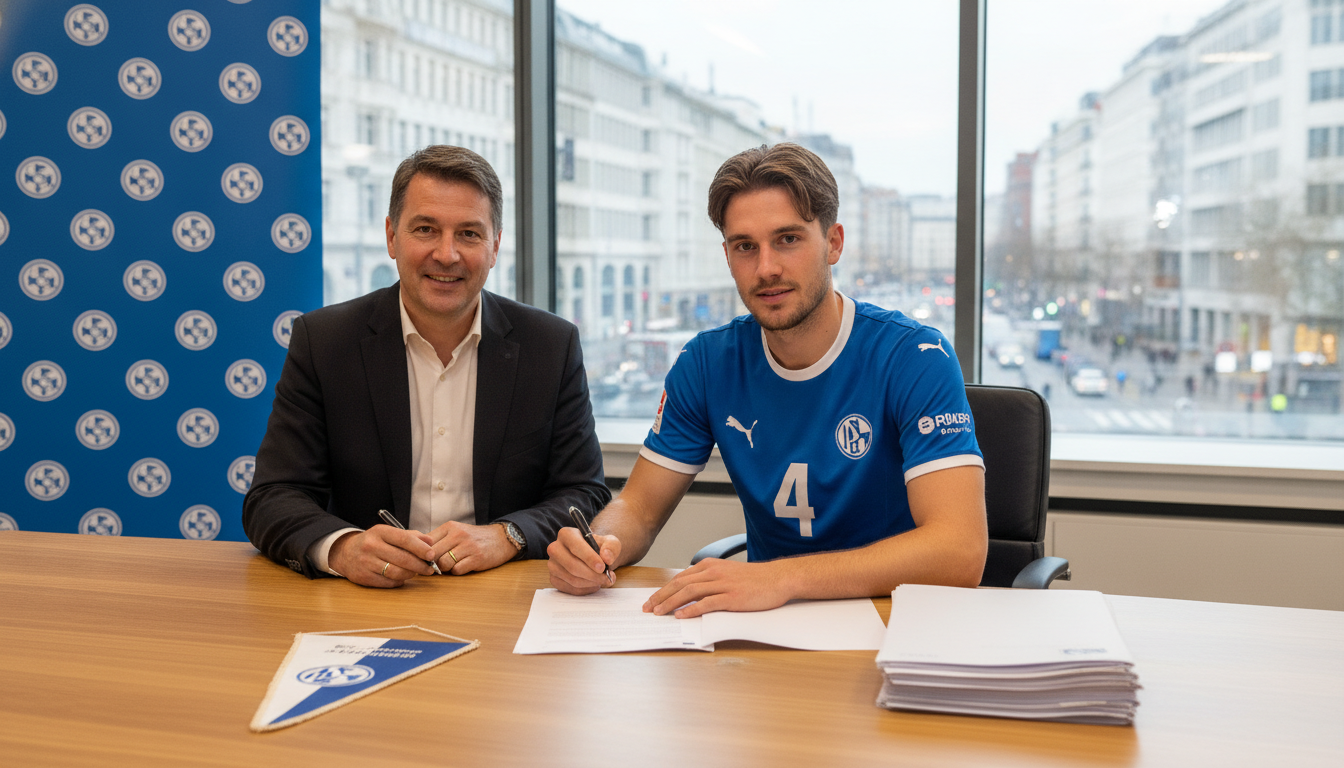
Maximilian Wöber Signs for Schalke 04 in One-Year Deal to Revive Bundesliga Career
Maximilian Wöber joins Schalke 04 on a one-year, performance-based deal after leaving Leeds, aiming to overcome injuries and reinvigorate his Bundesliga career.


Maximilian Wöber completed a rapid transfer to Schalke 04 after receiving late permission to join the club’s Austrian training camp following the termination of his Leeds United contract. The 28-year-old arrived in Neustift on short notice and has signed a one-year deal with appearance-triggered extensions, a structure designed to protect both player and club amid recent fitness concerns. Schalke secured Wöber on a free transfer, allowing the club to allocate limited resources elsewhere while adding an experienced left-footed defender to their squad.
Wöber’s Swift Arrival and Contract Details
After Leeds agreed to part ways with Wöber, Schalke moved quickly to bring him into their pre-season set-up, reflecting both urgency and opportunity on all sides. The contract is short-term but performance-linked, with a clause that can extend the deal if specified appearance targets are met. This arrangement shifts immediate risk away from Schalke while giving Wöber a clear pathway to earn a longer commitment through consistent match availability.
Schalke framed the signing as a low-cost, high-upside addition to their defensive options, with the club citing flexibility in formation as one reason for the move. For Wöber, the deal represents a chance to return to the Bundesliga stage where he previously played on loan and at other clubs, a setting he has described as familiar and professionally rewarding. The timing—arriving mid-preseason after a sudden call—highlights how quickly transfer dynamics can change when contracts are mutually terminated.
Injury History and Fitness Plan
Wöber’s recent seasons have been interrupted by injuries that limited his appearances and hampered continuity, most notably during his time at Werder Bremen last season. He has publicly described the last period as difficult, noting a mix of bad luck and decisions that affected his fitness and playing time. That history is central to Schalke’s conditional contract terms and to expectations for how the club and player will manage his workload.
The defender emphasized that he trained throughout the summer and believes he is in the best condition he has been for two years, while also acknowledging the need for a managed return to full match fitness. His immediate objective is not to start every game but to reach a point within four to six weeks where there is no doubt about his capacity to complete 90 minutes. Schalke’s medical and coaching teams will be tasked with monitoring progress and integrating him into match routines in a way that minimises risk.
Tactical Fit: Left-Footed Versatility
Wöber arrives as a left-footed centre-back who can operate in both a back three and a four, offering Schalke tactical flexibility that fits their proposed playing style. His experience at clubs that favour high pressing and vertical defending gives him familiarity with the kind of "defend forward" philosophy Schalke have described during talks with the player. That profile makes him a natural competitor for the left-sided centre-back role, where range of passing and comfort on the ball are valued.
The Austrian’s preference for playing on the left and his ability to step into midfield with forward-oriented defending complement a system that seeks collective pressure and coordinated movement. Schalke can use him as a direct starter if fitness allows, or deploy him progressively while maintaining defensive balance. Beyond his positional attributes, Wöber projects as a calming presence on the left side of the backline who can help transition possession into attack.
Financial Context: Free Transfer and Squad Strategy
The free transfer model for Wöber allowed Schalke to conserve scarce funds and create further payroll headroom to address other priorities, a factor the club has cited internally. By signing a player without a transfer fee and using performance triggers for extensions, Schalke mitigated both immediate financial outlay and long-term wage exposure. That strategy reportedly freed budget space that facilitated other roster moves during the window.
For a club balancing promotion expectations, competitive demands and a constrained transfer budget, the deal reflects a pragmatic approach: secure experienced reinforcements while preserving the ability to invest later. Wöber’s signing also underscores Schalke’s willingness to bet on players with undoubted quality who need careful management to return to peak levels. The financial prudence in the arrangement makes the move low-risk and potentially high-reward if Wöber regains regular fitness.
Locker Room Influence and Leadership Role
Beyond his on-field capabilities, Wöber has signalled ambitions to contribute as a leader within the squad, offering experience gathered across several leagues and high-level competitions. His previous stints in the Bundesliga, plus a substantial spell at Red Bull Salzburg earlier in his career, have given him exposure to different tactical systems and dressing-room environments. That background can be valuable for a Schalke group seeking cohesion and competitive drive.
Coaches often value defenders who can guide young teammates and maintain organisational standards during pressure moments, and Wöber himself mentioned his intent to be a positive presence in the locker room. Whether that influence manifests through vocal leadership, training-ground example or tactical communication, it adds non-technical value to his signing. For a club aiming to blend youth and experience, such attributes can be as important as matchday performances.
Expectations from Media and Fans
German football journalists have largely framed Wöber as a smart, low-cost acquisition with the potential to rank among the season’s better signings if he stays healthy and produces consistent displays. Fans have responded with cautious optimism, mindful of the player’s pedigree but aware of the injury history that has interrupted his career path. Media narratives now centre on a straightforward proposition: if Wöber returns to the form that made him a regular in previous Bundesliga campaigns, Schalke will have gained significant defensive quality.
Public discussion also notes the timing of the deal and how it dovetails with other moves at the club, viewing the transfer as part of a broader squad recalibration ahead of the new season. Analysts will watch the early weeks closely for signals about his conditioning, adaptability to coaching demands and how quickly he builds on-field rapport with his centre-back partners. Those early impressions are likely to shape season-long expectations for both player and club.
Path Forward: Objectives for 2026/27
Wöber’s immediate targets are clear: regain full match fitness, secure regular minutes, and trigger the appearance-based contract extension that would provide longer-term stability. On a tactical level he must demonstrate adaptability as Schalke evaluates formations and personnel during pre-season and the opening rounds of competitive fixtures. Meeting those milestones will determine whether the move is judged a short-term stopgap or the start of a meaningful resurgence.
For Schalke, the objective is to integrate Wöber without disrupting their broader tactical identity, while balancing his minutes to avoid recurrence of injuries. The club will likely map out a phased return plan with thresholds for training intensity and match involvement. If executed successfully, the partnership could yield immediate defensive improvement and contribute to sustained competitiveness over the 2026/27 campaign.
Maximilian Wöber’s arrival at Schalke 04 is a carefully judged gamble from both sides: a veteran defender seeking to restore momentum and a club aiming to reinforce its back line without overextending financially. The coming weeks will reveal whether that gamble pays off, but the terms of his contract, his stated fitness regimen and Schalke’s tactical needs have created a clear, measurable framework for success.