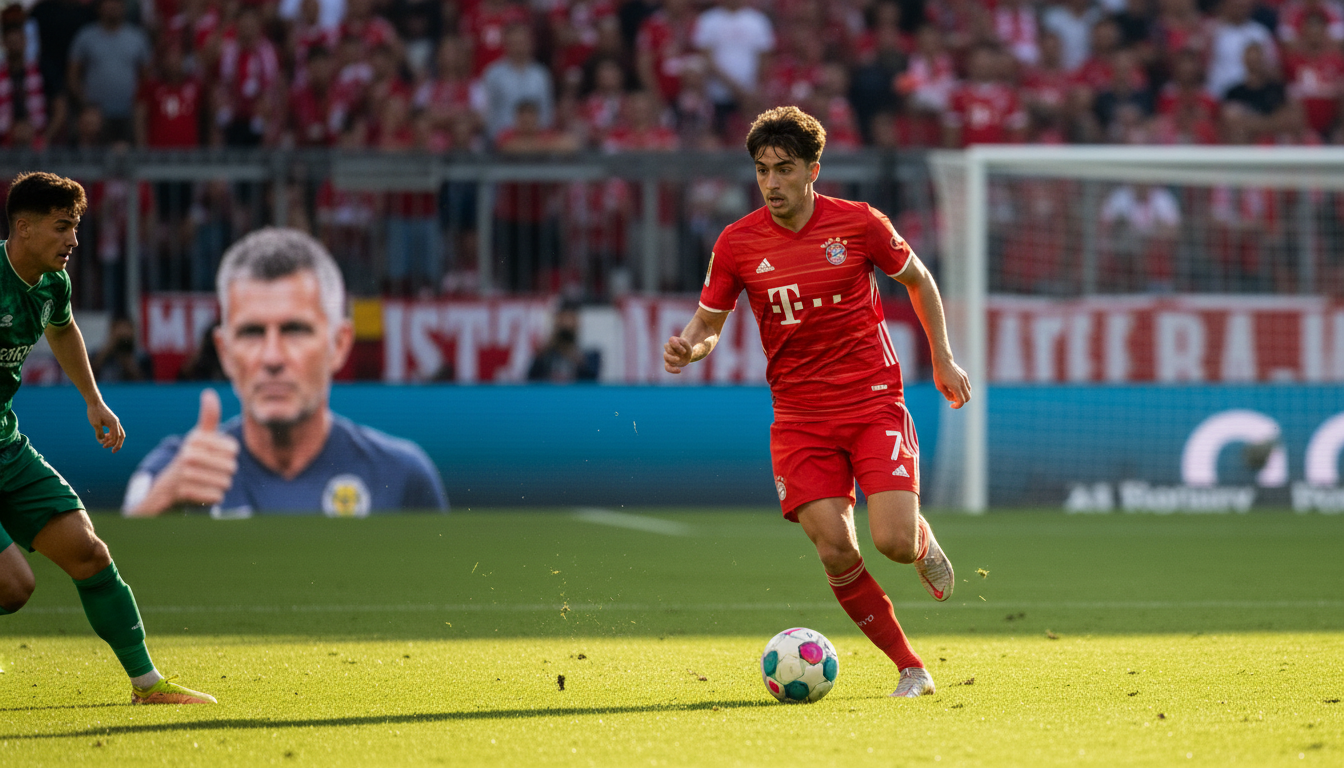
Mark Hateley: Premier League exports to Bayern Munich are flourishing as Olise and Kane adapt
Premier League exports to Bayern Munich are under the spotlight after former England international Mark Hateley praised Michael Olise’s adaptation and backed Harry Kane’s chances of major honours in a recent interview.


Hateley outlines Olise’s rapid growth at Bayern
Mark Hateley said Michael Olise has continued to score and to shoulder the less glamorous work that helps teams win, describing the winger’s technical quality and work ethic as clear signs of progress. He suggested Olise moved at the right moment to a club where senior figures and the environment would accelerate his development.
Hateley emphasized the importance of mentoring at Bayern, arguing that young players benefit when they respect and learn from established stars. He framed Olise’s transfer as a choice that could make the player settle quickly and position him for domestic and European success.
Kane’s Ballon d’Or prospects and longevity
On Harry Kane, Hateley offered a strong endorsement that the striker remains among the game’s elite and capable of competing for individual honours such as the Ballon d’Or. He pointed to Kane’s goal output, intelligence, and adaptability as reasons why the forward can sustain elite performance even as he passes his early thirties.
Hateley also drew parallels with other forwards who adapted their game after injuries, noting that smart, fit players can extend their prime by evolving their roles. He suggested Bayern’s structure and support network would help Kane remain a central figure for years and that contract length would be a matter for the player and the club to decide.
Why Bayern attracts Premier League talent
Hateley’s comments underline broader trends that make Bayern Munich an attractive destination for players from the Premier League. He highlighted Bayern’s winning culture, the presence of experienced ex-players around the club, and a playing environment that integrates youth with senior leadership.
The appeal is not purely financial or reputational; it is also professional development, according to Hateley. He argued that ambitious players see Bayern as a place to win trophies and to refine tactical and mental aspects of their game in a highly competitive setting.
Player agency, timing and career choices
A recurring theme in Hateley’s remarks was the role of personal agency in transfer decisions, particularly for younger players. He urged young professionals to take ownership of their careers, to resist being overly led by external pressures, and to say “no” when offers do not align with long-term objectives.
Hateley framed both Olise’s and Kane’s moves as well-timed choices that match each player’s stage of career ambition. He suggested that leaving the Premier League can be a logical step for players seeking silverware and new challenges rather than an abandonment of English football.
Tactical fit and Bayern’s integration model
Hateley described Bayern’s current operating model as one that fosters on-field cohesion and off-field mentorship, which he believes helps newly arrived players adapt quickly. He noted that when young players can observe and emulate senior professionals, integration accelerates and performance stabilizes.
That tactical and cultural fit matters for strikers and wide players alike, Hateley argued, because it allows individuals to exploit space, benefit from teammates’ movement, and sharpen decision-making in high-pressure matches. According to him, Bayern’s environment can turn talented recruits into more complete players.
Implications for English clubs and future transfers
Hateley’s assessment raises questions for Premier League clubs about talent retention and the timing of offers to emerging stars. He suggested that clubs must combine competitive projects with clear pathways to silverware if they aim to keep their top performers long-term.
At the same time, Hateley acknowledged that player ambition will sometimes outpace what a selling club can offer, prompting moves to continental powers like Bayern. He warned that recruitment models based solely on age profiles or presumed decline can miss the capacity of elite professionals to adapt and remain decisive.
Bayern’s recruitment of high-profile Premier League figures highlights a strategic dynamic in modern football where career management, mentorship, and club culture influence transfer markets as much as money and prestige.
What this means for the national team and elite competition
Hateley’s observations also carry implications for international football, particularly England’s talent pool. He argued that players who succeed in varied environments—domestic leagues and continental powerhouses—return to national setups with broadened tactical understanding and enhanced experience.
That diversification of experience can benefit national coaches seeking adaptable, mentally robust players for major tournaments. Hateley implied that moves to clubs like Bayern can contribute to player maturity in ways that ultimately help both club and country.
Transfers to dominant continental teams can also recalibrate competitive balance in Europe, pushing other elite clubs to rethink development strategies and squad construction. Hateley’s comments frame these moves as part of a larger shift toward cross-border career pathways for top talent.
The former international’s remarks amount to a strong endorsement of the pathway some Premier League players are choosing, and they underscore Bayern Munich’s continuing pull for players aiming to combine individual growth with team success.