Namibia Afcon 2028 bid hinges on government pledge for stadium upgrades
Namibia Afcon 2028 bid depends on government commitment as NFA presses for stadium upgrades and funding to meet CAF’s co-hosting requirements by 2028.

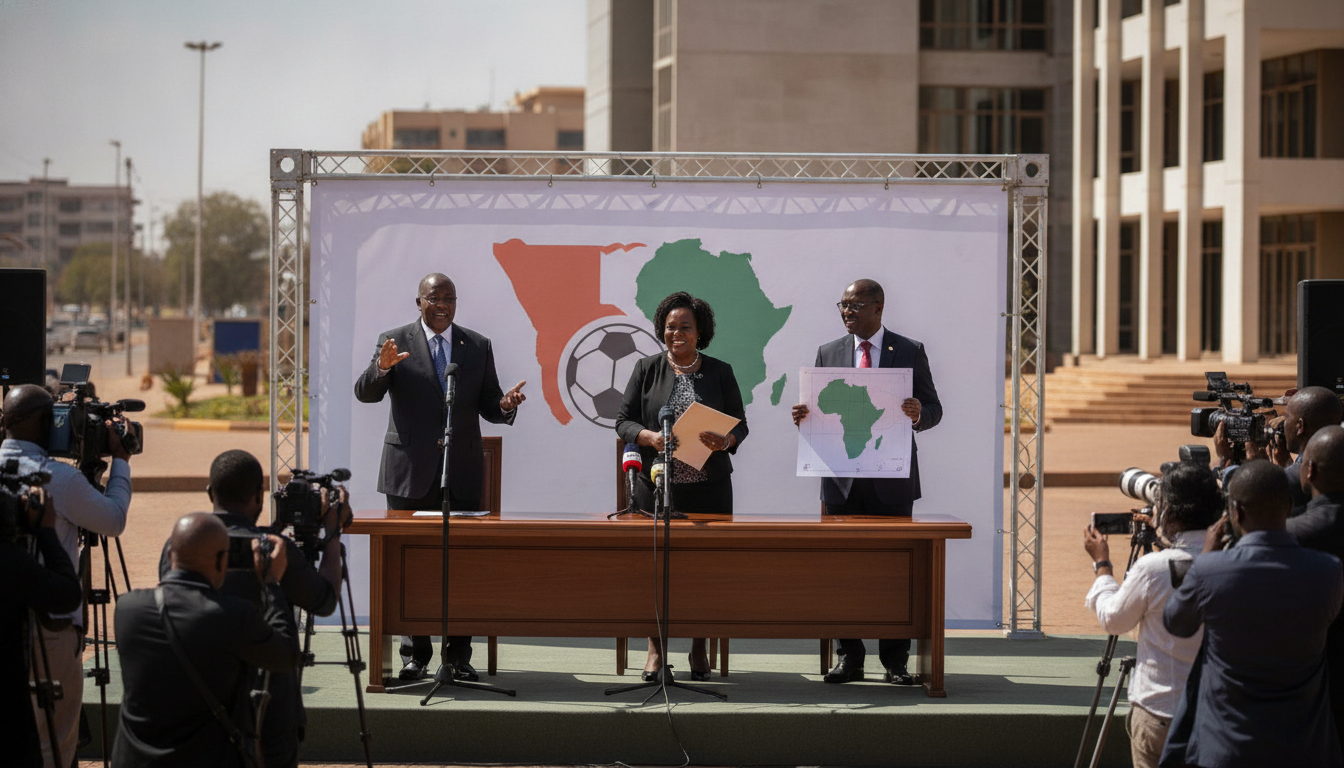
The Namibian Football Association (NFA) has said its ability to join a southern African co-hosting bid for the 2028 Africa Cup of Nations rests squarely on formal government backing. NFA secretary general Mabos Vries told reporters the association needs an official go‑ahead and concrete assurances that stadium infrastructure will be ready by the tournament. The development follows an invitation from the Confederation of African Football (CAF) to Namibia to take part in a multi‑country bid alongside South Africa, Botswana and Zimbabwe.
Government backing now central to the bid
The NFA has framed government endorsement as the prerequisite for moving from aspiration to implementation. Vries emphasized that without a clear, signed commitment the association cannot allocate resources or begin the sequence of delivery tasks required for a major tournament. This stance signals that Namibia’s role in a regional bid will be conditional rather than assumed, with the federation seeking formal guarantees before entering binding preparations.
Officials say the endorsement sought is not merely political rhetoric but includes firm timelines and budgetary pledges tied to stadium delivery and related works. The NFA is distinguishing between routine operational funding for domestic football and the separate, capital‑intensive investments required to host Afcon matches. That distinction underlines the scale and different financing model implicit in staging an international tournament.
Stadium readiness and Independence Stadium upgrade
A central hurdle for Namibia remains the availability of at least one CAF‑compliant stadium by the 2028 deadline. The association acknowledges that the country meets several CAF infrastructure criteria, but it lacks a primary venue that currently satisfies international hosting standards. Ensuring a suitable stadium in time will be the single most visible—and costly—component of any successful co‑host bid.
The government has already flagged investment in Independence Stadium as part of broader sport facility upgrades, setting aside specific sums in the current fiscal planning. The Ministry of Education, Innovation, Youth, Sport, Arts and Culture allocated N$60 million for work at Independence Stadium and a further N$23.6 million to support construction and rehabilitation across regional sports sites. Those line items indicate planning momentum, but federation leaders say the scale of work and the assurance of delivery remain open questions.
CAF invitation and the four‑nation southern bid
CAF’s invitation to Namibia to join a proposed four‑country southern African bid has reshaped the conversation about regional cooperation and collective hosting capacity. Under the plan, South Africa, Botswana and Zimbabwe would share hosting duties, and Namibia’s inclusion would broaden the tournament’s footprint across the sub‑region. The model is consistent with recent trends toward multi‑nation tournaments that distribute matches and costs among several partners.
For Namibia, joining a regional bid offers clear upside: international exposure, infrastructure improvements, and potential boosts to tourism and local businesses. Yet federation officials caution that the practicalities of co‑hosting—scheduling, transport links, accommodation capacity, and matchday logistics—must be balanced against what each partner can realistically deliver. CAF’s requirements set a baseline that all prospective hosts must meet to be awarded matches.
Financial constraints and political criticism over funding cuts
Political debate has entered the public domain after opposition figures warned that reductions in routine sport funding could weaken Namibia’s bid prospects. Shadow minister for sport Bertha Nghifikwa‑Kambonde said cuts to financial support for national sport bodies risk undermining operational stability at the very time long‑term investments are being sought. Critics argue that inconsistent funding sends mixed signals about the government’s priority for sport development and its readiness to underwrite a high‑profile international event.
NFA officials maintain that operational budgets for everyday football administration are separate from capital projects for hosting Afcon, but they accept that a credible bid must be supported by steady institutional funding. The federation says sustained resourcing is necessary to sustain national teams, maintain training programs and ensure that administrative systems can meet the elevated demands of tournament hosting. Any gap in these areas, critics warn, could complicate Namibia’s ability to demonstrate readiness to CAF and to partner nations.
Timeline, requirements and practical next steps
CAF’s timetable for member associations to firm up co‑host proposals means action must be taken in the near term to keep Namibia’s inclusion on the table. The NFA describes the Afcon project as a medium‑ to long‑term investment, but the proximity of 2028 compresses planning windows for design, procurement and construction. Securing a formal government commitment is the immediate priority, followed by technical assessments and an implementation plan that sequences upgrades to meet CAF inspections and matchday standards.
Practical next steps outlined by federation sources include a detailed stadium refurbishment plan, confirmation of financing sources, a logistical audit of transport and accommodation capacity, and engagement with private sector partners. The NFA will also need to present risk mitigation measures, legacy plans for post‑tournament use of facilities, and evidence that local organising structures can operate to international standards. These components will form the backbone of any bid dossier submitted to CAF and to prospective co‑hosts.
Potential economic and sporting legacy
If delivered, hosting Afcon matches would create a catalyst for infrastructure upgrades that extend beyond football, including transport improvements and hospitality sector investment. Economists and sport planners typically point to job creation during construction phases, increased tourism during tournaments, and the longer‑term benefits of enhanced sporting facilities for youth development. For Namibia, the strategic question is whether the short‑term costs of stadium and facility upgrades can be justified by measurable long‑term gains.
The federation argues that a successful bid would bolster the country’s sporting profile and provide a platform for national teams to compete on home soil in the future. However, stakeholders also caution that past tournament hosting experiences in the region show the need for disciplined project management to avoid cost overruns and facilities that underperform after the event. Clear legacy planning, community access guarantees and transparent procurement practices will be critical to maximizing public value.
Namibia’s Afcon 2028 prospects now hinge on a narrow window of political and financial decisions, with the NFA urging a formal, timebound commitment from government to transform planning into action. The federation and its political critics agree on one point: delivering a credible co‑host bid will require both capital investment and stable operational support in the coming years.