Super Falcons’ Madugu Defends Tactics After Shock 3-2 WAFCON Loss to Malawi
Super Falcons coach Justin Madugu defends his tactical choices after a stunning 3-2 WAFCON defeat to Malawi, saying selection and positional shifts were justified as Nigeria prepare for a crucial Group C meeting with Zambia.


The Super Falcons arrived at the Women’s Africa Cup of Nations as reigning champions, but their campaign suffered an early and unexpected blow when Malawi completed a 3-2 upset that has reverberated across the tournament. Coach Justin Madugu accepted overall responsibility for the result while pushing back against criticism aimed at his selection and the deployment of players outside their customary positions. The loss leaves Nigeria under significant pressure in Group C and raises immediate tactical and personnel questions ahead of their next fixture.
Madugu defends starting XI and positional moves
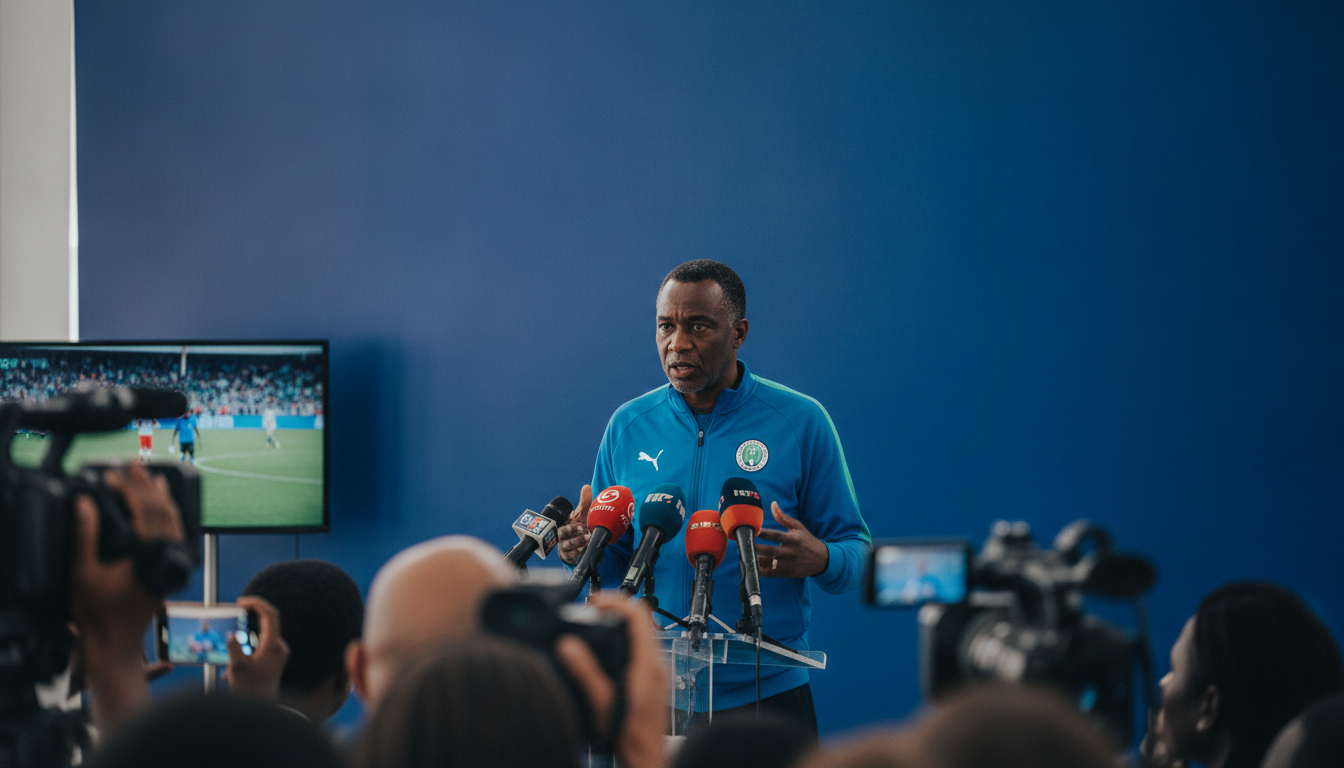
Madugu told reporters after the match that criticism in the wake of defeat is predictable, and that using players in unfamiliar roles was a considered response to squad circumstances. He pointed to past instances in which positional switches produced positive outcomes and argued that the decisions made against Malawi were grounded in necessity, not gamble. The coach emphasized that several squad members possess the versatility to adapt when required, and that such flexibility formed part of his selection calculus.
Madugu also stressed that defensive availability influenced the choice to field Michelle Alozie at left-back, rather than any tactical oversight. He insisted Alozie and others gave full commitment and performed to the best of their ability under the circumstances. According to the coach, the breakdowns that led to goals were not the direct result of players being deployed out of position.
Questions over Michelle Alozie and defensive structure
A central talking point after the game was Alozie’s appearance on the left flank, a role that drew scrutiny from supporters and pundits who questioned whether the change destabilized Nigeria’s backline. Observers argued that shifting established players around can create communication gaps and positional uncertainty, especially against opponents prepared to exploit such openings. Madugu, however, rejected the premise that the positional switch was responsible for the conceded goals and urged critics to consider the broader context of the team’s defensive options.
Tactical analysts will note that when a team alters its defensive spine, the collective understanding of pressing triggers, recovery runs and overlapping responsibilities can be affected. Nigeria’s backline conceded three times in the fixture, and while individual errors were visible, the coach maintained these were not tied solely to who was positioned where. The debate now centers on whether the Super Falcons have adequate depth at full-back and centre-back to sustain the intensity of a continental tournament.
Accountability and lessons for the technical crew
Madugu did not shy away from accepting responsibility for the result, acknowledging that the technical staff must assess and learn from the match’s shortcomings. He framed the defeat as a learning moment rather than a crisis, but conceded that the team must respond promptly to protect their title ambitions. The coach said the technical crew would return to their review work immediately, identifying tactical and executional errors to address in training ahead of the Zambia game.
Internally, the staff face rapid decisions on tactical tweaks, rotation and possible changes to the starting lineup if defensive frailties are to be remedied. For a tournament with a tight schedule, the margin for error is slim and the window to correct course is narrow. Madugu’s acknowledgment of responsibility came with a promise to “get it right” in subsequent fixtures, signalling a pragmatic focus on fixes rather than public recrimination.
Implications for Group C and the looming clash with Zambia
Nigeria’s defeat reshapes the dynamics of Group C, placing added emphasis on the upcoming fixture against Zambia as the Super Falcons attempt to stabilize their campaign. A loss or draw could significantly complicate qualification prospects and increase pressure on selection decisions for remaining matches. The result also empowers opponents in the group who will see vulnerability and may alter how they prepare to face Nigeria.
Zambia presents a clear next test, and Madugu has signalled the need for an immediate response to prevent the upset from defining Nigeria’s tournament. The coach must balance the need to restore defensive solidity with maintaining attacking cohesion, as the Super Falcons possess potent forward options that have won them matches in the past. How the manager manages substitutions, set-piece assignments and match tempo against Zambia will be watched closely by supporters and media alike.
Praise for Malawi and evidence of continental growth
Madugu was measured in his praise for Malawi, describing their victory as a reflection of sustained preparation and growing competitiveness in African women’s football. He noted that regular competition within regional platforms such as COSAFA has helped teams like Malawi improve their cohesion and match sharpness. The coach acknowledged that every nation reaching the WAFCON merits respect and that surprise results are becoming less rare as the overall standard rises.
Malawi’s performance underlined the tournament’s evolving landscape, where debutant teams can exploit momentum and tactical discipline to upset established powers. The result is likely to be studied as a case of how improved structures and competitive calendars across regions are narrowing historical gaps. Madugu’s comments framed the loss not simply as a failure by Nigeria but as part of a broader continental trend toward greater parity.
Immediate tactical priorities and squad management
In the short term the Super Falcons must shore up defensive coordination, sharpen transitional moments and ensure clearer role definitions within the backline. Training sessions are expected to focus on defensive shape, set-piece organization and scenarios that replicate the pressing patterns encountered against Malawi. Madugu will also have to evaluate whether personnel shifts are sustainable or whether re-establishing a settled back four is the fastest route back to form.
Beyond the immediate tactical adjustments, the coaching staff must manage squad morale and communication, key elements when criticism multiplies following an unexpected loss. Restoring confidence in the group will depend on transparent messaging from the technical team and visible improvement in match rehearsals. The next 72 hours are crucial for tactical clarity and for embedding any changes before the match against Zambia.
Nigeria’s supporters and football stakeholders will be watching for signs of adaptation, including whether Madugu alters his preferred system or doubles down on the versatile approach that he says has served the side well in past tournaments. The balance between flexibility and stability will likely define selection debates across media platforms up to kickoff.
The Super Falcons now face the task of converting lessons into performance, with one result left between them and a rapidly changing Group C landscape. The pressure is tangible, but the squad retains experienced players and technical resources capable of responding, should the coaching staff identify the correct combination of personnel and tactics.