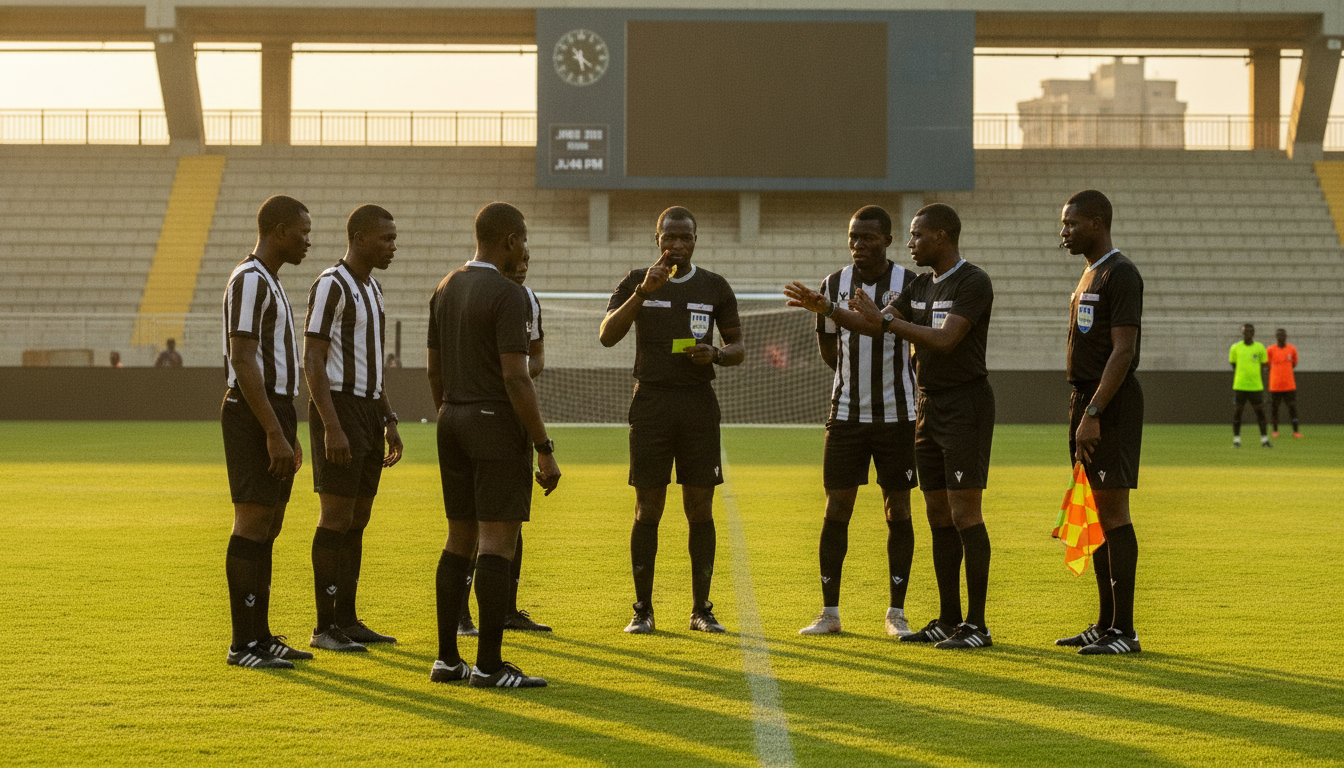
2026 FIFA Member Association Course Boosts Nigerian Elite Referees Ahead of World Cup Rule Changes
Nigeria concludes the 2026 FIFA Member Association Course in Abuja, updating elite referees on Laws of the Game amendments and implementation from July 1.


Course ends in Abuja after two-week programme
The Nigeria Football Federation confirmed the conclusion of the 2026 FIFA Member Association Course for elite referees in Abuja. The two-week programme ran from 7th to 19th June 2026 and focused on raising officiating standards across multiple formats.
FIFA representatives were present throughout the programme to brief officials on recently approved amendments to the Laws of the Game. Those amendments are already being trialed at the 2026 FIFA World Cup in the United States, Canada and Mexico and are scheduled for domestic implementation on 1st July 2026.
Sanusi highlights alignment with global standards
NFF General Secretary Dr Mohammed Sanusi emphasized the strategic importance of the course for Nigerian referees. He said the training ensures officials are current with international practices and prepared to apply new rulings in local and international matches.
Sanusi urged participants to translate the instruction into on-field practice so Nigerian officials can restore and strengthen their presence at the international level. He reiterated federation support for continuous professional development and follow-up monitoring.
Scope and participants of the programme
The course covered young talent pathways, beach soccer officiating, and elite referees currently active in the Nigeria Premier League and on FIFA’s international lists. Attendees included match officials, assessor personnel and referee instructors from across the country.
Sessions combined classroom instruction with practical drills and match simulations aimed at embedding decision-making under pressure. The multifaceted approach was designed to address the technical, physical and psychological components of contemporary refereeing.
FIFA involvement and the Laws of the Game update
FIFA sent delegates specifically to walk referees through amendments that have been introduced at the World Cup. The federation’s technical team provided detailed explanations, examples and the rationale behind each change to promote consistent interpretation.
Officials were advised that the updated Laws will take effect domestically from 1st July 2026 and that national competitions must adopt the new framework. The presence of FIFA instructors allowed for direct question-and-answer sessions and scenario-based learning tied to recent international applications.
Training methods and curriculum highlights
Practical workshops included video analysis of match incidents, live referee positioning drills and collaborative sessions with coaches to align expectations. Emphasis was placed on the use of technology, team communication and standardized reporting procedures during matches.
Assessment components combined written examinations with practical evaluations to ensure referees could apply theoretical adjustments in real-time. Instructors also stressed physical conditioning and psychological resilience as key to consistent high-level performance.
Implications for domestic competitions and international appointments
Widespread adoption of the revised Laws in Nigeria aims to improve match control and reduce inconsistencies across competitions. The training was positioned as part of a broader effort to professionalize officiating in the Nigeria Premier League and related tournaments.
Officials who successfully integrate the new directives are more likely to be considered for regional and international appointments. The NFF highlighted the longer-term objective of increasing Nigerian representation on continental and FIFA panels.
Follow-up measures and monitoring by the NFF
The federation outlined plans for continued refresher courses, mentorship programs and performance monitoring to track implementation of the new Laws. Referee assessors will attend key fixtures to provide feedback and enforce consistent application of the amendments.
Sanusi indicated the NFF will coordinate with league organizers to ensure compliance across match officials and competitions. The federation also signaled readiness to facilitate further FIFA-led workshops if additional clarification is required.
Refereeing development strategy and talent pipeline
Beyond immediate rule changes, the programme forms part of a sustained strategy to develop refereeing talent from grassroots to elite levels. Targeted efforts for youth referees and beach soccer officials aim to broaden Nigeria’s pool of qualified match officials.
Officials were encouraged to mentor younger colleagues and document learning points for transfer across regions. Strengthening the pipeline is seen as essential to ensuring that short-term training leads to durable improvements in officiating standards.
The NFF’s recent course brought international expertise directly to Nigeria, equipping referees with the guidance needed to implement Laws of the Game changes aligned with the 2026 World Cup. By combining practical drills, video analysis and FIFA briefings, the programme sought to ensure a smooth domestic transition ahead of the July 1 enforcement date.