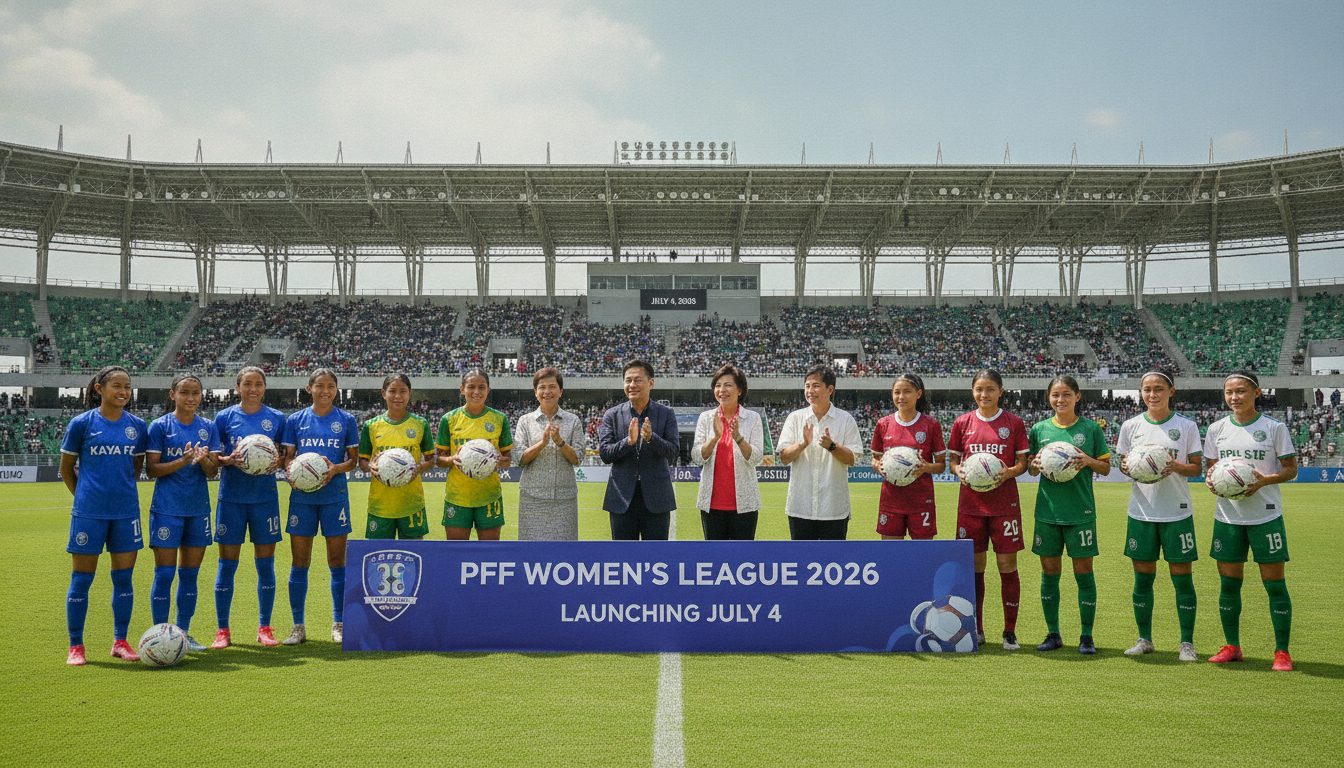
PFF Women’s League 2026 Kicks Off July 4 with Kaya, FEU, UP and DLSU Competing
PFF Women’s League 2026 kicks off July 4, 2026, with four teams — defending champions Kaya FC–Iloilo, FEU, UP and former champions DLSU — set to contest the national competition.


Opening match and tournament timeline
The Philippines Football Federation has confirmed that the PFF Women’s League 2026 will begin on July 4, 2026, with fixtures spread across the summer calendar. Four clubs will participate: defending champions Kaya FC–Iloilo, Far Eastern University (FEU), University of the Philippines (UP) and De La Salle University (DLSU). The compact field places a spotlight on quality and immediate stakes for every match as teams prepare to claim national honors.
Organizers say final match dates and venues will be announced by the PFF ahead of the opening weekend. With a smaller lineup than some previous editions, every result will carry heightened significance for title hopes and postseason positioning. Fans and stakeholders will be watching the federation’s release for ticketing and broadcast arrangements.
Kaya FC–Iloilo targets consecutive crowns
Kaya FC–Iloilo arrives as the defending champion and will head into the 2026 campaign with a target on their back. The club’s recent success in domestic women’s football has raised expectations for consistency and leadership on the pitch. Their experience in title races gives Kaya a competitive edge against collegiate sides and returning champions.
Coaching staff will likely emphasize squad cohesion and match-readiness after the offseason, but the team’s ability to translate prior success into the new season will be the decisive factor. Observers expect Kaya to leverage its depth and championship mentality in tight match situations.
University sides bring collegiate rivalry and young talent
Far Eastern University and the University of the Philippines enter as representative university teams, bringing strong collegiate pedigrees and a pipeline of young talent. Both programs have histories of producing players who transition to the senior level, and their inclusion adds a developmental dimension to the PFF Women’s League. University matchups often feature high intensity and tactical discipline, reflecting both academic rivalries and sporting ambition.
The two universities will be judged on how effectively they balance student-athlete commitments with a national competition schedule. Their performance in the league will be a barometer for the health of collegiate women’s football pathways in the Philippines.
De La Salle University returns with championship pedigree
De La Salle University returns to the national stage as a former champion, seeking to reassert itself among the country’s top programs. La Salle’s history in the league brings expectation and experience that can be decisive in a condensed competition. The team’s approach will likely aim to combine tactical organization with opportunistic attacking play to challenge the defending champions.
For DLSU, success in the 2026 campaign could signal a renaissance of their women’s program and boost recruitment ahead of the collegiate season. Their matches will be key measuring points for other clubs gauging both form and strategic trends within Philippine women’s football.
Tactical storylines and players to watch
Tactical narratives for the PFF Women’s League 2026 will hinge on how teams adapt to one another in a small, tightly contested format. Expect coaches to prioritize defensive organization and set-piece proficiency, given the high stakes of each fixture. Players who can change games through creativity in midfield or clinical finishing up front will attract early attention from national team selectors and scouts.
Competition will also highlight goalkeeper performances in pressure moments and the ability of squads to manage game tempo. Emerging talents from the collegiate teams could use the platform to elevate their profiles and stake claims for greater roles at club and national levels.
Federation goals and implications for women’s development
The PFF has framed the Women’s League as a core element in the country’s broader plan to strengthen the women’s game, emphasizing competition pathways and talent identification. A focused edition with four teams allows the federation to concentrate resources, broadcast attention and developmental support. Officials view the league as part of a multi-year strategy to increase participation, raise standards and prepare players for regional competition.
How the 2026 season is organized and promoted will influence momentum for grassroots programs and university partnerships. Clear scheduling, transparent officiating and accessible coverage remain priorities to maximize impact for players and supporters.
Media coverage, fan engagement and commercial outlook
Media coverage and fan engagement will be important for the league’s visibility as it returns to action in early July. The federation’s communication plan, along with club outreach, will determine attendance and audience reach for televised or streamed matches. Commercial partners may look to the competition as an opportunity to connect with a growing fan base for women’s football in the Philippines.
Sustained interest will depend on consistent messaging, match-day experience and the league’s competitive narrative. Strong early matchups and compelling storylines can help attract broader media coverage beyond the core football audience.
The PFF Women’s League 2026 offers a concentrated, competitive platform as Kaya FC–Iloilo defends its crown while university and former champion sides aim to challenge for top honors. Fans should mark July 4, 2026, as the season opener and watch for PFF announcements regarding fixtures, venues and broadcast details. The tournament represents both immediate competition and a stepping stone for the continued growth of women’s football in the Philippines.