Philippines rally to beat Laos 4-1 in ASEAN Hyundai Cup 2026
Philippines vs Laos: Philippines recovered from an early deficit to record a 4-1 win over Laos in Vientiane, securing their first Group B victory at the ASEAN Hyundai Cup 2026.
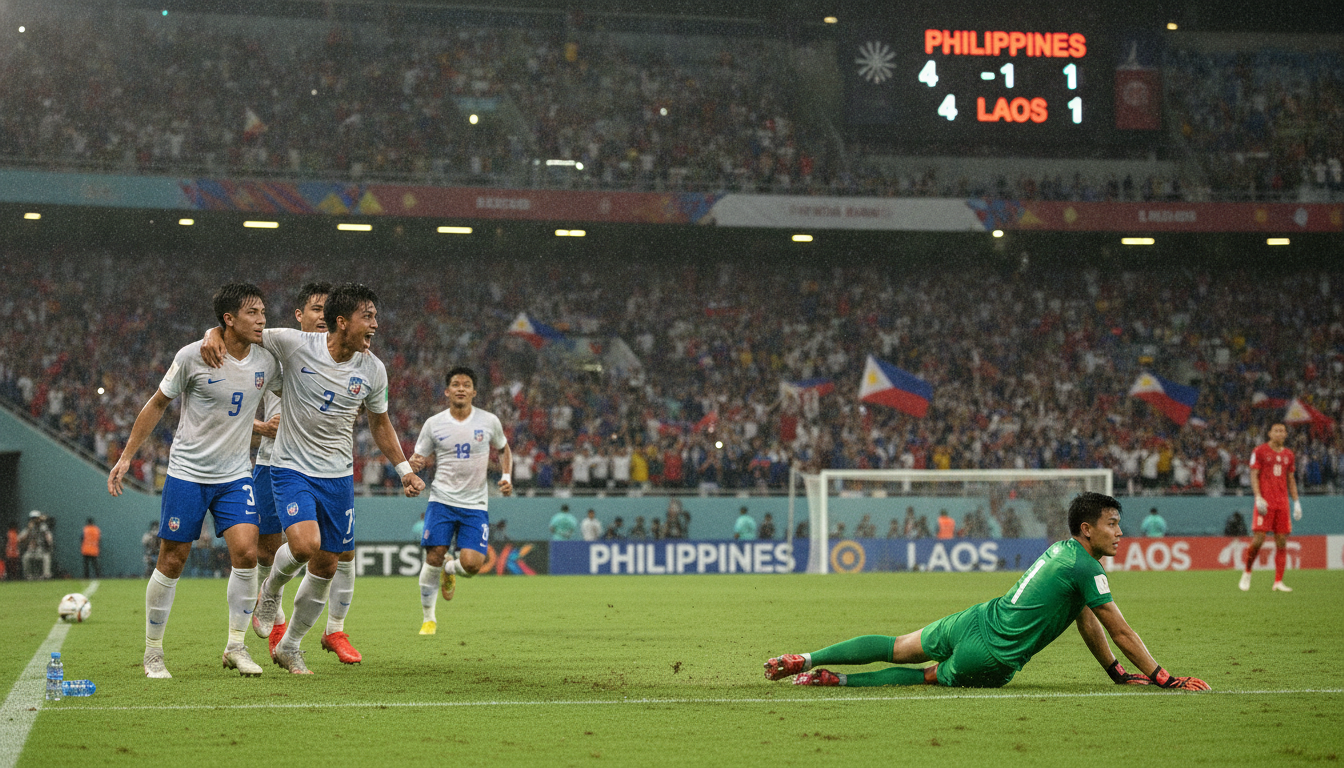
The Philippines executed a composed second-half response to overturn an early Laos lead and deliver a convincing 4-1 victory in Vientiane on August 1, 2026. The match in Group B of the ASEAN Hyundai Cup 2026 began with a shock for the visitors when a goalkeeper error allowed the hosts to take an early lead, but momentum shifted dramatically after a first-half red card. A sequence of well-taken finishes and a deflected strike gave the Philippines the advantage before a penalty and a late header put the result beyond doubt. The win marked a crucial rebound for Carles Cuadrat’s side after their opening-day loss in the group.
Early Laos goal and controversial double blow
Laos stunned the visitors inside the opening ten minutes when a counter-attack exposed a momentary lapse in concentration at the back. A long move ended with captain Damoth Thongkhamsavath firing a low effort that slipped under Philippines goalkeeper Quincy Kammeraad to give the hosts an unexpected lead. The goal was a product of quick transition play that punished a Philippines side still settling into the match.
The home side’s advantage lasted only marginally before the game pivoted on a harsh disciplinary decision. Phetdavanh Somsanid was shown a red card after a sliding challenge on Jarvey Gayoso, a decision that followed an initial yellow and then a pitch-side review. Down to ten men, Laos lost a key defensive presence and the balance of the contest shifted in favor of the visitors.
Philippines press but early chances go begging
After the sending-off, the Philippines pressed for an equaliser but found the finishing touch elusive in the first half. Kenji Nishioka had a header disallowed for an infringement in the build-up, and Cole Mrowka went close from a free kick that curled narrowly wide of the near post. Those near misses masked the growing territorial control the visitors were asserting.
Laos defended deep and attempted to hit on the break, but their numerical disadvantage increasingly dictated a cautious approach. The half ended with Philippines possession figures higher and a clear intent to find a route back into the game after creating several promising situations in the final third.
Second-half turnaround triggered by Lucero and an own goal
The Philippines levelled just after the interval through a tidy finish that stemmed from sustained pressure on the left flank. A whipped cross from Daisuke Sato escaped the defensive clearance and fell to John Lucero, who struck first-time across the goalkeeper into the bottom corner. The goal was a product of persistent wing play and quick, incisive movement in the box.
Momentum carried the visitors on, and within minutes they were ahead thanks to a fortunate deflection. Cole Mrowka’s effort from distance took a slight touch off defender Viengxay Sydavong and wrong-footed Laos goalkeeper Kop Lokphathip, diverting the ball past the keeper and into the net. The deflected strike handed the Philippines a lead that they had been building toward since the red card incident.
Penalty, composed finishing and late Sato header seal result
The visitors extended their advantage from the penalty spot when Jarvey Gayoso was adjudged to have been impeded inside the area. The forward stepped up and converted with calm precision, placing the ball down the middle and beating Kop for a 3-1 cushion. The penalty reflected increasing confidence from the Philippines and a clearer ability to force decisive moments inside the box.
Laos rarely threatened a comeback after the third goal, and the result was put beyond doubt when Daisuke Sato rose at the far post to head home from a left-sided cross in the closing minutes. The header capped a sustained spell of Philippines dominance and underscored the hosts’ inability to live with the visitor’s aerial delivery late in the game. The 4-1 scoreline left little doubt about which side controlled the second half.
Key performers, tactical adjustments and match management
Cole Mrowka’s influence across the middle of the park earned him the Hyundai Player of the Match accolade after he combined creativity with a long-range finish that produced the own-goal. His set-piece delivery and range of passing repeatedly unsettled the Laos backline, offering the Philippines varied attacking angles throughout the second half. John Lucero and Jarvey Gayoso provided the incisive finishing that converted pressure into tangible returns.
Carles Cuadrat’s tactical tweaks at half-time — shifting emphasis to wider attacking play and encouraging overlapping full-backs — paid dividends and forced Laos to defend deeper. Daisuke Sato’s presence on the left created crossing opportunities that repeatedly caused problems, while Javier Mariona’s movement opened pockets for runners to exploit. For Laos, the red card necessitated a more conservative setup that limited their offensive output and allowed the visitors to dominate possession.
Discipline, key moments and goalkeeper roles
Disciplinary decisions shaped the match narrative, with the second-yellow red card for Phetdavanh significantly altering the contest’s complexion. The intervention by match officials after a pitch-side review drew criticism from some quarters, but it unequivocally tilted the game in the Philippines’ favor. That decision, combined with the early mistake from Quincy Kammeraad, highlighted how quickly momentum can swing in a tightly contested international fixture.
Both goalkeepers experienced contrasting campaigns on the day; Kop Lokphathip produced a series of saves that kept Laos in contention during stretches, yet was helpless on the deflected strike and penalty. Quincy Kammeraad recovered his composure after the initial fumble to make several important interventions as the Philippines sought to turn the tide. Ultimately, the visitors’ collective defensive reorganization and attacking quality proved decisive.
Group B standings impact and what comes next
The victory gives the Philippines their first three points in Group B of the ASEAN Hyundai Cup 2026 after a setback in their opening fixture. The result keeps them firmly in contention in a tightly contested section, and the manner of the win will likely boost confidence ahead of the remaining group matches. Laos, by contrast, will face an uphill task to recover from a defeat compounded by a red card and must regroup quickly to salvage their campaign.
Looking ahead, both teams will reassess their priorities and approaches as the group stage progresses. The Philippines will aim to build on this momentum and address the lapses that allowed an early goal, while Laos must find a way to stabilize defensively and manage discipline under pressure. Coaching staff on both sides will weigh tactical and personnel adjustments as they prepare for the next round of fixtures.
The Philippines’ 4-1 win in Vientiane showcased a resilient response to adversity and a clear second-half tactical plan that yielded multiple goal-scoring avenues. The result not only answers questions about their ability to recover after an opening loss but also sends a message to Group B rivals that the team can execute a sustained comeback under pressure. As the ASEAN Hyundai Cup 2026 group phase unfolds, the Philippines will look to convert this performance into consistent results, while Laos must address both defensive vulnerabilities and disciplinary control to remain competitive.