ASEAN Hyundai Cup 2026 build-up intensifies as Cambodia, Philippines, Indonesia and Thailand post key friendly results
Pre-tournament friendlies ahead of ASEAN Hyundai Cup 2026 saw Cambodia, Indonesia, Thailand and the Philippines post key results as teams fine-tune squads and tactics.


Regional friendlies set tone just over a month before the ASEAN Hyundai Cup 2026
With just over a month to go until the ASEAN Hyundai Cup 2026, a series of international friendlies played on and around 12 June produced decisive signals about form and selection across the region. National teams used the fixtures to test combinations, sharpen set pieces and give fringe players competitive minutes ahead of the biennial tournament. Results in Phnom Penh, Jakarta, Jinhua and Manila suggested the competition for places and points next month will be intense. Coaches and federation officials described the matches as critical final steps in finalising squads and shaping strategic plans.
Cambodia claim historic 2-0 victory over Hong Kong in Phnom Penh
Cambodia recorded what their federation hailed as a landmark 2-0 win over Hong Kong at the National Olympic Stadium in front of more than 20,000 supporters. Midfielder Yudai Ogawa broke the deadlock deep into first-half stoppage time before striker Sieng Chanthea extended the lead early in the second half. The result marked Cambodia’s first-ever victory over Hong Kong and provided a tangible sign of the strides the home side have made in recent months. Local media and federation sources credited the win to improved preparation and strong home support.
Indonesia edge higher-ranked Mozambique in Jakarta friendly
In Jakarta, Indonesia secured a narrow 1-0 victory over Mozambique at the Gelora Bung Karno Stadium to bolster confidence ahead of the regional championship. The decisive moment arrived early when Ole Romeny converted in the 12th minute, and Indonesia mounted a disciplined defensive effort to preserve the lead. The win over a higher-ranked African opponent offered coach and supporters reassurance about the squad’s defensive shape and transition play. Officials emphasized the match’s value in testing players against varied international styles ahead of the ASEAN Hyundai Cup 2026.
Thailand hold host China to a goalless draw in Jinhua
Seven-time ASEAN champions Thailand produced a disciplined display to hold China to a 0-0 draw at the Jinhua Sports Centre Stadium as they continue preparations to reclaim regional supremacy. Thailand’s backline and midfield structure limited clear chances and the match served as a tactical rehearsal for both sides. The clean sheet will be welcomed by Thai camp after their runners-up finish last edition, with the coaching staff noting improvement in game management. Observers said the fixture illustrated Thailand’s intent to balance attacking ambition with compact defensive organisation.
Philippines dominate Myanmar and claim momentum after Tri Nations success
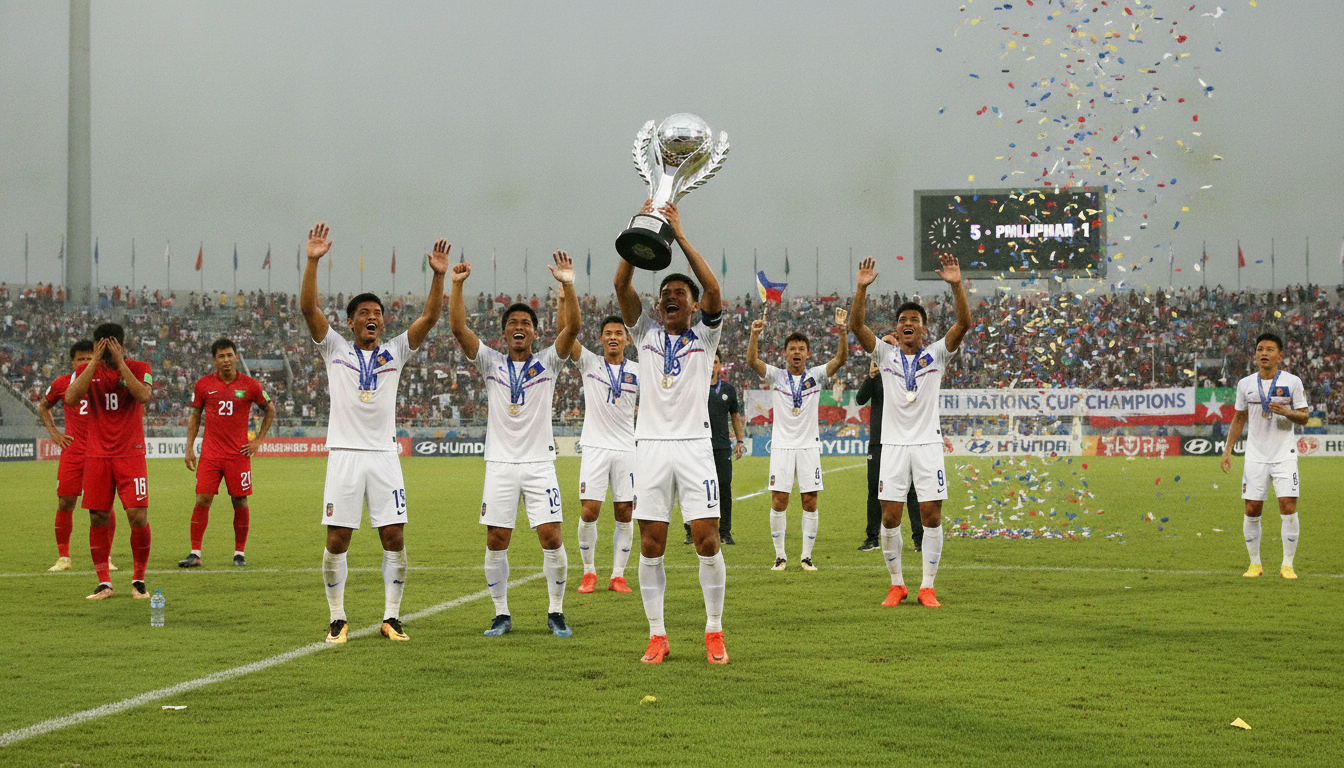
At the Rizal Memorial Stadium in Manila, the Philippines delivered a comprehensive 5-1 victory over Myanmar, further underlining their attacking depth and match fitness heading into the ASEAN Hyundai Cup 2026. Jeff and Paul Tabinas struck shortly before and after halftime, while Sebastian Rasmussen added a late brace and Andre Leipold contributed in stoppage time to complete the scoring. Myanmar’s solitary goal came from Win Naing Tun midway through the second half, but the hosts controlled large periods of the match. Earlier warm-up action saw the Philippines beat Guam by the same scoreline to capture the Tri Nations Cup, giving the squad sustained competitive minutes and a morale boost.
Standout performers and tactical takeaways from the friendlies
Several individual displays emerged from the week’s fixtures that could influence squad selection and tactical choices for the ASEAN Hyundai Cup 2026. Yudai Ogawa’s composed finish at the end of the first half highlighted Cambodia’s growing midfield creativity, while Sieng Chanthea’s movement and finishing provided another reliable attacking outlet. In the Philippines camp, the Tabinas brothers combined effectively on the flanks and Sebastian Rasmussen’s clinical late finishes showcased depth in the striker positions. Indonesia’s Ole Romeny offered a focal point in attack, and Thailand’s collective defensive resilience was the most notable aspect of their outing in China. Coaches will weigh these performances alongside training assessments when naming final tournament rosters.
What the results mean for team selection and tournament outlook
The recent friendlies have given national coaches data on fitness, form and tactical coherence that will feed into final selection decisions for the ASEAN Hyundai Cup 2026. For emerging teams like Cambodia, a historic win can cement places for players who have carried domestic momentum onto the international stage. Established teams such as Thailand and Indonesia used the fixtures to confirm baseline defensive structures and to trial new attacking permutations. The Philippines’ attacking output in consecutive 5-1 wins positions them as a team to watch, while the draw between Thailand and China signals that even traditionally dominant sides face stern tests. Federation technical directors noted that the balance between experienced leaders and in-form newcomers will be a recurring theme at the tournament.
Cambodia’s victory, Indonesia’s narrow win over a non-ASEAN opponent, Thailand’s clean sheet and the Philippines’ scoring surge illustrate how different preparation philosophies are being put to the test. Some teams prioritised match rhythm by playing two fixtures in short succession, while others used single friendlies against quality opponents to sharpen tactical edges. The variety of approaches suggests the tournament could reward adaptability as much as squad depth.
Preparations now shift into their final phase as teams begin formal camp periods and medical monitoring ahead of official tournament registration deadlines. Coaches will use the remaining weeks to finalise defensive pairings, calibrate pressing triggers and refine set-piece routines. Fewer than five weeks remain for federations to complete logistics, submit final player lists and arrange travel, and the competitive intensity seen in the recent friendlies suggests a high-stakes regional championship lies ahead.
The ASEAN Hyundai Cup 2026 field is shaping up to be closely contested, with multiple sides indicating they will aim for aggressive, possession-based football while others prepare to counter with compact organisation and quick transitions. The friendlies provided clearer narratives about which teams might prioritise pressing and which will rely on structured buildup. Analysts expect that marginal gains in fitness, tactical clarity and set-piece execution — all tested in these matches — could decide tight matches in the group phase.
Sporting directors and coaches across the region also flagged the value of home support and venue familiarity, elements that can swing tightly poised tournament fixtures. Cambodia’s large turnout in Phnom Penh underlined the advantage of playing at home, while the Philippines’ use of the Rizal Memorial Stadium helped consolidate local momentum. With crowds expected to be a factor at several host venues during the ASEAN Hyundai Cup 2026, federations are preparing public engagement plans and ticketing strategies aimed at maximising home advantage where possible.
As the countdown continues, federations will monitor player workloads and recovery closely, balancing the need for tactical preparation with injury prevention. The coming weeks will include controlled intra-squad sessions, video analysis of the recent friendlies and targeted work on transitional phases. Teams that manage the fine margins of fitness and cohesion between now and the tournament opener will likely gain an edge in short, high-intensity matches.
National coaches and federation officials said the friendlies delivered answers to several selection questions but left other areas open for debate. Who will lead pressing in the high midfield? Which full-backs can sustain overlaps against quick wingers? Which attacking partnerships can deliver consistent chance creation? The matches in Phnom Penh, Jakarta, Jinhua and Manila clarified some of these issues while preserving intrigue for selectors finalising their squads.
The ASEAN Hyundai Cup 2026 promises to be a closely fought contest that reflects the gains made across the region. Recent friendlies have provided a competitive rehearsal and produced both expected and surprising outcomes. As teams conclude their final preparations, attention now turns to official squad announcements and the opening fixtures that will set the tone for the tournament.
These preparatory matches have given supporters and pundits a clearer picture of form, but the true measure will come under tournament conditions where stakes, crowd influence and knockout scenarios amplify every decision and performance.