Raddy Avramović’s Legacy Looms Over Singapore Ahead of ASEAN Hyundai Cup 2026
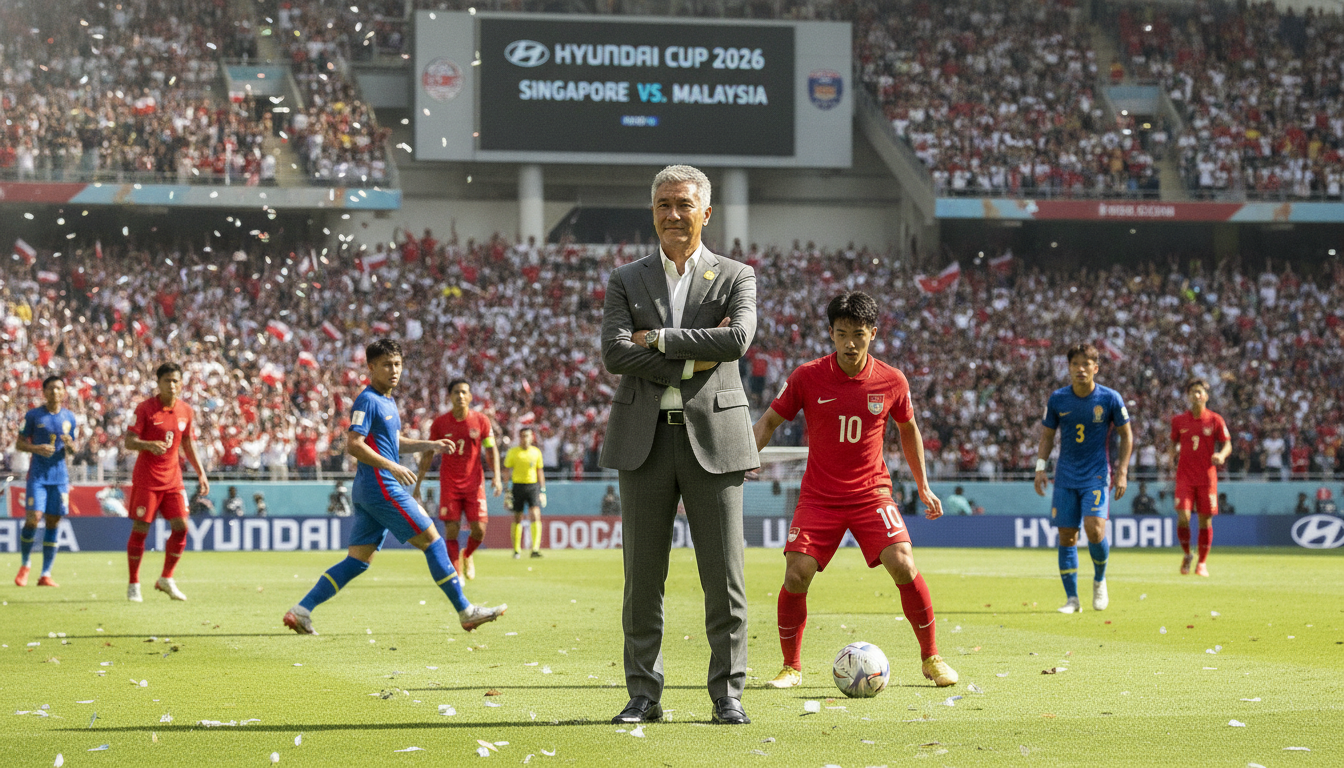
Raddy Avramović’s three ASEAN titles with Singapore remain the reference point as the ASEAN Hyundai Cup 2026 approaches, with the tournament set to begin July 24. The former Serbia-born coach’s emphasis on youth development and collective organisation shaped a decade of regional dominance and is being re-examined ahead of the 30th anniversary edition. Singapore will enter the Hyundai Cup carrying the weight of those expectations and the memory of a team built to peak at the right moments.


Avramović’s three ASEAN titles set the benchmark
Radojko “Raddy” Avramović became the only coach to win three ASEAN Championships, guiding Singapore to titles in 2004, 2007 and 2012. Those victories transformed the island nation from regional also-ran to perennial contender and remain a central chapter in Singapore’s football history. His record shapes how the national programme and supporters measure success today.
Avramović’s achievement is not simply statistical; it altered how neighbouring federations regarded Singapore. The three titles were earned across different tournament formats and shifting regional strengths, underlining a sustained standard rather than a one-off peak. As the Hyundai Cup opens on July 24, that standard will be a touchstone for both fans and the current coaching staff.
Young Lions pathway at the heart of the revival
Central to Avramović’s strategy was the deliberate integration of the Young Lions development project into the national setup. The Young Lions, a squad of emerging talents competing in Singapore’s domestic league, supplied a core of players who already understood one another’s tendencies and responsibilities. That continuity allowed Avramović to accelerate team cohesion and to field combinations that behaved like a single unit rather than a collection of individuals.
By regularly promoting Young Lions players into the senior national squad, Avramović reduced the acclimatisation time typically required for international football. The approach married club rhythm with national duty and emphasised shared tactical responsibilities over reliance on one or two marquee names. Current national coaches studying that period point to the pathway model as a replicable mechanism for smaller federations seeking sustained competitiveness.
Tactical framework and culture of collective responsibility
Avramović’s teams were built on a clear tactical identity: organised defending, quick transitions and an insistence on positive intent in attack. He rejected negative pragmatism, instructing his players to pursue victories rather than settling for draws, and he structured training so that roles were precise and repeatable. That clarity reduced individual error and increased the team’s ability to absorb pressure from traditionally stronger opponents.
Beyond systems, Avramović instilled a culture in which players measured themselves by team outcomes rather than personal statistics. Senior leaders were asked to mentor young prospects and to accept positional responsibilities for the collective good. That cultural framework delivered consistent performances across tournaments and is often cited by former players as the decisive factor behind their most successful years.
Key players forged under Avramović
The Avramović era produced a generation of players who became national anchors and, in some cases, regional names. Several goalkeepers, defenders and attackers who came through the Young Lions or domestic ranks under his watch later assumed leadership roles for club and country. Those players embodied the coach’s demand for tactical discipline and work-rate, often covering for creative limitations with organisation and intensity.
Names associated with that period include established goalkeepers, durable defenders and forward pairings who combined movement with finishing efficiency. The presence of experienced leaders alongside emerging players created a balance that allowed the team to navigate tense two-legged ties and the pressure of knockout football. This blend of youth and experience proved particularly effective in finals and high-stakes matches.
From 2004 breakthrough to final curtain in 2012
Singapore’s 2004 campaign marked a turning point; the team entered as outsiders but advanced unbeaten to claim a landmark title. That success was built on a compact squad that peaked collectively and executed Avramović’s plan across the tournament. The repeat in 2007 consolidated that transformation, with a tense campaign culminating in victory over regional powerhouses.
After mixed results in intervening competitions, the 2012 triumph served as a decisive closing act to Avramović’s tenure. He had signalled his intention to step down at the end of that tournament, and the title allowed him to depart with an unrivalled regional record. Players from that final era have since reflected that winning under Avramović meant subscribing to a programme that valued preparation, accountability and mutual sacrifice.
Relevance for Singapore and the Hyundai Cup 2026
As the ASEAN Hyundai Cup 2026 commemorates its 30th edition from July 24 to August 26, Avramović’s blueprint remains a living reference for Singaporean football. Current coach Gavin Lee and his staff face the twin tasks of honoring past successes while adapting to modern tactical developments and the evolving talent pool. The challenge for Singapore is to translate Avramović-era lessons into a framework that suits today’s players and the tournament’s fresh dynamics.
Regional opponents have also shifted, with investment and youth programmes across Southeast Asia narrowing historical gaps. Singapore’s historical dominance under Avramović needs to be understood within that changing competitive landscape. The Hyundai Cup will test whether a new generation can echo the discipline and cohesion of the early 2000s while introducing tactical flexibility and technical improvements.
What the legacy means for player development and federation strategy
Avramović’s record provides a concrete argument for long-term planning and investment in development pathways rather than short-term fixes. Federations that seek sustainable success can point to Singapore’s use of a domestic development squad as evidence that continuity breeds competitiveness. The broader lesson is organisational: consistent selection policies, clear tactical principles and a willingness to fast-track promising young players can change national trajectories.
For administrators, the debate now centers on how to marry that lesson with contemporary demands: higher physical standards, refined technical training, and data-informed scouting. Singapore’s current setup faces scrutiny over its capacity to produce players capable of competing with improved regional rivals. How the federation responds in terms of coaching education, league structure and cross-border opportunities will influence the national team’s prospects in the Hyundai Cup and beyond.
Singapore will enter the Hyundai Cup 2026 walking into a tournament shaped partly by memories of Avramović’s teams and partly by the region’s newer ambitions. The upcoming matches will provide a barometer of whether past methods can be adapted successfully, or whether a different approach is now necessary to return to sustained regional prominence.
Avramović’s three-title legacy remains a benchmark, but it is also a prompt: success at international tournaments requires more than past laurels. Singapore’s football authorities, coaching staff and players must convert the lessons of the past into practical steps for the present if they are to compete for the Hyundai Cup trophy this summer.