Real Sociedad youth coaches — Mikel Labaka returns to lead División de Honor Juvenil and Ander Murillo appointed for Easo
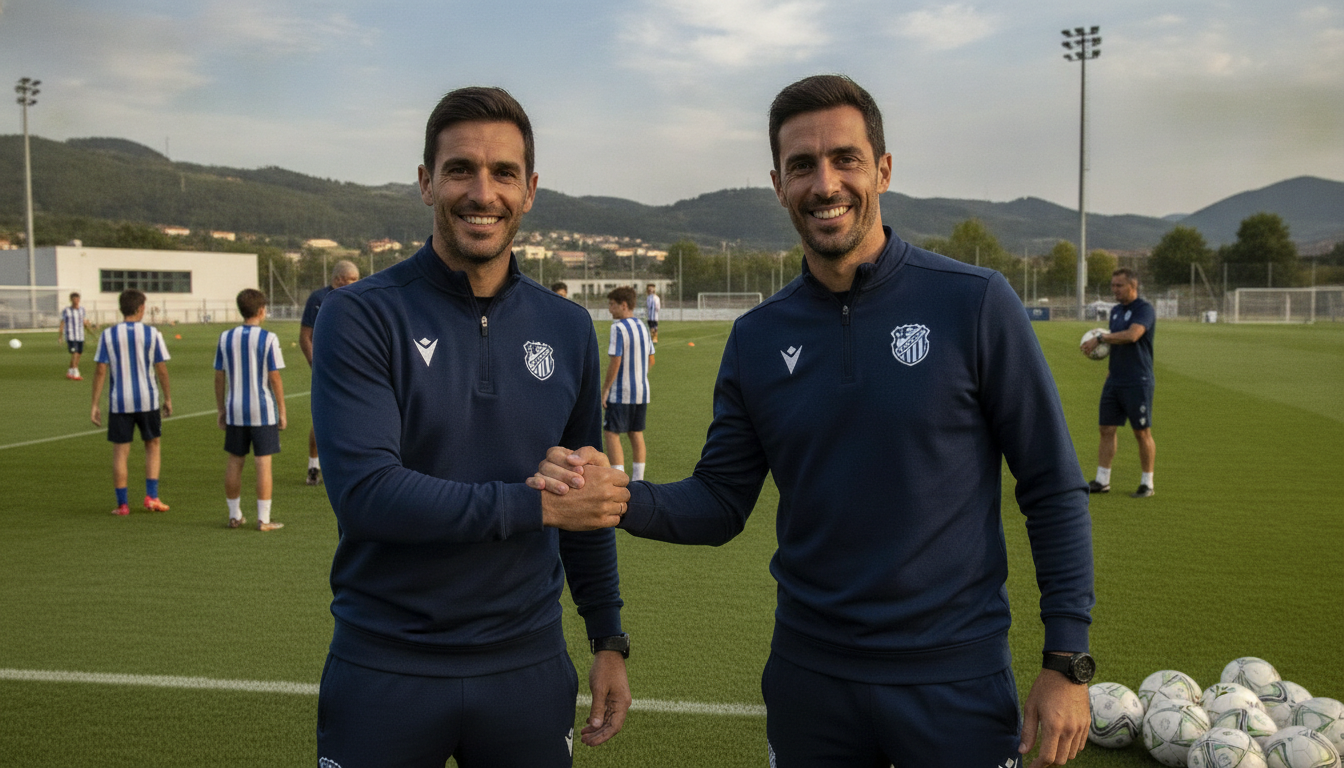
Real Sociedad appoints Mikel Labaka to lead the División de Honor Juvenil as part of a reshuffle of the club’s youth coaches, with Ander Murillo named head coach of Easo to reinforce the academy pathway.


Strong opening paragraph summarizing the news event
Real Sociedad has announced a new set of appointments for its youth coaching structure, naming Mikel Labaka as head coach of the División de Honor Juvenil and Ander Murillo as the coach of Easo. The move is presented as a strategic step to consolidate the club’s development pipeline and renew leadership across its formative teams. Both appointments bring experienced figures with deep ties to Basque football back into Zubieta’s training ground.
Club confirms Mikel Labaka as Juvenil head coach
The club confirmed that Labaka, after taking a year-long sabbatical, will return to take charge of the División de Honor Juvenil, the top U19 competition in Spain. Labaka’s appointment marks his first role as a head coach at this level within Real Sociedad’s academy system. The club framed the decision as part of a broader plan to blend continuity with fresh direction in its youth development program.
Labaka’s return to the Juvenil group is notable given his recent proximity to the first team and his long-standing relationship with the club’s senior coaching staff. The club emphasized Labaka’s intimate knowledge of the club’s playing model and the developmental needs of young prospects. Officials view his presence as an asset for aligning the Juvenil squad more closely with the tactical and cultural expectations of the senior side.
Ander Murillo chosen to lead Easo after Lezama spell
Real Sociedad also announced that Ander Murillo will head Easo, the club’s second youth team, following three seasons working within Athletic Bilbao’s Lezama academy. Murillo arrives from a coaching tenure at Lezama where he served in various roles, including assistant work at Bilbao Athletic and head duties in the cadet ranks. His hiring underscores a targeted recruitment of coaches with proven experience in Basque academy environments.
The club noted Murillo’s background as both a former professional player and a developing coach who has spent time shaping young squads. Born in Donostia, Murillo began his own playing career locally before moving through the Athletic system, and his return to Gipuzkoa to work with Real Sociedad is presented as a homecoming. The appointment is intended to strengthen Easo’s competitiveness and improve the progression of players toward the higher youth levels.
Labaka’s experience with the first team under Imanol
Labaka was promoted to the Real Sociedad first-team coaching staff when Imanol Alguacil returned to the senior job in December 2018, serving as a trusted deputy through a sustained and successful period. For six and a half years the pairing worked closely, with Labaka acting as a key technical and tactical collaborator during that stretch. His responsibilities in the first team covered match preparation, training management, and implementing the club’s possession-oriented, organized style.
After his time with the senior staff, Labaka chose not to pursue an overseas opportunity and instead opted for a sabbatical to reflect on his next career step. The sabbatical lasted approximately one year and concluded with the decision to re-engage with the club at the youth level. Club sources describe the move as a deliberate repositioning that will allow Labaka to apply first-team methods directly to the Juvenil age group and accelerate the transition of promising players.
Murillo’s pathway from Antiguoko to Lezama and coaching roles
Ander Murillo’s own career trajectory began at Antiguoko, the local Donostia youth club renowned for producing professional talent, before he moved into the Athletic system as a player and later as a coach. His post-playing transition to coaching included a spell assisting Carlos Gurpegui at Bilbao Athletic, followed by a head role in the Liga Vasca cadet division. Those appointments provided him with hands-on experience in both player development and competitive youth league management.
Murillo’s decision to join Real Sociedad this summer was influenced by professional opportunity and personal ties to the region, including family connections within the local football scene. The club highlighted that his daughter is currently prominent in the club’s formative ranks, a detail that brought a personal dimension to his hiring. Real Sociedad aims to leverage Murillo’s familiarity with regional talent networks to boost Easo’s recruitment and development pipeline.
What the appointments mean for Real Sociedad’s academy
The dual hires reflect an intent to align the club’s youth coaching staff more closely with the senior team’s tactical framework and long-term objectives. By placing Labaka, with recent first-team exposure, at the helm of the División de Honor Juvenil, Real Sociedad is signaling a desire for smoother transitions from youth to senior football. Murillo’s appointment to Easo complements that plan by strengthening the bridge between younger age groups and the top youth tier.
Officials emphasize that stability and shared methodology are central to the club’s recruitment of coaches, aiming to reduce friction when players move between levels. The structure also allows for a clearer succession plan for standout talents, ensuring they encounter consistent principles and coaching expectations as they advance. The club expects the changes to yield benefits in both on-field performance and the readiness of graduates for professional demands.
Early expectations and player development pathway
Real Sociedad’s immediate objective is to have the Juvenil team competing at the highest level while producing players capable of stepping up to the reserve teams and eventually the senior squad. Labaka’s presence is intended to accelerate tactical maturity and tactical awareness among U19 players, emphasizing game management, positional discipline, and the club’s established pressing and possession patterns. Club staff will monitor progress through regular coordination meetings across age groups.
For Easo, Murillo’s remit includes maximizing playing time for emerging talents, refining technical fundamentals, and exposing players to competitive situations that mirror the demands of higher divisions. The club has signaled that Easo will serve as a testing ground for players on the cusp of Juvenil selection, with clear evaluation processes to track development. Both coaches will be expected to report on individual progress and to collaborate on tailored development plans.
Integration with the senior setup and long-term goals
Real Sociedad continues to prioritize an integrated coaching model where youth coaches are in frequent dialogue with senior staff to ensure consistency in tactics and player profiling. Labaka’s recent experience with the first team positions him well to act as a conduit for those exchanges and to prepare players who fit the senior team’s style. The club has emphasized that such integration is critical to creating a sustainable pipeline of talent capable of contributing at the professional level.
Long-term, the appointments are also part of a strategy to raise the ceiling of the academy by exposing youth players to coaches who have navigated the demands of top-level football. Real Sociedad aims to maintain a balance between pushing for competitive success at youth levels and focusing on individual trajectories that lead to the reserve teams and first-team opportunities. Continued investment in coaching continuity and talent identification remains central to the club’s planning.
Labaka and Murillo will be expected to implement measurable benchmarks for player progress, from technical metrics to tactical comprehension and physical readiness. The club intends to use performance data alongside traditional scouting assessments to make promotion decisions. This blended approach reflects a modern academy philosophy that combines on-field observation with objective indicators of readiness.
Real Sociedad’s announcement of these appointments completes a targeted overhaul of the youth coaching landscape at Zubieta, prioritizing coaches with local roots and relevant experience. The club will now concentrate on executing its development plan through the coming season, with early training blocks and preseason fixtures set to reveal how quickly the new coaches can imprint their methods. For players and supporters, the changes represent a renewed commitment to cultivating homegrown talent capable of advancing to the professional ranks.
The restructuring aims to preserve the club’s identity while sharpening the pathway from grassroots to the first team, using a coordinated coaching framework to shepherd the next generation of Real Sociedad players.