Morocco World Cup exit: Atlas Lions fall 2-0 to France in Boston
Morocco’s World Cup exit came after a 2-0 quarter-final defeat to France in Boston, ending the Atlas Lions’ run while drawing mixed emotions of disappointment and pride. The Morocco World Cup exit leaves the North African side as the last African team eliminated and concludes a campaign that again captured the nation’s imagination. Supporters in Casablanca and across the country reacted with calm respect for the winners while expressing confidence the team can rebuild from this setback.

France advance with a 2-0 quarter-final victory
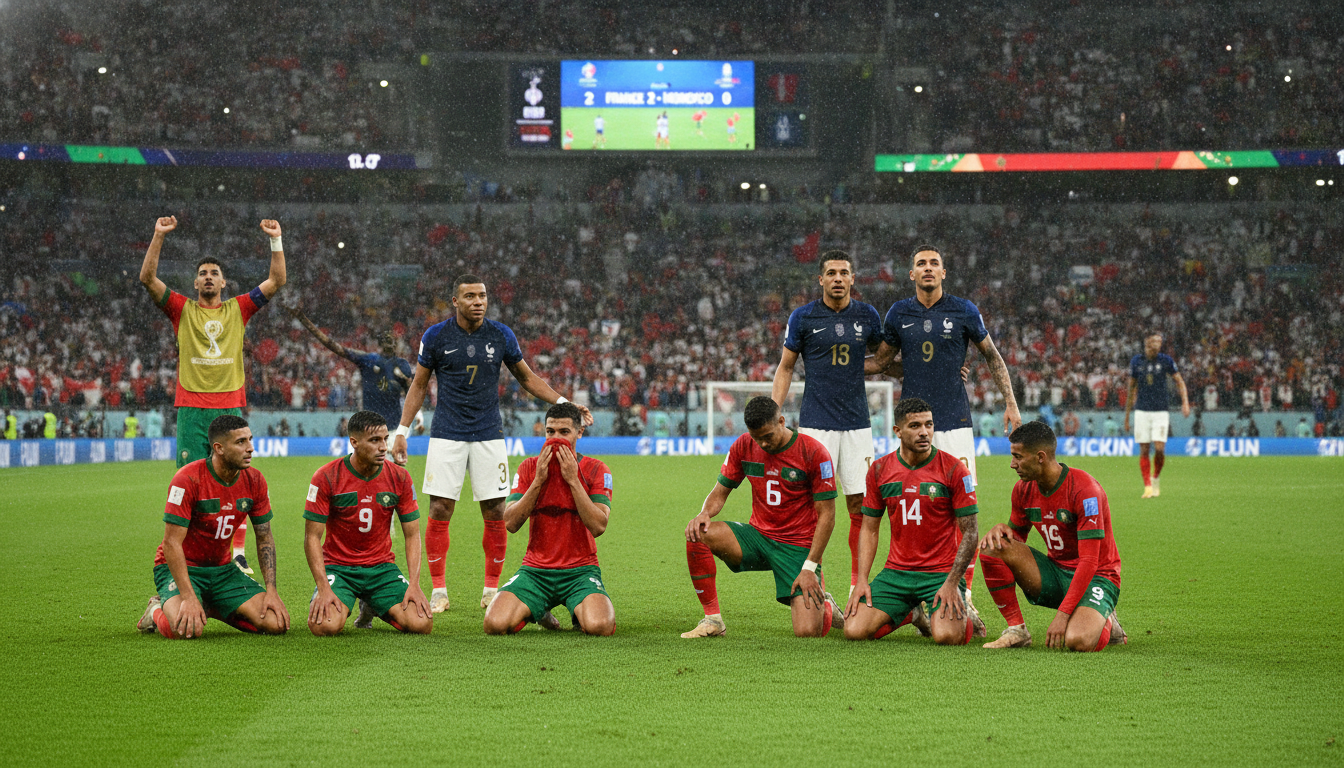
France secured a 2-0 win in Boston to end Morocco’s World Cup campaign and move into the semi-finals. The result was decisive enough to quiet the early optimism in the stadium and in Moroccan fan zones, as Les Bleus gradually asserted control over the contest. Morocco remained competitive defensively and showed tactical discipline, but France’s finishing and control of key moments made the difference on the night.
The scoreline told a clear story of margins at the highest level, with France converting opportunities that Morocco could not. Moroccan players frequently pressed and sought to play their game, but momentum shifted as the match progressed and France tightened space in midfield. By the final whistle, the visitors had done enough to eliminate the Atlas Lions and keep their own title ambitions alive.
Scenes in Casablanca mixed disappointment and pride
In central Casablanca the fan zone emptied within minutes of the final whistle, yet the mood was more reflective than angry. Supporters had gathered hours earlier to dance and sing, turning the public square into a carnival blending nerves and celebration before the match. After the defeat, many fans voiced disappointment but also pride in a side that had again carried the hopes of a nation.
Voices in the crowd struck a conciliatory tone toward France, with some spectators even wishing the winners well in the remainder of the tournament. That reaction underscored how Morocco’s progress has altered public expectation and generated a broad sense of national achievement despite the exit. Officials and supporters alike pointed to the team’s unity and fighting spirit as reasons to believe in future campaigns.
Tactical contest and turning points in Boston
The match was a tactical test between a Morocco side set up to contain and counter, and a France team built to control possession and create chances. Early exchanges featured measured probing from both teams, with Morocco intent on disrupting France’s rhythm. As the game wore on, France gained a foothold in midfield and began to impose their tempo, forcing Morocco into deeper positions.
Key moments alternated between defensive resilience from the Atlas Lions and clinical execution by France in attack. Morocco’s defending kept the scoreline manageable for long stretches, but France found the openings needed to finish on two occasions. Those decisive actions, rather than sustained dominance, proved the difference and closed the door on Morocco’s run in the tournament.
Consecutive deep runs reshape Moroccan football history
Morocco’s performance in this tournament continued a recent pattern of deep World Cup runs that has raised the country’s profile on the global stage. The Atlas Lions became the first African nation to reach the quarter-finals in consecutive World Cups, a milestone that reflects long-term progress in development and coaching. That historical context has shifted expectations at home and abroad, as Morocco is now routinely viewed as capable of challenging Europe’s established powers.
The team’s results have also highlighted the growing competitiveness of African national teams in major tournaments. Morocco’s training methods, scouting of diaspora talent, and tactical organization were widely credited for their sustained improvement. While this campaign has ended, the legacy of back-to-back deep runs will likely influence planning, investment, and player pathways in the years ahead.
Coach Ouahbi vows to rebuild and return stronger
In the immediate aftermath the Morocco coaching staff acknowledged the defeat and emphasized lessons to carry forward into future competitions. Coach Ouahbi publicly committed to constructive reflection and signalled that the players and staff will work to address weaknesses identified during the match. That response was framed as part of a longer-term project rather than a moment of collapse.
Players echoed the coach’s determination, thanking supporters for their backing while promising to learn and improve. The squad’s age profile, combined with the experience gained in consecutive World Cups, offers a foundation for renewal. Morocco’s football federation will now face decisions on player development and tactical direction, but the prevailing message from inside the camp was one of resolve rather than despair.
Implications for France and African football going forward
France’s victory advances them into the later stages of the tournament with renewed belief and the weight of expectation that comes with being title contenders. The win in Boston demonstrated that Les Bleus can manage tough knockout ties and deliver the key actions required to progress. For France, attention now turns to the tactical adjustments necessary to face whichever opponent awaits in the semi-finals.
For African football, Morocco’s elimination ends the continent’s last remaining campaign at this World Cup, but it also cements a broader narrative of growth and competitiveness. Other African teams will study the Atlas Lions’ blend of defensive organisation and counter-attacking threat as a model to emulate. The broader takeaway is that African nations are less likely to be viewed as occasional dark horses and more as consistent challengers on the world stage.
The Morocco World Cup exit is a disappointment for fans who had hoped for further progress, yet the campaign reinforced how far the team has come in a short period. While France moves on in the tournament, Morocco can look to the future with evidence of a footballing identity and infrastructure that produced historic consecutive deep runs. The immediate focus now turns to recovery, analysis, and the preparations that will determine whether the Atlas Lions return stronger at the next major tournament.