Spain Win World Cup 2026 After Ferran Torres’ Extra-Time Strike
Spain win World Cup 2026 after a 1-0 extra-time victory over Argentina on July 19; Ferran Torres’ 106th-minute strike seals a historic double for Spain fans


Spain completed a sweeping victory in the 2026 FIFA World Cup when Ferran Torres scored in the 106th minute to beat defending champions Argentina 1-0 on Sunday, July 19. The Spain win World Cup 2026 headline was earned through sustained control and high-pressure play at MetLife Stadium in East Rutherford, New Jersey. The result capped a 39-day tournament played across Canada, Mexico and the United States featuring 48 teams, 104 matches and record crowds. Spain’s triumph has wide-ranging sporting and historical significance for the country and the wider international game.
Spain Clinches Title with Late Extra-Time Goal
Spain’s extra-time breakthrough arrived after a match dominated by Spanish possession and chances, but stubborn defending and a series of saves prolonged the contest into the second period of extra time. Ferran Torres, introduced to spice the attack, produced the decisive finish in the 106th minute to settle the final at 1-0. Argentina, the 2022 champions, were unable to test the goalkeeper with a single shot on target, a statistic that underlined Spain’s tactical stranglehold. Emiliano Martínez remained busy for Argentina and made several crucial stops, but Torres’ goal proved unassailable.
Spanish Tactical Control and Statistical Dominance
From the opening whistle Spain imposed a positional system that prioritized ball retention, patient build-up and rapid forward transitions. The Spaniards registered around 20 shots with a double-digit tally on target, repeatedly testing Argentina’s defensive discipline and goalkeeper. Argentina relied heavily on individual moments from Lionel Messi and the reflexes of Martínez to stay competitive throughout regulation. Spain’s ability to keep Argentina from generating shots on target reflected a defensive structure that complemented its attacking ambition.
Historic Sweep of Titles and Individual Accolades
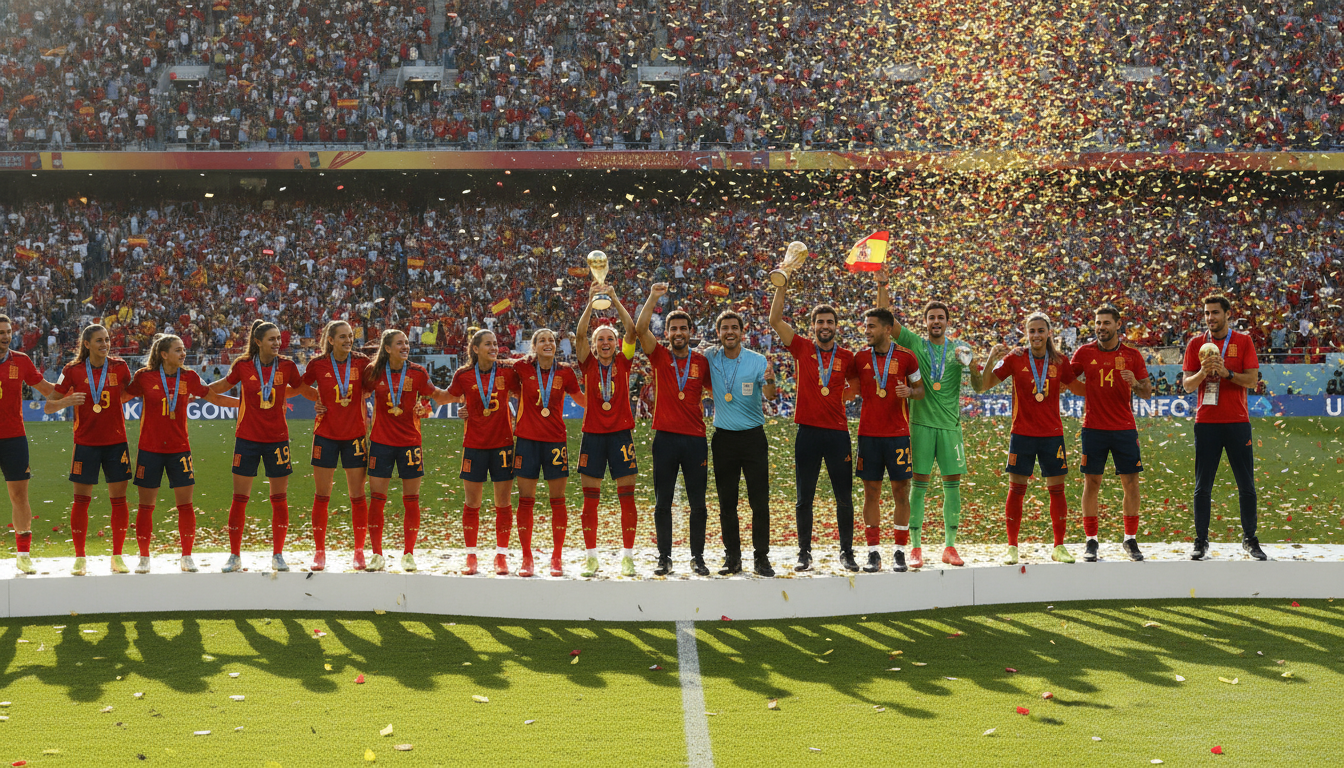
Spain’s victory adds to a remarkable run of international success and creates a unique chapter in the nation’s football history. By winning the men’s tournament while the Spanish women hold their own World Cup crown, Spain became the first country to possess both senior World Cup titles simultaneously. The team and staff also collected several tournament awards, with Spanish players recognized for their performances across categories. The achievement cements Spain’s standing at the top of global football in this cycle.
Tournament Scale, Records and Commercial Impact
The 2026 World Cup was the largest finals in history, staged across 16 host cities in three countries — 11 in the United States, three in Mexico and two in Canada. The expanded format produced 104 matches over 39 days, drawing a record-breaking global attendance of approximately 6.81 million fans and an average crowd of about 65,500 per match. Commercially the tournament also set new marks, with a total prize pool reported at $871 million and the champions receiving $51 million. Ticket prices, hospitality packages and secondary-market demand reflected the scale and global appetite for the event.
Surprises, Breakthroughs and Memorable Matches
Beyond the final, World Cup 2026 delivered a sequence of surprising results and dramatic matches that kept fans engaged throughout. Norway produced a headline upset by eliminating Brazil in the Round of 16 to reach the quarter-finals for the first time, while Cabo Verde provided one of the tournament’s most compelling underdog stories. The island nation — the smallest team by population in the finals — drew with Spain and pushed Argentina to the limit in a high-drama fixture, illustrating the broader depth introduced by the expanded field. Other standout encounters included high-scoring draws and late turnarounds that highlighted the unpredictability of the competition.
African Continent and Emerging Nations Make Mark
Africa’s expanded allocation saw a larger and more diverse representation on the biggest stage, with multiple sides advancing from the group phase and several reaching the knockout rounds. Morocco and Egypt both recorded impressive runs before bowing out to higher-ranked opponents, and DR Congo made a notable second finals appearance that included spirited performances against established sides. The continent’s showing prompted renewed discussion about greater inclusion in future tournaments and underscored the globalizing talent pipeline feeding national teams. Individual players with transnational backgrounds provided vivid examples of the sport’s multicultural reach.
Controversies: Racism, Political Displays and Security Concerns
The tournament was not free of controversy, with multiple off-field incidents prompting investigation and public backlash. A high-profile instance of racist abuse directed at Kylian Mbappé drew condemnation and an official response from relevant football authorities after a national lawmaker’s remarks. Political messaging also surfaced on the pitch when an Argentine delegation displayed a banner referencing the Malvinas/Falklands during a semi-final, an action that FIFA flagged for review. Security and visa issues affected officials and delegations at times, highlighting the logistical and diplomatic complexities of staging an event across international borders.
Spain’s victory and the larger tournament narrative have left a mixed legacy: sporting celebration mixed with clear reminders about the responsibilities of hosts, federations and political actors. Fans continued to create emotional moments in stadiums and fan zones, with family celebrations and player reunions underscoring the human side of global sport.
The immediate aftermath will focus on celebrations in Spain and reflection in Argentina, where Lionel Messi departed the tournament moved by the emotional end to what could be his final World Cup appearance. For the global game, attention will turn quickly to preparations for 2030 — scheduled to be hosted by Morocco, Spain and Portugal — and the prospect of further format changes. National federations and leagues will analyze the competitive lessons, investment impacts and organizational challenges revealed in 2026 as they plan for the next cycle.
Spain’s extra-time winner on July 19 will stand as the defining moment of World Cup 2026, a fitting close to the tournament’s record-breaking run and an achievement that will shape international football headlines and debates in the months and years ahead.