South Africa reach World Cup Round of 32 after Maseko winner stuns South Korea
South Africa beat South Korea 1-0 as Thapelo Maseko’s second-half strike sends Bafana Bafana into the FIFA World Cup Round of 32 on Tuesday.

Maseko strike in the 63rd minute sends South Africa through
The decisive moment arrived early in the second half when substitute Tshepang Moremi threaded a precise pass to Thapelo Maseko. Maseko cut onto his left foot and curled a composed finish into the bottom corner to break the deadlock and secure a 1-0 win. The goal propelled South Africa into the World Cup Round of 32 for the first time in the nation’s history.
Hugo Broos’ side had entered the fixture knowing that only victory would extend their tournament hopes. The strike altered the complexion of Group A and forced South Korea into a searching response that they could not convert. The match-winner left South African players and support staff celebrating a landmark achievement.
Early defensive interventions set the tone
The game began with immediate pressure from South Korea, whose set-piece found Kim Min-jae free at the near post inside two minutes. Aubrey Modiba produced a vital goal-line clearance to deny Kim and keep the scores level, an intervention that proved pivotal as the match unfolded. That early defensive action settled Bafana Bafana and gave the team confidence to weather the opening onslaught.
From that moment South Africa showed a readiness to contest every loose ball and maintain a compact shape. Ronwen Williams marshalled the backline, while Mbekezeli Mbokazi provided organisational control to limit clear openings. Those early saves and clearances allowed South Africa to grow into the contest rather than retreat under sustained pressure.
South Korea controlled possession but lacked cutting edge
Statistics on the night reflected South Korea’s dominance of possession, yet those territorial numbers did not translate into clear opportunities. Lee Kang-in delivered a series of dangerous crosses, and Kim Min-jae threatened on set pieces, but clear chances inside the box were scarce. South Korea repeatedly moved the ball well but were repeatedly frustrated by compact defending and smart positional play from the South African side.
Kim Seung-gyu, South Korea’s goalkeeper, was forced into a few smart saves, notably denying Thalente Mbatha in the first half after a powerful effort. Despite having the ball more, South Korea could not fashion the decisive pass or finish that would have overturned the deficit. The mismatch between possession and chance creation ultimately proved decisive.
Substitutions and moments that changed the match
Tshepang Moremi’s introduction shortly before the goal was the single tactical switch that paid immediate dividends for Hugo Broos. Moremi’s move down the flank and his accurate pass into Maseko’s path unlocked a backline that had been staunchly defended until then. The timing and weight of that pass allowed Maseko the space to pick his shot and execute under pressure.
Broos’ substitutions demonstrated a clear game plan to inject energy into wide areas without losing structural discipline. That balance between attack and stability allowed South Africa to defend their lead effectively throughout the closing stages. Coaching choices and player execution combined to deliver a result that had been the team’s explicit objective entering the match.
Defensive resilience and leadership under pressure
Once ahead, South Africa tightened their lines and invited pressure while remaining organised and physical in key areas. Ronwen Williams’ leadership from goal and Mbekezeli Mbokazi’s defensive reads frustrated successive South Korean forays. Aubrey Modiba’s earlier goal-line intervention set the defensive tone that colleagues repeated through the second half.
Late in the game South Korea intensified their attacks and pushed more players forward, yet South Africa maintained concentration and avoided costly lapses. Clearances, blocks and disciplined marking in the penalty area preserved the narrow advantage. The ability to withstand extended pressure underlined the team’s defensive maturity in a high-stakes environment.
Group A reshaped as Bafana Bafana advance
Maseko’s goal transformed the immediate prospects in Group A, elevating South Africa into the knockout mix and leaving South Korea needing a response that did not materialise. The result reshuffled qualification scenarios and delivered a dramatic finish to the group phase for both teams. For South Africa, the victory marks progress from past tournaments and a tangible milestone on the world stage.
Players and staff acknowledged the significance of the achievement after the final whistle, pointing to collective effort and game management as keys to advancement. The outcome will influence tactical planning for the Round of 32 as South Africa prepare to face a new opponent in the knockout rounds. For South Korea, the defeat will prompt a reassessment of finishing and chance-creation in future fixtures.
Scenes of celebration and what comes next
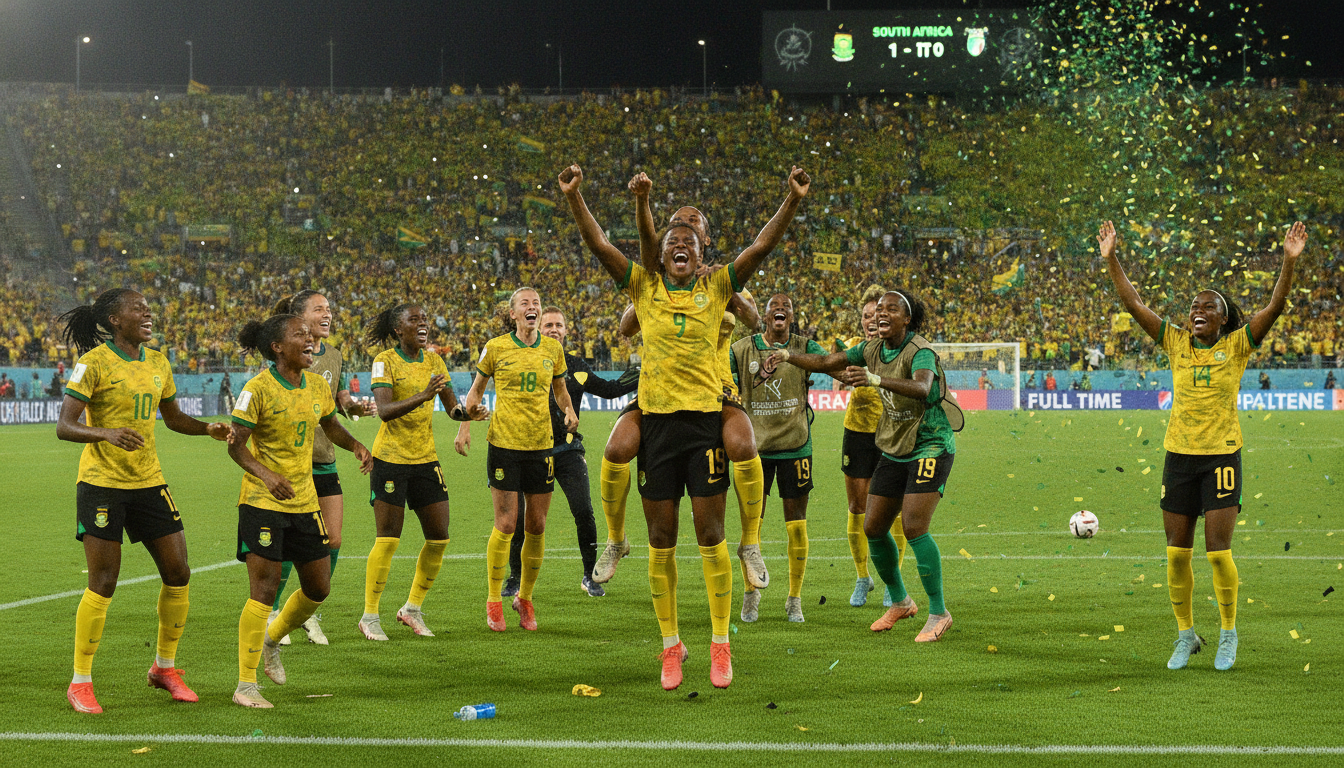
After six minutes of added time the referee’s final whistle confirmed a famous South African victory and sparked jubilant scenes among players and supporters. The squad gathered in celebration on the pitch while fans erupted with relief and pride at a historic progression. The win will be remembered as a defining moment in the tournament for South African football.
Preparations now turn to the Round of 32, where South Africa will meet another qualifying side in a single-elimination fixture. Hugo Broos and his coaching staff face the task of recovering and refining tactics ahead of the next match. The immediate focus will be on recovery, analysis of the opposition, and maintaining the unity and discipline that produced this breakthrough.
South Africa’s qualification to the World Cup Round of 32 represents a milestone that rewards defensive grit, timely attacking invention and decisive coaching interventions, and it sets the stage for the team to test itself further in the knockout phase.