Chung Mong-gyu resignation follows South Korea’s early World Cup exit; KFA vows review
Chung Mong-gyu resignation: KFA president steps down after South Korea’s early World Cup exit; coach Hong Myung-bo also quit as federation pledges review.
Chung Mong-gyu resigns after World Cup elimination
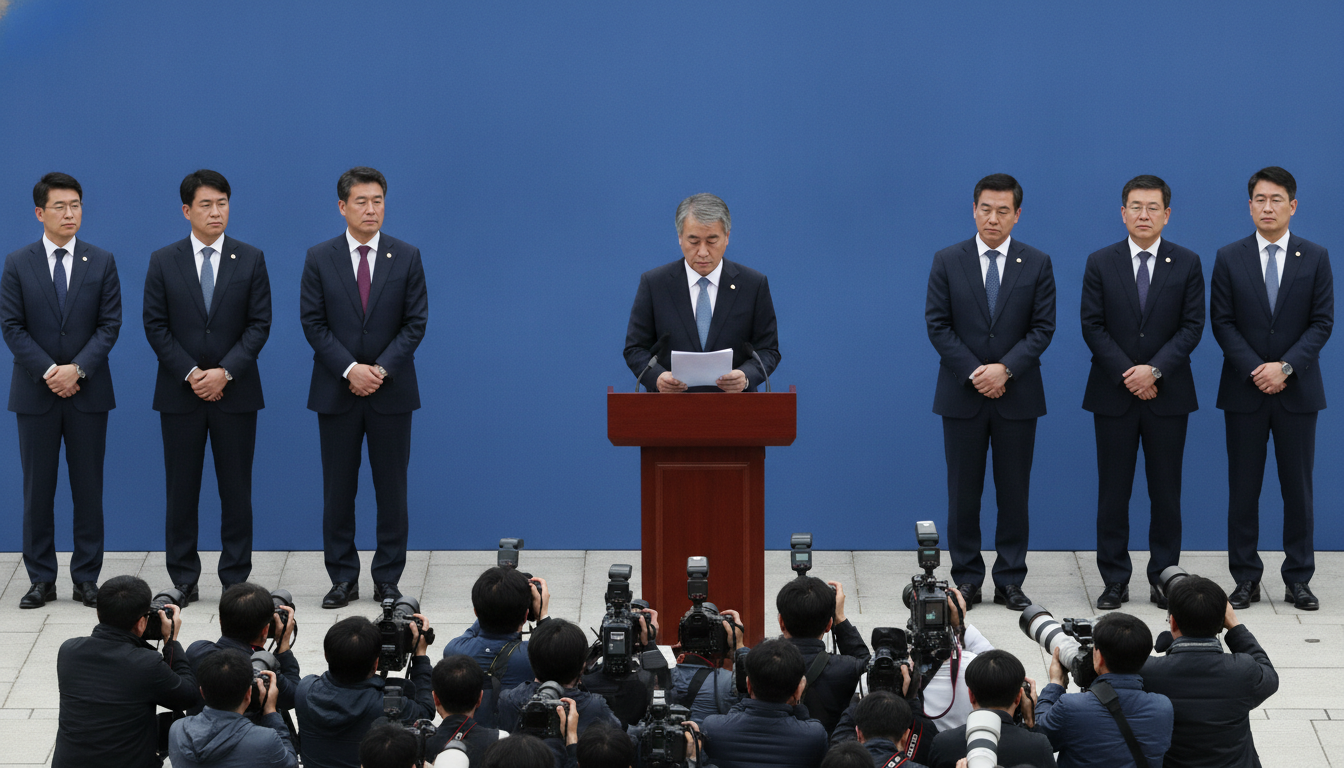
Chung Mong-gyu tendered his resignation as president of the Korea Football Association (KFA) on Monday, July 6, 2026, following South Korea’s premature exit from the FIFA World Cup. The move came a week after the national team failed to qualify for the knockout stage, finishing with three points and missing out as one of the eight best third-placed sides.
Chung had led the KFA since January 2013 and presided over his final executive meeting at Korea Football Park in Cheonan, about 90km south of Seoul, before handing in his resignation. In a brief statement released by the federation, he thanked supporters for their backing and apologised for the disappointment caused during the tournament.
Immediate fallout and leadership departures
The Chung Mong-gyu resignation followed a cascade of high-level exits and public criticism that intensified after the group-stage elimination. Head coach Hong Myung-bo resigned last week, acknowledging responsibility for the team’s shortfall after South Korea accumulated only three points in the group phase.
President Lee Jae-myung publicly criticised the team’s performance, a rebuke that increased pressure on both the coaching staff and KFA leadership. The dual departures leave the federation facing an immediate leadership vacuum at a moment when supporters and officials are calling for a clear plan to address systemic failings.
Match results and group-stage performance
South Korea opened the campaign with a 2-1 victory over the Czech Republic, a result that briefly raised hopes of progression from the group. Those hopes were undone by narrow 1-0 defeats to Mexico and South Africa that left the team with insufficient points to advance.
The elimination marks the third time South Korea has exited at the group stage in its last four World Cups, intensifying scrutiny over tactical decisions, squad selection and the development pathway for national players. Analysts and fans alike have highlighted the team’s inability to build on early momentum as a central issue.
KFA statement and public reaction
Following his resignation, the KFA issued a concise statement in which Chung expressed gratitude to fans and apologised for disappointing moments during his tenure. The federation signalled that a formal review of the World Cup campaign would be conducted and that steps would be taken to address shortcomings.
Public reaction was swift and mixed, with some supporters acknowledging Chung’s long service and others demanding substantial changes within the association. Calls for transparency in the upcoming review and for an accelerated timetable to appoint interim leadership were prominent among supporters and commentators.
Player responses and Son Heung-min’s comments
Senior players have also spoken about the emotional toll of the early exit, with captain Son Heung-min saying he felt a strong sense of responsibility for the national team’s performance. Son’s statement reflected the wider sense of disappointment across the squad and underscored the personal accountability senior figures felt in the aftermath.
Other members of the squad offered private apologies to fans and pledged to participate in future rebuilding efforts, but several players are expected to face questions about form, fitness and roles within the team as the federation and incoming leadership conduct their review.
Implications for South Korean football and needed reforms
The resignations expose deeper questions about the governance, talent pipeline and strategic planning of South Korean football. With Chung having led the KFA for more than a decade, the federation must now confront entrenched policies and consider structural changes to coaching pathways, youth development and international recruitment strategies.
Observers say any substantive reform will need to address coaching standards, domestic league scheduling and clearer integration between youth academies and the senior national team. The federation’s promised review is likely to focus on those areas, alongside proposals to improve scouting and player transition from domestic competition to the international stage.
Transition process and timeline for new leadership
The KFA will now proceed with established protocols to accept Chung’s resignation and appoint interim leadership while starting the search for a permanent president. The federation’s statutes set out procedures for emergency meetings of the executive committee and for convening an extraordinary general meeting if needed.
Stakeholders expect the KFA to publish a timetable for the leadership transition and for a transparent selection process for both the next president and the head coach. Football administrators and political figures will likely press for a swift but thorough process to restore confidence ahead of upcoming regional qualifiers and continental competitions.
International context and future competitions
South Korea’s World Cup campaign will be reviewed not only domestically but also by partners and confederation officials who monitor national team progress across Asia. The early exit has implications for the country’s standing in regional competitions and for preparations ahead of the next international calendar cycle.
The federation will need to balance immediate fixes with longer-term planning to ensure competitive readiness for upcoming qualifiers and tournaments. That balance will be central to rebuilding trust with a passionate fan base that expects consistent performances on the global stage.
Chung Mong-gyu’s resignation marks a significant turning point for South Korean football, bringing an end to a 13-year presidency and initiating a period of reflection and change across the KFA and national team structures. The federation now faces the dual tasks of managing a leadership transition and delivering a credible plan to address the on-field failures that precipitated his departure.