South Korea vs Czechia: Hwang and Oh inspire late comeback to win 2-1 in Group A
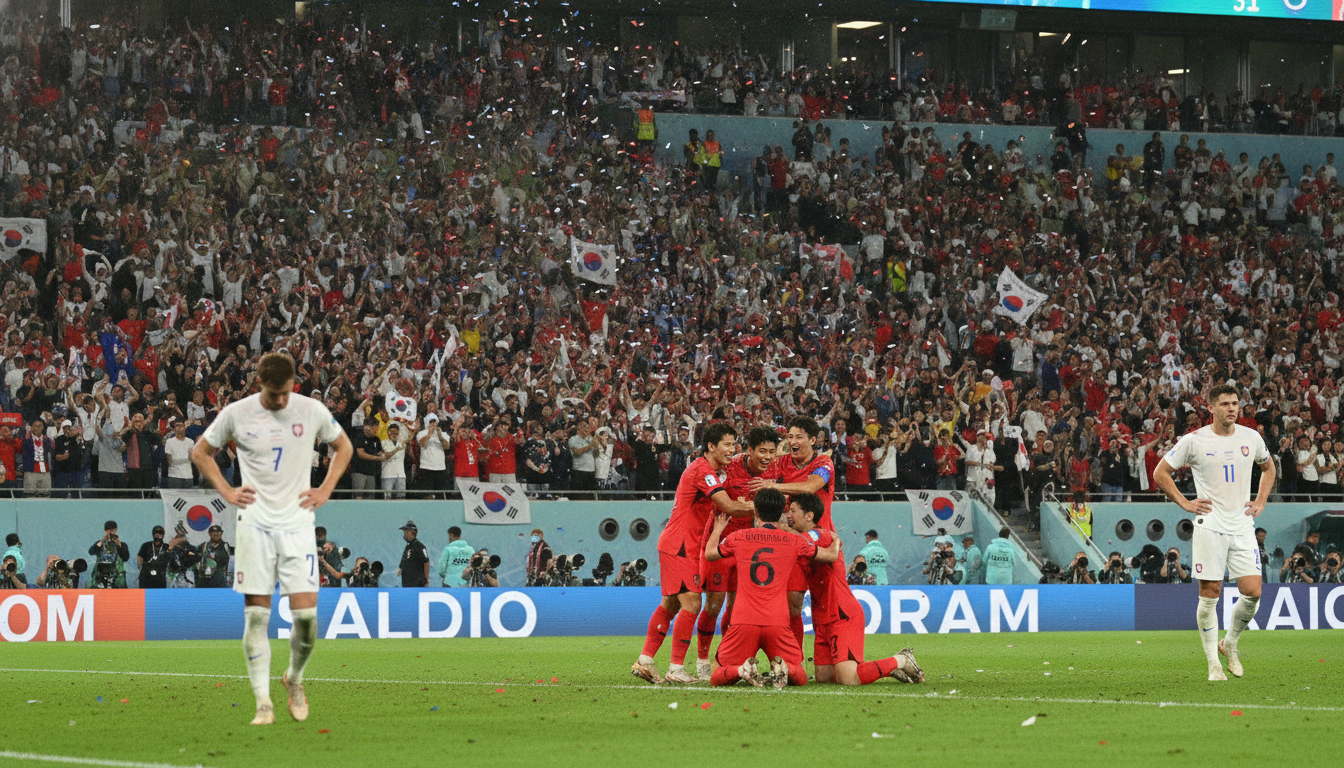
South Korea produced a dramatic late comeback to beat Czechia 2-1 in their opening Group A match of the 2026 World Cup, overturning a Ladislav Krejčí header to claim three points.


South Korea recovered from a goal down to win the second game of Group A at the 2026 World Cup, with In‑Beom Hwang and substitute Oh Hyeon‑Gyu combining to turn the contest in the final half hour. The result leaves South Korea level with early pace-setters in the group and gives the side momentum ahead of a meeting with Mexico on matchday two.
Late comeback decides tense Group A clash
The contest looked headed for a narrow Czechia victory after Ladislav Krejčí nodded in from a long Vladimír Coufal throw in the 60th minute, but South Korea rallied with high-quality finishes and late saves to secure the win. In‑Beom Hwang levelled the game before Oh Hyeon‑Gyu, introduced from the bench, struck ten minutes after his arrival to complete the turnaround.
The match opened slowly and settled into a midfield battle, but the last half hour produced end‑to‑end action as both teams pushed for control. Seung‑Gyu Kim made crucial stops late on to preserve the three points for South Korea and ensure the visitors left with a deserved victory.
How the goals unfolded
Czechia took the lead when Ladislav Krejčí met a long throw from Vladimír Coufal and powered a header past the goalkeeper at the hour mark. The goal followed a period of Czech dominance in set pieces and gave the home side a narrow advantage when the game appeared evenly balanced.
South Korea responded by increasing tempo and width, and In‑Beom Hwang produced a composed finish to restore parity, drawing his team back into the contest. The winner arrived after a swift attacking move involving Hwang as a provider and Oh Hyeon‑Gyu as the finisher, with the substitute’s quick impact decisive.
Tactical shifts and key substitutions
Both managers made adjustments as the match opened up, with Czechia initially compact and attempting to launch attacks from wide positions and long throws. South Korea shifted to a more direct attacking posture in the final third of the game, pressing higher and committing more players forward.
The introduction of Oh Hyeon‑Gyu proved pivotal; his fresh movement unsettled the Czech defence and created space for Hwang to operate as a creator. Czechia’s own attacking group, which included forwards deployed to test South Korea’s backline, could not find a second goal despite sustained efforts late on.
Standout performers on both sides
In‑Beom Hwang stood out for his influence on South Korea’s attacking transitions, combining late runs with calm finishing to both score and set up chances. Seung‑Gyu Kim’s late saves were instrumental in securing the clean sheet after the comeback, producing two confident stops that denied Czechia a route back into the match.
For Czechia, Vladimír Coufal’s long throw created the opening goal and underlined his threat from wide positions and set plays. Ladislav Krejčí’s headed finish rewarded persistent pressing and good positioning, while Patrik Schick and Adam Hložek remained dangerous in pockets but were unable to convert opportunities into a match‑winning goal.
Player context and Bundesliga links
The lineups featured a notable Bundesliga presence, including Bayern Munich’s Kim Min‑jae and Mainz’s Lee Jae‑sung for South Korea, while Czechia started Robin Hranáč, Vladimír Coufal, Adam Hložek and Patrik Schick, who ply their trade in Germany. Borussia Mönchengladbach’s Jens Castrop was an unused substitute for South Korea, reflecting the tournament’s mix of experience and emerging talent.
Those club links provided familiar narratives about form and fitness heading into the World Cup, with players drawing on recent seasons in top European leagues to perform on the global stage. The Bundesliga representation helped shape the tactical approaches both sides employed, particularly in how they defended set pieces and transitioned into attack.
What the result means for Group A
The victory gives South Korea an important three points in a tightly contested Group A, setting up a pivotal match against Mexico in matchday two. A positive result against Mexico would put South Korea in a strong position to contend for the knockout spots, while Czechia must regroup quickly to chase their first points.
Czechia will now look to address defensive lapses and the inability to put the game beyond doubt after taking the lead. The narrow defeat underlines the fine margins in World Cup group play, where a single substitution or moment of individual brilliance can swing outcome and momentum.
Coaching decisions and tournament implications
Coaches on both sides will take different lessons from a match decided in the final stages: South Korea’s manager will be heartened by the squad’s resilience and the effectiveness of attacking changes, while Czechia’s staff must evaluate late defensive organisation and opportunities missed to extend their advantage.
Tournament management, including rotation and substitution timing, will be under scrutiny as the group progresses and match congestion intensifies. Players who made decisive contributions—either through late goals or match‑saving interventions—are likely to see increased trust from their managers in the games to come.
South Korea’s comeback win over Czechia delivered an early Group A statement at the 2026 World Cup, showcasing resilience, quality finishing and decisive interventions from substitutes.