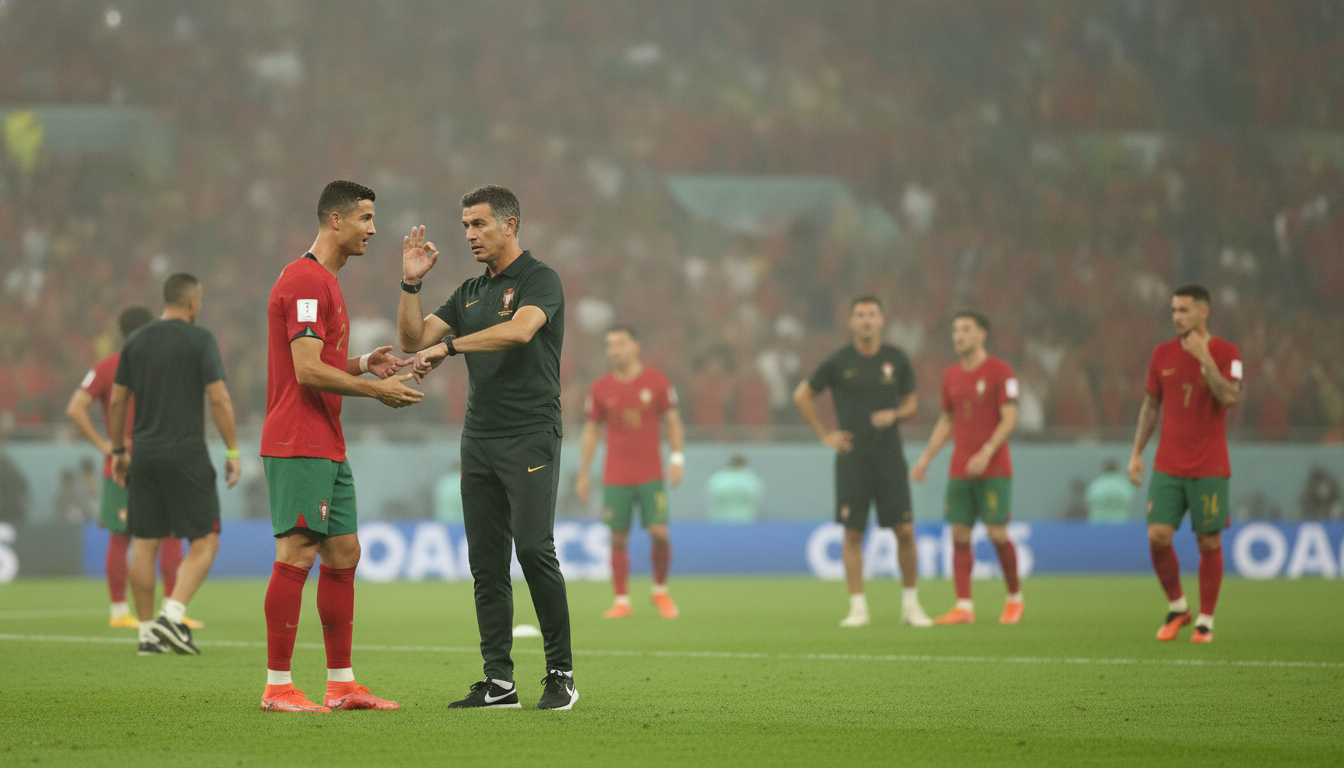
Portugal vs Nigeria: Martínez says Ronaldo’s early withdrawal was pre-planned as Portugal tune World Cup preparations
Portugal vs Nigeria: Martínez says Ronaldo’s 60-minute plan was prearranged as Portugal beat Nigeria 2-1 in Leiria, tuning tactics ahead of the 2026 World Cup.

Portugal edged Nigeria 2-1 in Leiria on Tuesday as Roberto Martínez confirmed Cristiano Ronaldo’s early substitution was part of a pre-set plan rather than a reaction to the veteran’s missed chances. The Portugal vs Nigeria friendly doubled as a final rehearsal before the 2026 World Cup, with Martínez using the match to manage minutes, test combinations and sharpen tactical details. Portugal took the lead through Pedro Neto, conceded an equaliser from Akor Adams, and ultimately sealed the win with a second-half strike from Francisco Conceição. The result offered Martínez measurable progress and left both teams with clear takeaways ahead of the tournament.
Martínez outlines substitution plan
Martínez defended the decision to replace Ronaldo after roughly an hour, saying the change had been scheduled before kick-off as part of a workload plan for the group. The coach explicitly mapped out minutes for several starters, noting that Diogo Costa would play the full 90 while Cristiano would be limited to 60. Martínez framed the rotations as deliberate steps to balance player fitness with tactical rehearsal ahead of the World Cup. He stressed the importance of synchronising the squad’s preparations, calling the exercise “a source of pride” for the national team staff.
Martínez described the fixture as more than a simple test of who could win on the night, framing it instead as a controlled environment to manage load and evaluate tactical options. Substitutions were used to give younger players targeted minutes and to replicate scenarios the team might face in tournament play. The coach underlined that the primary objective was to ensure the squad arrived at the World Cup physically fresh and tactically aligned. Those planning choices set the tone for how Portugal will approach rotation once the tournament begins.
Match decisive moments in Leiria
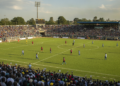
Portugal opened the scoring when Pedro Neto finished a move that showcased the side’s pace and ability to exploit transitional moments. Nigeria responded with a clinical equaliser from Akor Adams after a defensive lapse, keeping the game finely balanced at half-time. The match shifted after the interval when Francisco Conceição produced the decisive intervention, tapping home a chance that gave Portugal the edge. From that point Portugal increasingly dictated tempo, generating opportunities while restricting Nigeria’s chances on the ball.
The flow of the game reflected two teams at different stages of preparation: Portugal intent on refining patterns, Nigeria probing with direct, physical attacks. Statistically, the second half was dominated by Portugal as they limited the Super Eagles to few meaningful shots and increased their own attacking threat. While the scoreboard ended 2-1, the granular data and possession phases suggested Portugal had secured the control they sought. The result therefore carried both immediate reward and the procedural benefit of simulated match conditions for Martínez’s wider plan.
Ronaldo’s role and minutes management
Cristiano Ronaldo, who marked his first senior appearance against Nigeria, had a busy evening in promising areas but did not convert his opportunities, finishing with several near-misses. Rather than being a reflection of form, Martínez explained the substitution was dictated by a preset minutes allocation designed to protect long-term fitness and manage tournament readiness. Limiting Ronaldo to approximately 60 minutes allowed the coaching staff to observe his influence on the game without risking fatigue, a priority given his age and role within the squad. The approach illustrates Portugal’s balancing act between leveraging Ronaldo’s experience and preserving his effectiveness across a congested calendar.
Ronaldo’s involvement still delivered tactical value: his movement attracted markers, opened spaces for team-mates, and contributed to Portugal’s early momentum. But the substitution also created an opportunity for other attacking options to stake a claim, with Conceição’s second-half contribution demonstrating the depth available to Martínez. This management of minutes signals how Portugal may deploy older stars in the tournament, combining short, high-impact appearances with reliance on younger players to provide sustained energy. The strategy will be watched closely as match-day decisions in Qatar grow more consequential.
Second-half control and tactical tweaks
Martínez pointed to improvements after half-time, highlighting the team’s intensity without the ball and their ability to regain confidence through collective pressing and compactness. Portugal’s second-half plan focused on reducing transitional vulnerabilities and tightening defensive spaces to blunt Nigeria’s direct threat. The coaching staff’s in-game adjustments—both in personnel and positional instructions—allowed Portugal to dominate the middle third and create higher-quality chances. Those tactical refinements served Martínez’s immediate objective of validating training concepts in a live match environment.
The adjustment process exposed the value of targeted substitutions, as changes in personnel brought fresh legs and different stylistic options that unsettled Nigeria’s structure. Portugal’s midfield work-rate increased, pressing lanes were better covered and forward runs were timed with greater synchronization. This combination produced sustained periods where Portugal controlled the ball and tempo, limiting the Super Eagles to speculative efforts rather than clear goal attempts. For Martínez the successful tweaks were evidence that the squad has absorbed recent tactical amendments and can execute them under pressure.
Portugal’s World Cup readiness and Group K opener on June 17
Martínez used the night in Leiria to underline his belief that Portugal have reached a level of readiness for the World Cup, both in physical conditioning and tactical comprehension. The squad’s next major checkpoint arrives quickly: Portugal open their 2026 World Cup campaign against DR Congo on June 17, a fixture Martínez and his staff will now approach with clearer minutes management and selection parameters. The team’s preparation period, Martínez said, permitted players to recover and assimilate ideas, producing a squad that he believes has balance across all three group matches. That confidence matters in a tournament where margins are small and recovery between fixtures is at a premium.
Portugal’s placement in Group K alongside Colombia, DR Congo and Uzbekistan presents a blend of technical and physical opponents, requiring both tactical flexibility and squad depth. Martínez’s usage of the Leiria friendly—carefully distributing minutes across key starters and fringe players—appears designed to build a pecking order and to identify combinations capable of flourishing in short-turnaround tournament games. With the opener on June 17 fast approaching, Portugal will now finalize set pieces, contingency plans and minute-by-minute rotation policies that align with Martínez’s overarching World Cup blueprint. The next selection decisions will indicate how the coach intends to balance ambition and pragmatism on the world stage.
Nigeria’s positives and lessons from the loss
Despite the defeat, Nigeria displayed attributes that will please coach Eric Chelle, notably physical intensity, direct attacking transitions and a willingness to test Portugal’s back line. The Super Eagles produced a deserved first-half performance that created real problems for Portugal and yielded the equaliser through Akor Adams. That spell underlines Nigeria’s potential to trouble high-level opposition in quick transition phases and highlights areas of strength on the counter. For Chelle, the test against a top-tier European side will feed into final adjustments ahead of Nigeria’s upcoming competitive fixtures.
However, Nigeria’s second-half retreat from chance creation points to areas requiring refinement, particularly in sustaining attacking rhythm and managing game-state pressure. The Super Eagles struggled to register a meaningful shot after the interval, a reflection of Portugal’s tactical tightening and Nigeria’s diminishing cohesion in possession. Moving forward, Nigeria will need to work on maintaining structure once opponents adapt and pressing intensity ramps up. The Leiria encounter nevertheless provided valuable evidence that Nigeria can compete physically and tactically, giving the coaching staff a platform to convert potential into consistent results.
Immediate takeaways for both camps
For Portugal, the primary takeaway from the Portugal vs Nigeria friendly was the successful execution of a planned rotation model that combined competitive intensity with controlled load management. Martínez achieved the twin aims of securing a victory and validating tactical adjustments that should serve the team well in the tournament. The match also clarified squad hierarchy in key positions and provided measurable minutes for players who will be required to step in during the World Cup. Those practical outcomes will likely ease selection debates and sharpen training focus in the final days before the opener.
Nigeria left Leiria with reasons for encouragement as well as clear tasks to address, having demonstrated capacity on the break but also vulnerability when pressed for extended periods. The experience of facing a European side with multiple systems to deploy offers Chelle actionable insights into defensive organisation and transitional attacking patterns. Both teams therefore gained useful, concrete information from a single friendly, transforming the match into a productive rehearsal rather than just a scoreline. With the World Cup now imminent, the lessons from Leiria will be measured by how quickly each staff converts observation into improvement.
Portugal’s preparation moves into a decisive phase after this controlled friendly, with Martínez balancing the dual demands of winning and finalising a practical rotation strategy. Nigeria take with them a competitive performance that highlighted strengths to build on and weaknesses to mend. The Portugal vs Nigeria game in Leiria will be remembered less for its controversies and more for its role as a calibrated step in each team’s march toward the World Cup.