South Korea World Cup squad to return under heavy police security after backlash and threats to coach Hong Myung-bo
South Korea World Cup squad to return under heightened police protection after public outrage over coach Hong Myung-bo’s failed campaign; airport homecoming canceled amid threats.

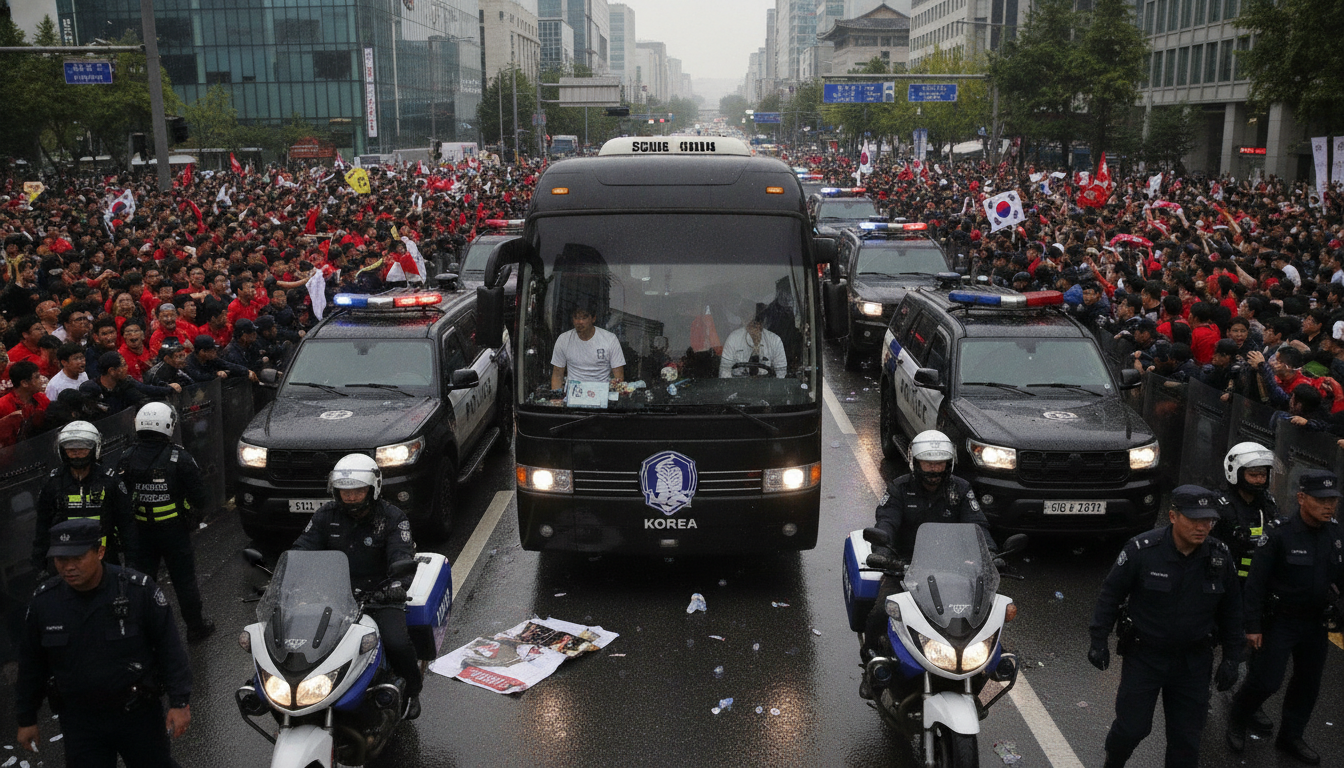
South Korea World Cup squad members are scheduled to return to Incheon under a heightened police presence after an angry public response to the team’s failure to progress beyond the group stage. The Korea Football Association announced there would be no formal airport reception, a departure from tradition that follows reports of online death threats, viral business bans and calls for major changes in the national setup. Key players including Kim Min-jae, Hwang Hee-chan, Hwang In-beom and Lee Kang-in were expected to land together after leaving Mexico, while Son Heung-min was due to arrive separately, according to local reports.
Police to secure Incheon arrival after threats
The National Police Agency said officers will be on hand at Incheon International Airport to manage any disturbances and ensure the safety of returning players and staff. The stepped-up security follows reports that a deleted online message allegedly threatened to kill head coach Hong Myung-bo at the airport upon his return. Local reporting said investigators were tracing the author of the post and weighing criminal intimidation charges as part of a broader effort to deter violent threats against public figures.
Police sources indicated preparations included coordination with airport authorities, crowd-control plans and contingency measures to separate arriving squad members from any demonstrators. While officials have not released operational details, authorities emphasized the priority of protecting players, staff and other travelers from harassment or potential clashes. The visible security presence marks a significant shift from the customary celebratory receptions that once greeted national teams on home soil.
KFA cancels traditional airport reception
The Korea Football Association confirmed through Yonhap that there would be no separate homecoming event, citing safety concerns and the volatile public atmosphere surrounding the team’s exit from the tournament. Officials said the decision was intended to reduce the risk of confrontations and to prevent the reception from being hijacked by protesters or abusive fans. This will be the first time South Korea has returned from an overseas World Cup without an organized airport welcome, underscoring the depth of public dissatisfaction.
KFA representatives also signaled that the association would focus on ensuring the players could complete travel formalities and return to their clubs or homes without further incident. The cancellation has sparked fresh debate over how national federations balance fan engagement with duty of care when emotions run high. For some supporters the absence of a formal reception will be a bitter symbol of a campaign that failed to meet expectations.
Public anger spills into businesses and daily life
The hostility directed at the national side has spilled beyond social media into everyday spaces, with multiple reports of restaurants, convenience stores and small businesses posting notices banning coach Hong or other team officials from their premises. Such local actions have been shared widely online, amplifying the perception of a national backlash against the football establishment. Business owners cited frustration at perceived failures within the national program, even as critics warned that bans risked escalating the situation and stigmatizing individuals.
Social-media commentary ranged from expression of disappointment to vitriolic abuse, reflecting a polarized national conversation about accountability and standards in Korean football. Analysts said the intensity of the reaction is shaped by the sport’s high profile at home and by recent investments and expectations tied to international performance. Observers also noted that when public anger moves into the physical world, it complicates efforts to restore civility and constructive debate.
Investigations and potential legal action
Authorities are reportedly tracing the individual behind the deleted online threat that targeted Hong, with Korean outlets saying the poster claimed to be a 41-year-old U.S. national. Police indicated they would explore criminal charges if the investigation confirms the authorship and intent behind the message. Prosecutors and law-enforcement officials have in recent years taken a firmer stance on online threats and doxxing, treating such incidents as potentially criminal rather than mere abusive speech.
The possibility of legal action extends beyond the author of a single post, as police review other messages and social-media campaigns that may constitute criminal intimidation or harassment. Legal experts cautioned that while authorities can pursue perpetrators under statutes covering threats and defamation, proving intent and locating anonymous accounts often presents practical difficulties. Still, officials said the visible pursuit of suspects is intended to send a deterrent signal to would-be abusers.
Pressure mounts for governance changes in Korean football
Public fury over the World Cup campaign has reignited calls for structural reforms within Korea’s football hierarchy, with commentators urging the Korea Football Association and related bodies to undertake reviews of coaching appointments, talent development and strategic planning. Critics argue that the national program’s shortcomings reflect deeper issues in scouting, domestic league coordination and the transition of youth prospects to senior international roles. Those demands for sweeping change have been echoed by former players, pundits and some fan groups seeking accountability at all levels.
Federation executives face the dual challenge of responding to immediate safety concerns while also mapping a path forward to rebuild trust with fans and stakeholders. The KFA is expected to convene internal assessments and public consultations in the coming weeks as it evaluates performance and governance. Any decisions on leadership, funding or programmatic overhaul will be closely scrutinized, and could reshape the sport’s direction ahead of upcoming qualifiers and age-group competitions.
Player welfare and international obligations
Amid the swirl of controversy, attention has turned to the welfare of players whose club and international schedules require prompt departures and returns. Teams traveling long distances following tournament exits confront logistical and psychological pressures, and federations bear a responsibility to protect athletes from abuse and ensure safe passage home. Clubs with players in the national squad must also be prepared to manage reintegration and to offer support where needed, particularly if players face sustained public criticism.
International partners and tournament organizers routinely advise federations on security protocols and crisis management, and the situation in Korea highlights how those frameworks can be tested when public sentiment becomes hostile. Industry officials said lessons from the episode may inform future procedures for managing contentious homecomings and safeguarding participants from targeted harassment.
South Korea now confronts both an immediate security problem and a broader debate about leadership, accountability and the culture surrounding the national team. The cancellation of a long-standing homecoming ritual signals the depth of public frustration while prompting officials to reassess how they engage supporters and protect personnel. As investigations proceed and discussions about reform continue, the federation will be tasked with restoring a constructive relationship between the national team and its passionate fan base.