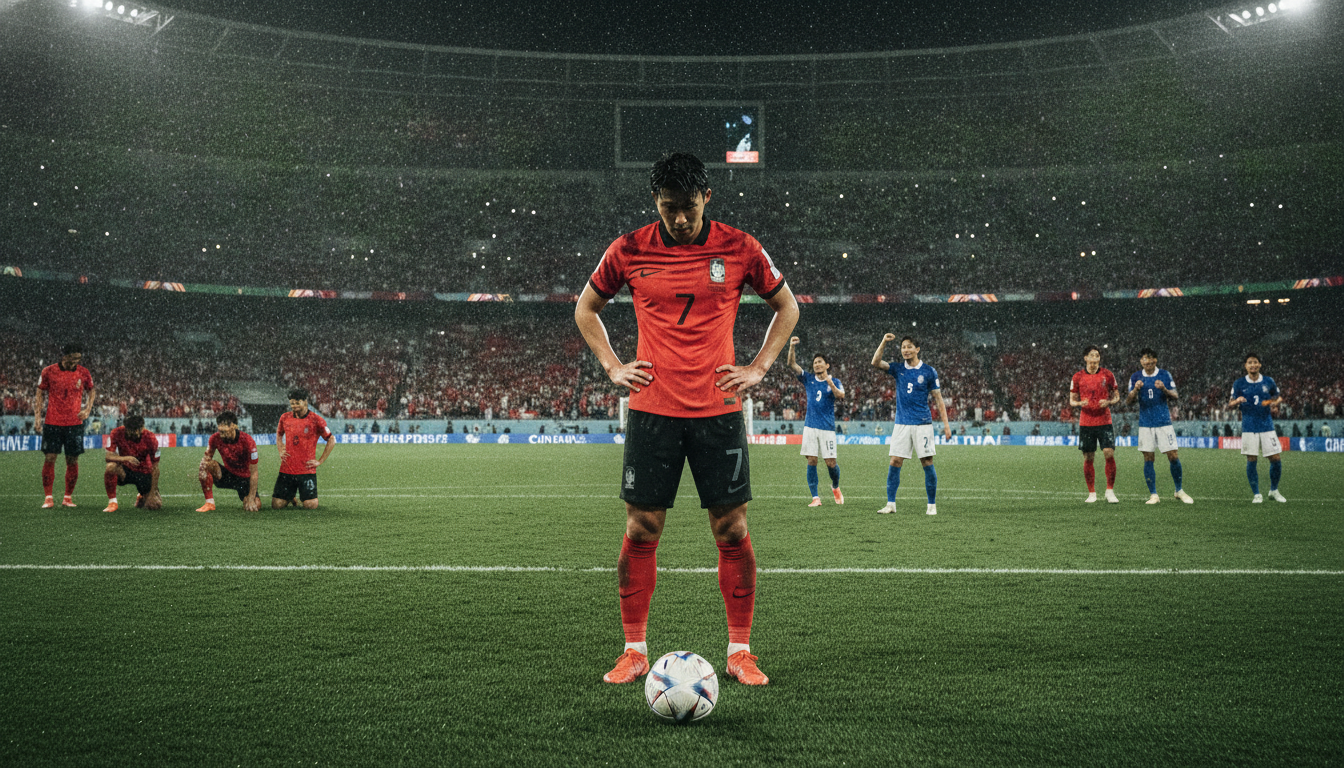
South Korea World Cup hopes left hanging after 1-0 loss to South Africa
South Korea’s World Cup prospects took a major hit as Hong Myung-bo’s side lost 1-0 to South Africa, leaving their qualification hopes for the knockout stage uncertain.

Match summary and immediate outcome
South Korea’s World Cup campaign slipped precariously after a 1-0 defeat by South Africa, a result that leaves their path to the knockout rounds uncertain. The match saw coach Hong Myung-bo omit Son Heung-min from the starting eleven, a selection decision that intensified scrutiny after a narrow and nervy performance. Thapelo Maseko scored the game’s decisive goal in the 63rd minute, a clinical finish that proved enough for South Africa to secure their place in the last 16. With Mexico topping Group A and Czech Republic eliminated, South Korea now await confirmation of whether they will advance as one of the best third-placed teams.
Selection controversy around Son Heung-min
Hong Myung-bo’s decision to leave Son Heung-min on the bench dominated pregame discussion and shaped the narrative during the match. Son’s absence from the starting lineup removed a central attacking threat and altered South Korea’s forward structure from the opening whistle. The choice suggested tactical caution or perhaps concerns about fitness, but it invited criticism as South Korea struggled to produce coherent attacking patterns. Substitutions later in the match attempted to inject pace and creativity, but they came too late to overturn the deficit.
How the decisive goal unfolded
The match’s single goal arrived midway through the second half when Thapelo Maseko, South Africa’s most influential winger on the night, finished intelligently after a sustained period of pressure. Maseko’s run and composition exposed gaps in South Korea’s defensive alignment, and the finish was clinical enough to be decisive. Prior to the goal, South Africa had fashioned multiple chances and looked the more threatening team across long stretches of the game. South Korea defended resolutely at times but failed to match that intensity in transition, and the goal underlined the visitors’ capacity to capitalize on mistakes.
Tactical trends and in-game dynamics
South Korea began the match with a conservative shape that prioritized defensive stability but sacrificed territorial dominance in the final third. That configuration allowed South Africa to control wide areas and supply Maseko with room to operate, placing continual strain on South Korean full-backs. When South Korea attempted to press higher, their lines lacked coordination and the midfield transitions were disjointed. The substitutions introduced after half-time shifted personnel but not the underlying balance, leaving South Korea to chase the match rather than dictate play.
Group implications and qualification scenarios
The defeat complicates South Korea’s route through Group A and lifts the pressure on other teams competing for best third-place qualification slots. Mexico secured top spot in the group after a comprehensive 3-0 victory over the Czech Republic, leaving South Korea to fight for one of the remaining progression positions. South Korea now possess a single point from their group campaign under Hong’s stewardship, and they must await results from other groups to learn whether their tally will suffice. The wider tournament picture is also unflattering for Asian football, with several continental representatives struggling to accumulate points and goals in this World Cup.
Wider concerns for Asian teams at the tournament
South Korea’s loss is part of a broader pattern that has seen Asian sides underperform at this World Cup, a trend that will invite analysis back home and across the confederation. Collectively, the region’s teams have struggled to convert openings and maintain defensive solidity against well-organized opponents. The cumulative record — with few wins, multiple defeats, and a sizable negative goal difference — reflects tactical shortcomings and executional lapses at critical moments. Tournament context will frame questions about coaching approaches, player preparation, and the competitiveness of domestic development structures.
South Korea must now prepare for their remaining group fixture with both tactical adjustments and psychological resilience. The coaching staff will be under pressure to explain selection choices and to present a clearer plan for creating balanced attacking phases without exposing defensive vulnerabilities. Players who were passive in key moments will need to step up and assert themselves if the team hopes to advance.
Confidence and game management will be as important as formation tweaks for South Korea going forward. The balance between protecting a narrow lead and seeking a decisive breakthrough has proven challenging in matches of this intensity. Clear leadership on the pitch, coupled with decisive substitutions, will be required to stabilize performances and to generate the necessary momentum in their final group game.
South Africa, by contrast, can take encouragement from a composed away performance that combined quick wide play with clinical finishing. Their progression to a World Cup knockout stage for the first time will be celebrated at home and marks a notable achievement for coach and squad. The victory also underlines the value of structured wing play and the capacity to convert pressure into goals against technically sound opponents.
For Hong Myung-bo, the result compounds an already delicate position given his past inability to progress teams from the group stage in global tournaments. The immediate focus will be on reversing the run and securing a positive result in the final group fixture, but public and media scrutiny will likely intensify. Discussions about squad selection, tactical identity and long-term planning for the national team are expected to accelerate following this setback.
The coming days will be dominated by analysis of match footage and by debates over tactical alternatives that could unlock South Korea’s attacking potential. Whether Hong opts to reinstate Son Heung-min to the starting lineup or to pursue different attacking combinations will be a central storyline leading into the next game. Supporters and pundits will look for tangible evidence of a coherent plan that can translate into points.
The tournament’s broader scheduling means South Korea must manage recovery carefully and optimize training sessions for both tactical work and player freshness. Mental preparation will be equally important after a demoralizing result, and the squad’s ability to regroup will test the managerial staff’s leadership. With limited time before the next match, clarity and decisive action are imperative.
The immediate legacy of this fixture is twofold: South Africa celebrate a historic advance while South Korea face an anxious wait to learn their fate. The match offered distinct takeaways on tactical discipline and the importance of decisive attacking players. As the group stage concludes, national federations and coaching teams will inevitably reflect on lessons learned and on the adjustments necessary to remain competitive at future international tournaments.
South Korea now enter a critical phase where small margins will determine whether their World Cup journey continues. The squad’s response in training and in the final group match will define the public perception of Hong Myung-bo’s tenure and may influence longer-term decisions about the national program.
Fans and analysts alike will be watching closely as South Korea seek a timely response to a result that has left their World Cup hopes precarious and their footballing direction under intense scrutiny.