Spain 2026 World Cup: Ferran Torres’ 106th‑Minute Strike Gives Spain 1–0 Final Win Over Argentina
Ferran Torres’ extra‑time goal delivered Spain the 2026 World Cup title, a 1–0 victory over Argentina at MetLife Stadium on July 19, 2026, capping a tense final.

Ferran Torres’ 106th‑minute goal decides the final
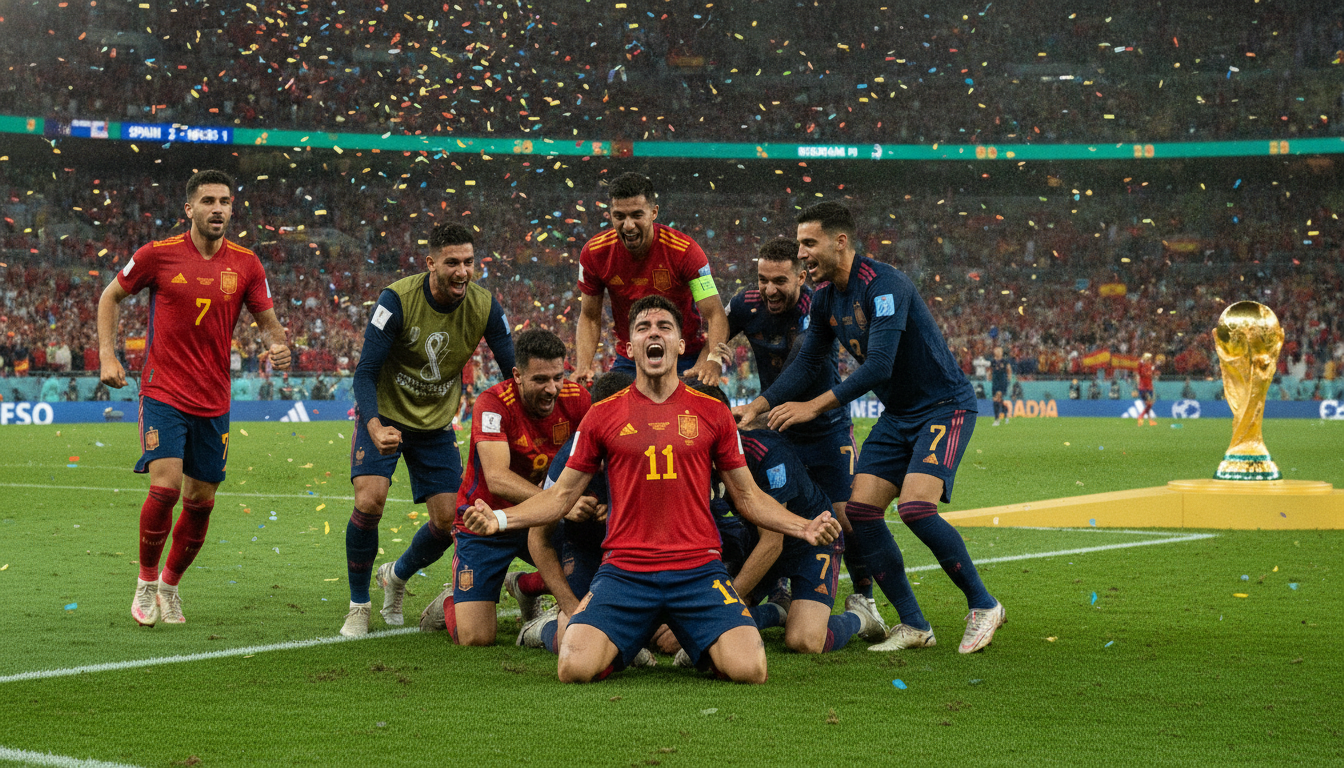
Spain secured the 2026 World Cup with a single, decisive moment when Ferran Torres headed home in the 106th minute of extra time to break the deadlock.
The strike was the culmination of a tightly contested match that produced few clear chances and heavy tactical measures from both sides.
Torres’ finish delivered immediate relief for Spain’s players and supporters, and it shaped the post‑match narrative across stadiums and fan zones worldwide.
The goal came after a period of sustained Spanish pressure, with the team finding a narrow opening that Argentina could not recover from in the remaining minutes.
MetLife Stadium hosted a high‑stakes defensive duel
The final at MetLife Stadium in East Rutherford, New Jersey, was attended by 80,663 spectators, who witnessed a match defined more by tactical discipline than open, end‑to‑end play.
Both managers set up teams to minimize risk, resulting in a cautious opening that gradually intensified as set pieces and transitions became the main avenues to goal.
Argentina and Spain traded possession but struggled to convert territorial advantage into clear opportunities, making set pieces and moments of individual quality decisive.
When Torres found space in extra time, it illustrated how a single break in concentration or lapse in marking can determine the outcome of a match between two elite sides.
Key moments and tactical turning points
The match pivoted on a handful of moments rather than sustained dominance from either team, with Spain’s winning play born out of a well‑worked sequence after a midfield turnover.
Argentina had spells of pressure in both halves but were often stifled by Spain’s compact defensive structure and disciplined pressing in central areas.
Coaches adjusted personnel and shape during the second half and extra time, searching for openings without exposing their lines to counterattacks.
Ultimately, Spain’s persistence in recycling possession and probing from the wings created the marginal advantage that led to Torres’ late strike.
Spain’s route to the final and squad contributions
Spain’s run to the 2026 World Cup final combined a strong defensive foundation with increasingly effective attacking rotations across the tournament.
Multiple players stepped into key roles at different stages, allowing Spain to balance possession football with pragmatic finishing when chances arrived.
The squad showed depth in rotation, with substitutes playing meaningful minutes in knockout matches en route to the final.
Coaches and staff were praised for their match management, substitutions and tactical tweaks that kept Spain competitive against varied opponents.
Global celebrations and scenes in Kigali fan zones
Football fever erupted far beyond New Jersey as fans watched the final in public viewing areas and fan zones, including large gatherings across Kigali.
Thousands of supporters converged at multiple fan zones in the Rwandan capital to follow the match live, creating an atmosphere of high anticipation that turned to jubilation after the decisive goal.
Scenes from Kigali mirrored celebrations in other parts of the world, with fans embracing, singing and waving national flags well into the night.
The widespread public viewings underscored the World Cup’s global reach and how a late moment in a single match can trigger mass celebrations thousands of miles from the stadium.
Post‑match protocol and high‑profile photograph with U.S. officials
Following the trophy presentation and customary celebrations on the pitch, Spain’s players and coaching staff were photographed alongside high‑profile figures, including the President of the United States and the president of FIFA.
The group photograph, taken on Sunday, July 19, 2026, captured the diplomatic and ceremonial dimension that accompanies modern major sporting events.
Officials and team representatives exchanged formal congratulations before players began their trophy tour and celebratory events with fans and national authorities.
The photograph and subsequent public moments highlighted how international sport frequently intersects with political and organizational leadership at the highest levels.
Spain’s 2026 World Cup triumph will be analyzed for its tactical nuance, squad management and the timing of decisive moments, with Ferran Torres’ extra‑time header standing as the defining image of the final.
The victory concludes Spain’s campaign with the ultimate prize, and it sets a benchmark for how finely balanced matches at the highest level can be resolved by a single, well‑executed action.
The tournament finale left supporters, pundits and national federations reflecting on small margins, squad depth and the role of preparation in reaching and winning a World Cup final.