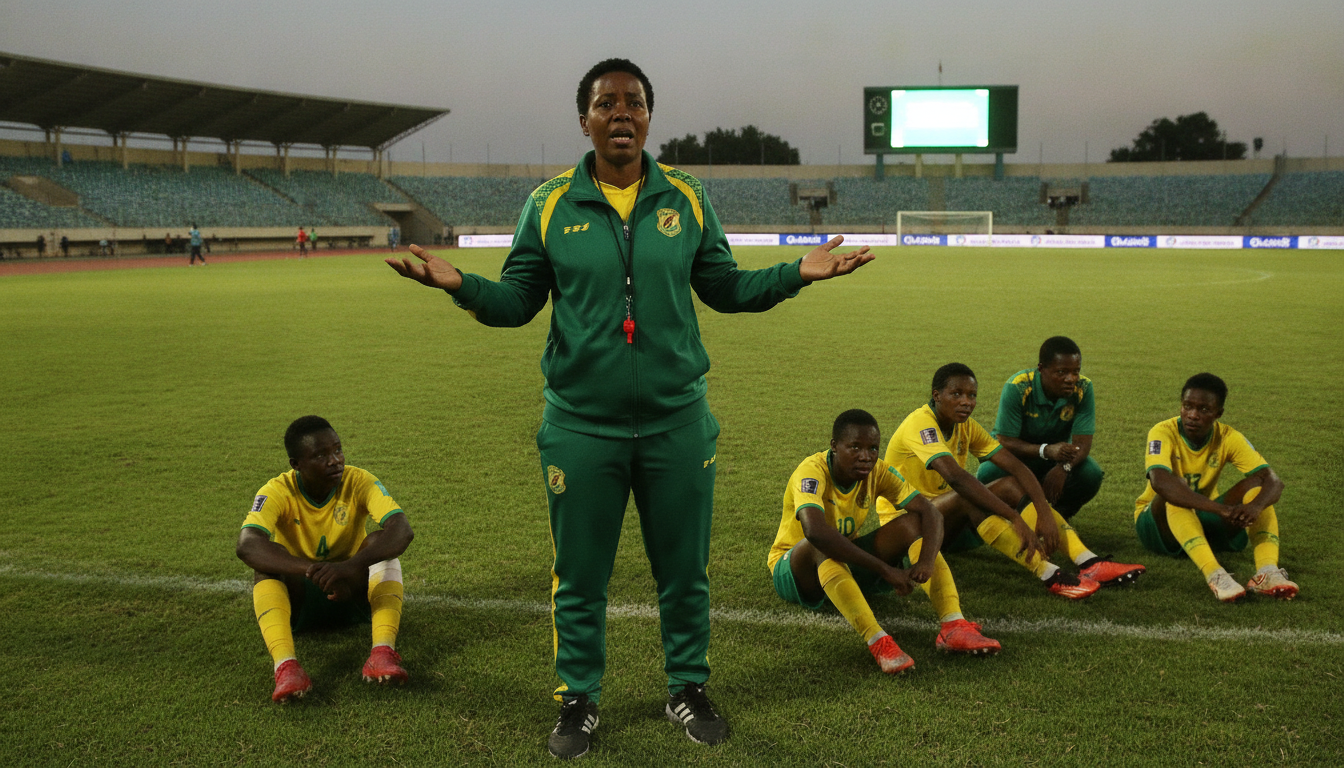
Twiga Stars Exit Women’s Cup of Nations After 2-1 Loss to Ivory Coast
Tanzania’s Twiga Stars exited the Women’s Cup of Nations following a 2-1 defeat to Ivory Coast on Tuesday, with coach Bakari Shime citing injuries and poor fitness as decisive factors. The loss ended Tanzania’s campaign after the Ivorians finished Group B unbeaten with seven points. Tanzania and Burkina Faso finished level on three points but missed out on the quarter-finals.


Injuries Halt Twiga Stars’ Progress
Tanzania’s hopes in the tournament were undermined by a string of injuries that left key positions weakened and forced the coach into unplanned substitutions. Bakari Shime confirmed several players began the match not fully fit and that further knocks during play prevented the team from executing its planned game model. The cumulative effect of these physical issues, he said, led to uncharacteristic errors at critical moments that Ivory Coast exploited.
The squad’s conditioning also emerged as a concern after the match, with Shime stressing that attempts to play through pain contributed to lapses in concentration and energy. Several players pushed on despite discomfort, limiting the team’s ability to maintain intensity for the full 90 minutes. That shortfall in match fitness, combined with injuries, ultimately proved decisive in a tightly contested group.
Opah Clement Forced Off Before Half
One of the pivotal moments came when forward Opah Clement was forced to leave the field in the first half, depriving Tanzania of a leading attacking option and a focal point for their offensive play. Clement had been central to the team’s forward movement and her early exit required Shime to reorganize his frontline under pressure. The loss of a talismanic striker altered the team’s dynamics and forced younger players into unfamiliar roles.
In response, Aisha Mnunka and Enekia Lunyamila were shifted forward to shoulder the attacking burden, while the side attempted to preserve its tactical shape. Those adjustments, however, were made on the fly and without the preparatory training time usually needed for such changes. The makeshift approach showed at stages, as the Twiga Stars struggled to find the clinical edge necessary to trouble a disciplined Ivorian defence.
Tactical Adjustments Disrupted Game Plan
Shime admitted that the unfolding fitness issues and injuries disrupted the tactical plan the squad had prepared for the match, making it harder to press and transition as intended. The coach had expected Ivory Coast to lose some organisation in the second half, but the enforced changes meant Tanzania could not sustain the pressure required to force that breakdown. Instead, the team had to contend with reassigning players and reshuffling defensive responsibilities.
One such forced alteration saw Anna Katunzi drop into a makeshift defensive role following an injury to Donesia Minja, a move that reduced midfield balance and limited forward support. These on-field substitutions shifted responsibilities away from positions where players had trained and prepared to execute specific tasks. The net effect was a disjointed performance at crucial moments as the squad sought to regain cohesion.
Second-half Setback and Penalty Decisive
The match swung further against Tanzania shortly after halftime when a defensive lapse led to a penalty and an Ivorians goal that stretched the lead. That second goal compounded the psychological blow caused by the first-half injury and made the task of mounting a comeback considerably steeper. Although Tanzania produced a late reply to make the scoreline respectable, they could not generate the sustained pressure needed to force an equaliser.
Conceding just before the break had already dented the Twiga Stars’ momentum, and the penalty deep into the second half further limited their margin for error. Ivory Coast, who finished the group unbeaten, managed the game with composure and capitalised on the openings presented by Tanzania’s disrupted shape. The final stages saw Tanzania press for a response, but the combination of fatigue and disrupted plans left gaps the Ivorians could exploit on the counter.
Group B Outcome Leaves Tanzania Short
The defeat confirmed the group standings: Ivory Coast topped Group B with seven points, while South Africa advanced into second place following a 1-0 win over Burkina Faso. Tanzania and Burkina Faso both finished the group with three points, but goal differences and head-to-head considerations meant both missed out on progression to the quarter-finals. The narrow margins underline how single moments — injuries, late goals, and individual errors — can determine a team’s fate in a compact group stage.
For the Twiga Stars, the result marks the end of a short but instructive tournament campaign in which they faced two of the continent’s stronger sides. The exit is a clear signal for the federation and coaching staff to reassess fitness preparation, depth in key positions, and contingency plans for in-game injuries. It also underscores the competitive level in the region and the small margins between advancing and being eliminated.
Shime Highlights Youth Progress and Calls for Patience
Despite the disappointment, Shime pointed to valuable experience gained by younger players who were blooded in a highly competitive environment against South Africa and Ivory Coast. He emphasised that exposure to top-level opponents is crucial for the development of a new generation and that the lessons learned will inform future selections and training emphases. The coach framed the tournament as part of a broader rebuilding process rather than an end point.
Shime also apologised to supporters for failing to meet the team’s targets, asking for continued backing as the side undergoes restructuring and recovery. He stressed the need for time to improve physical conditioning and to integrate younger prospects into a cohesive unit capable of competing consistently. The appeal for patience came with a commitment to regroup and address the shortcomings revealed during the group stage.
Practical Lessons and Immediate Priorities
Moving forward, the Twiga Stars’ immediate priorities are clear: strengthen medical and fitness protocols, bolster depth in key attacking and defensive positions, and design training programmes that mirror the intensity of tournament football. The coaching staff will need to work with the national federation to ensure that recovery and conditioning windows are protected between domestic seasons and international tournaments. Investment in sports science and a structured player rotation plan could reduce the risk of late-tournament fatigue and injury.
Scouting and development at the youth and domestic levels will also be central to building resilience across the squad, allowing replacements to step in without disrupting team balance. The performances of younger players in this tournament provide a foundation to build on, but translating that potential into consistent results will require a coordinated approach from coaches, clubs, and the national federation. Clearer contingency plans for injuries and more competitive friendly fixtures could help the Twiga Stars bridge the gap to Africa’s leading teams.
Tanzania leaves the tournament with hard lessons and a group of young players who have tasted top-level competition, and the coaching staff has signalled a commitment to addressing fitness, depth, and tactical flexibility ahead of the next cycle.