UEFA Boycott Approved by 55 Federations Over Infantino’s World Cup Private Equity Plan
UEFA federations vote to boycott FIFA competitions over Gianni Infantino’s plan to sell World Cup stakes to private equity, deepening a governance crisis.
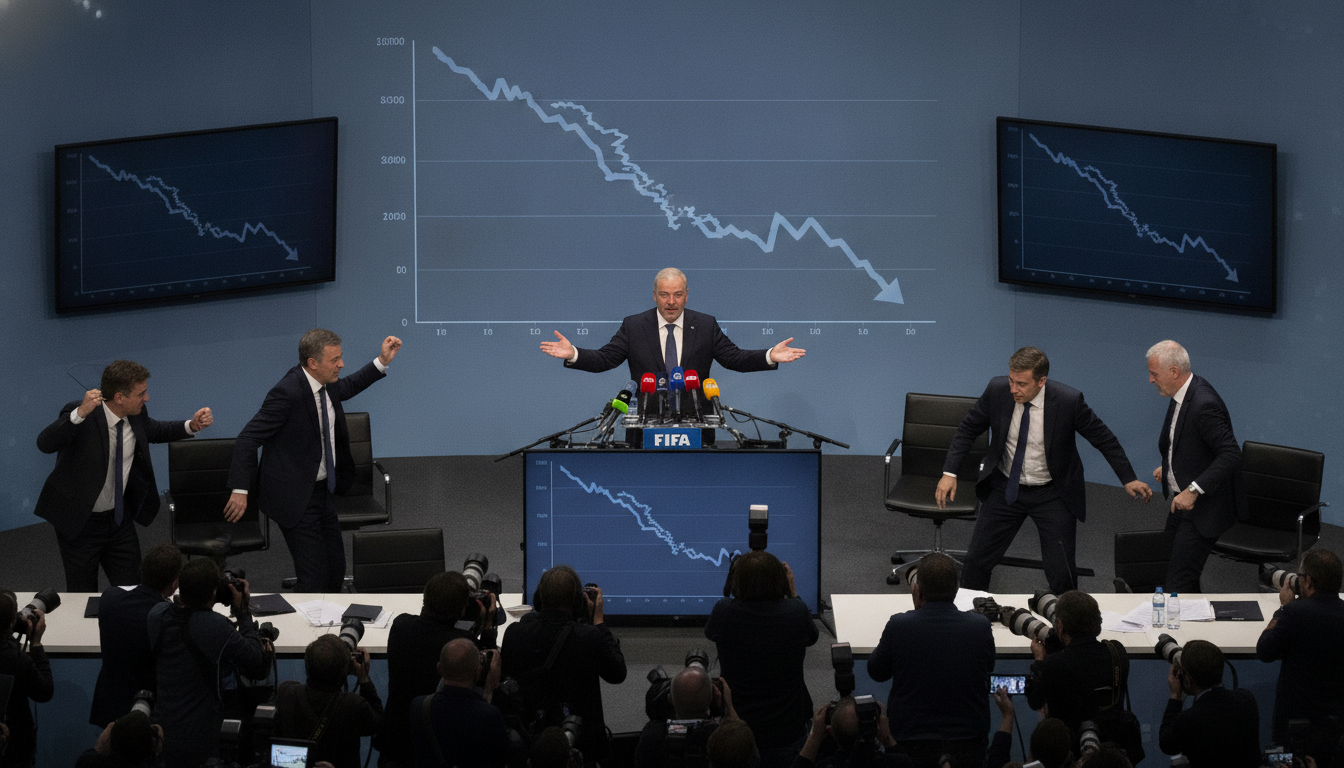
European federations moved on Thursday to enact a coordinated UEFA boycott of FIFA competitions in direct response to a proposal by FIFA president Gianni Infantino to commercialize and partly privatize World Cup revenues.
The decision, reached in an urgent online meeting of UEFA’s 55 national associations, formalizes a refusal to participate in FIFA-run tournaments while the plan remains on the table.
The move signals a major rupture between Europe’s governing body and world football’s governing institution and raises immediate questions about the staging of future FIFA events.
UEFA emergency meeting and formal resolution
The emergency session convened after reporting this week that Infantino had floated a deal to spin off FIFA’s commercial arm into a new entity with private investors holding a 20 percent stake.
UEFA said its 55 member associations agreed that they would not take part in FIFA competitions as long as such commercialisation was advanced, framing the action as a defense of the sport’s public ownership.
In a forceful statement, the body declared the World Cup “belongs to football” and vowed Europe would not allow it to be sold.
UEFA described the proposed transaction as a breach of FIFA’s responsibilities as custodian of the global game and a failure of leadership by its president.
The statement recalled Gianni Infantino’s long professional history inside UEFA, noting the irony of a former staffer leading the organisation accused of proposing to monetise the sport’s flagship tournament.
The boycott decision followed immediate agreement among a wide cross-section of national federations and represents the most significant European challenge to FIFA governance in years.
Details of Infantino’s proposal and financial terms
Reports revealed that Infantino offered a payment of US$20 million to each of FIFA’s 211 member associations as part of the package, a sum that would have to be accepted by mid-September.
The broader commercial plan reportedly envisioned a US$20 billion subsidiary to house FIFA’s commercial rights, with 20 percent earmarked for external private investors who would take equity stakes.
Sources tied the principal investor to a New York investment firm established by Joshua Kushner, a figure publicly connected by family ties to Jared Kushner.
FIFA frames the proposal as a means to unlock capital to invest in football development and infrastructure, presenting private funding as a way to “turbocharge” the sport’s financial resources.
UEFA and its members contend that ceding ownership to private equity would transfer control over competition revenues and strategic direction to financiers whose priorities could diverge sharply from sporting interests.
The financial mechanics, including governance safeguards, revenue sharing and oversight mechanisms, have not been published in detail by FIFA, adding to UEFA’s concerns.
Why UEFA said the World Cup must remain public
UEFA’s position rests on a principle that the World Cup is a global sporting asset and should remain under the stewardship of national associations and confederations rather than private investors.
Officials argued that introducing private equity into control of the tournament risks prioritising profit maximisation over competitive integrity, access, and long-term development in less affluent regions.
The statement reiterated that some assets are “simply too important to sell,” underscoring a belief that sport has public and cultural dimensions that cannot be commodified without long-term harm.
European executives warned that allowing a minority private stake in FIFA’s commercial vehicle could set a precedent for future sales of broadcast, sponsorship and hosting rights.
They stressed that even minority investors with deep pockets could exert outsized influence over scheduling, format and allocation of revenues, changing the competitive landscape of international football.
For UEFA, protecting the World Cup’s ownership structure is also a means to defend domestic and continental competitions that depend on predictable calendars and revenue flows.
Immediate political and commercial fallout
The boycott announcement triggered swift debate among broadcasters, sponsors and tournament organisers over the practical implications for upcoming qualifiers and events.
A withdrawal of UEFA’s federations from FIFA competitions would affect European national teams, youth tournaments and potentially club competitions that interface with FIFA’s calendar.
Commercial partners will now face uncertainty about rights, deliverables and the medium-term value of their agreements with both UEFA and FIFA.
Governments and sporting authorities may be drawn into the dispute if the standoff threatens the staging of tournaments or the eligibility of players for major competitions.
Legal questions are also likely to follow, including whether national associations can lawfully refuse to participate in competitions governed by FIFA statutes and what sanctions, if any, might be imposed.
The escalation deepens a governance crisis that could prompt intervention by independent watchdogs or arbitration panels if the parties do not agree a path forward.
Reactions from national associations and the wider football community
Several national federations within UEFA publicly backed the boycott decision, citing the need to protect football’s collective interests.
Smaller associations, which rely heavily on shared income from global tournaments and solidarity payments, expressed particular concern about handing decision-making power to private investors.
Club representatives and player unions have so far urged caution, calling for transparency and dialogue while acknowledging the gravity of UEFA’s stance.
Some stakeholders worry about the divided loyalties that could emerge if continental and global bodies remain at odds, increasing friction in already congested calendars.
Players could be caught between national commitments and contractual obligations tied to FIFA-sanctioned competitions, a scenario that raises welfare and legal considerations.
Sponsors and broadcasters are likely to lobby for rapid clarification to protect commercial investments and campaign planning across international windows.
Next steps, timeline and potential resolutions
UEFA’s boycott resolution carries a clear deadline pressure because FIFA reportedly set mid-September as the window for acceptance of the offer to member associations.
That timeline gives both organisations a window to negotiate an alternative structure, present safeguards, or withdraw the proposal entirely before further escalation.
Diplomatic channels between FIFA and UEFA, and between individual national federations and FIFA, are now likely to be the primary avenues for resolving the dispute.
Independent legal and governance reviews could be proposed to assess whether a private stake in FIFA’s commercial arm is compatible with statutes and the broader public interest in sport.
Another possible path would see FIFA refine its proposal to exclude equity sales, instead pursuing other financing models such as long-term debt, licensing agreements or expanded sponsorships.
However, if talks fail and the boycott stands, the practical consequences for competition organisation and global football finances would be substantial and long-lasting.
The dispute marks a watershed moment for football governance, pitting a confederation that controls many of the sport’s richest competitions against a world governing body seeking new revenue models.
UEFA’s rejection of the privatization proposal underscores a wider debate about who should control the game’s most valuable assets and on what terms.
Resolving this conflict will require clear proposals, transparency on financial terms, and assurances that sport and fans—not only financiers—remain at the center of decision-making.
If the boycott persists, FIFA will face immediate operational challenges in staging competitions that historically depend on European participation and viewership.
That scenario could force compromise, legal contests or a reimagining of the commercial model for global football rights.
For now, both sides must weigh long-term stewardship of the game against immediate financial opportunities and the political risks of escalation.
European federations have positioned themselves as defenders of football’s public interest and custodial traditions in the face of a controversial commercial offer.
How FIFA responds—whether by revising the plan, engaging independent reviewers, or pushing forward despite opposition—will determine the next phase of this governance crisis.
The coming weeks will be crucial for fans, federations and commercial partners seeking clarity on the future ownership and management of the sport’s flagship tournament.
The international football calendar, broadcast contracts and the careers of players and coaches now hang in the balance as diplomatic and legal manoeuvring intensify.