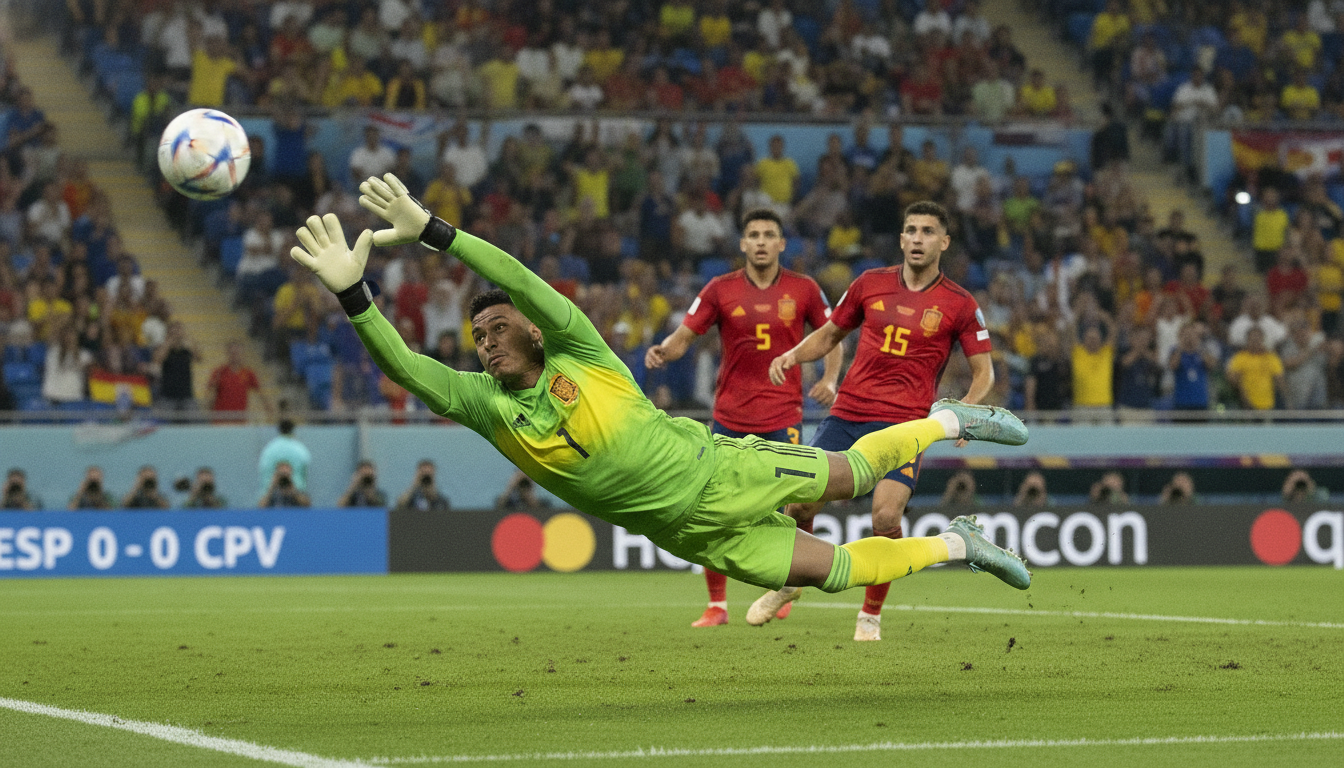
Vozinha Stars as Cape Verde Hold Spain to Historic 0-0 World Cup Draw
Vozinha kept Spain at bay as Cape Verde secured a shock 0-0 draw in their World Cup debut, the veteran goalkeeper producing a sequence of saves that anchored one of the tournament’s most talked-about results.


Vozinha Keeps Cape Verde Level Against Spain
Cape Verde’s debut at the World Cup turned into a defensive masterclass largely because of Vozinha, whose late thirties and early forties experience translated into a composed, high-pressure performance in Atlanta. He repeatedly denied Spain with reflex saves and commanding presence in the penalty area, ensuring the Blue Sharks left the pitch with a clean sheet. The scoreline reflected more than just a single match outcome; it marked a milestone for a nation making its first appearance on football’s biggest stage.
The draw dramatically altered expectations for Cape Verde’s group and put the team firmly on the global radar, with analysts noting the tactical discipline and organization that complemented Vozinha’s shot-stopping. Spain dominated possession at times, but Cape Verde’s structure and the goalkeeper’s timely interventions neutralized several clear opportunities. For a team whose appearance at the World Cup is a historic achievement, preserving a draw against the European champions became a defining moment.
Name Rooted in 1986 World Cup Story
Beyond the matchday heroics, Vozinha’s personal history carries a surprising link to the 1986 World Cup, a tournament that inspired his family and ultimately shaped the name on his birth certificate. His given name, Josimar Dias, reflects his parents’ admiration for the Brazilian full-back Josimar, whose tournament in Mexico produced memorable goals and captured global attention. The family’s original preference, however, had been to honor an Argentine forward from that same era, a detail that reveals how footballing icons from different continents intersected in one Cape Verdean household.
A civic registry policy at the time prevented the use of certain foreign names, prompting a pivot from the initial choice to the name Josimar, and that decision created a quiet but meaningful link between Vozinha and the stars of Mexico 1986. The familial record therefore preserved a homage to football history, and the name would later be spoken aloud by millions as the goalkeeper made saves on football’s grandest platform. The anecdote places Vozinha’s World Cup emergence into a longer narrative about how international tournaments shape identity far from the stadiums where they are played.
From Street Football to the World Stage
Vozinha’s trajectory from playing in Cape Verdean neighborhoods to anchoring his national side at the World Cup is a testament to grassroots development and personal resilience. Raised largely by grandparents while his parents worked abroad, he cut his teeth in informal games against older opponents, a formative environment that tested his toughness and sharpened his instincts. Those early experiences—marked by rough play and quick returns to the safety of home—helped craft a goalkeeper comfortable under pressure and unafraid of physical confrontation.
The nickname "Vozinha," born from childhood teasing about running back to his grandmother, transformed over time into a badge of identity and pride rather than an insult. As those street-level lessons translated into a professional career, the name stuck and eventually became synonymous with reliability in goal across the African game. His performance against Spain, therefore, is not only the product of coaching and conditioning but also the cumulative effect of decades-long lessons learned in modest settings.
Reaction From Jorge Valdano and Cross-Continental Echoes
The human-interest element of Vozinha’s naming story reached further into football history when Jorge Valdano, the Argentine forward who inspired the original naming idea, learned of the connection shortly before the World Cup match. Valdano’s response—surprise followed by warmth—underscored the way personal histories and global sporting moments can intersect unexpectedly. His expression of pride and felicitations to Vozinha and his family added a poetic symmetry to a tournament that often revives past legends while creating new ones.
That exchange also highlighted the cultural affinities at play in Cape Verde, a Lusophone nation whose football loyalties and inspirations have long straddled Portugal and Brazil while also admiring players from elsewhere. The mix of influences in Vozinha’s name—an attempted homage to Argentina and an eventual official naming after a Brazilian who shone in 1986—mirrors the broader tapestry of football fandom in the islands. It is a reminder that World Cup legacies travel, inform personal identities, and bridge generations across oceans.
Personal Loss, National Pride and Social Media Surge
Vozinha’s emotional reflection after the draw brought attention to the personal sacrifices and losses that have marked his life, and to the pride that moment represented for Cape Verdeans everywhere. He spoke of family members who reared him and who are no longer alive to witness this achievement, casting the result as a shared triumph for those who shaped him. That element of personal narrative resonated widely, amplifying the public’s response beyond the purely sporting achievement.
The goalkeeper’s profile surged in the hours after the match as social media audiences discovered his story and celebrated his saves, with reports indicating a substantial jump in followers and global interest. While the spotlight can be fleeting in modern sports culture, the immediate amplification helped cement the draw as one of the World Cup’s memorable upsets and put Cape Verdean football squarely into international conversation. For a nation of modest size, the reputational gains from such a performance are tangible and potentially transformational.
What the Result Means for Cape Verde Football
The clean sheet against a European heavyweight provides Cape Verde with a platform to build momentum in the tournament and to attract broader attention to its domestic and diaspora talent pools. Sporting directors, coaches and scouts watching the match will have taken note of the team’s tactical cohesion and of individual performances that may suggest deeper resources than previously assumed. For local football authorities, the moment offers leverage to advocate for investment in infrastructure and youth development, using the World Cup result to argue that Cape Verde can produce players capable of competing on the world stage.
Beyond the administrative and developmental implications, the result has an immediate cultural impact at home and among Cape Verdean communities abroad, reinforcing national identity and pride. The team’s ability to execute a disciplined defensive game plan while relying on a veteran goalkeeper’s composure speaks to a blend of preparation and character. As the tournament progresses, how Cape Verde channels this result—whether as a springboard to further surprises or as a singular historic moment—will shape the legacy of this squad for years to come.
Vozinha’s performance, his name’s unexpected roots in the 1986 World Cup, and the emotional backdrop of family and community together paint a portrait of a player whose significance in Atlanta will outlast a single match. That portrait is now part of Cape Verde’s sporting history and the wider narrative of this World Cup, where small nations and veteran personalities continue to write memorable chapters.