World Cup group stage: Norway and France vie for Group I top spot while Messi’s Argentina maps a knockout route
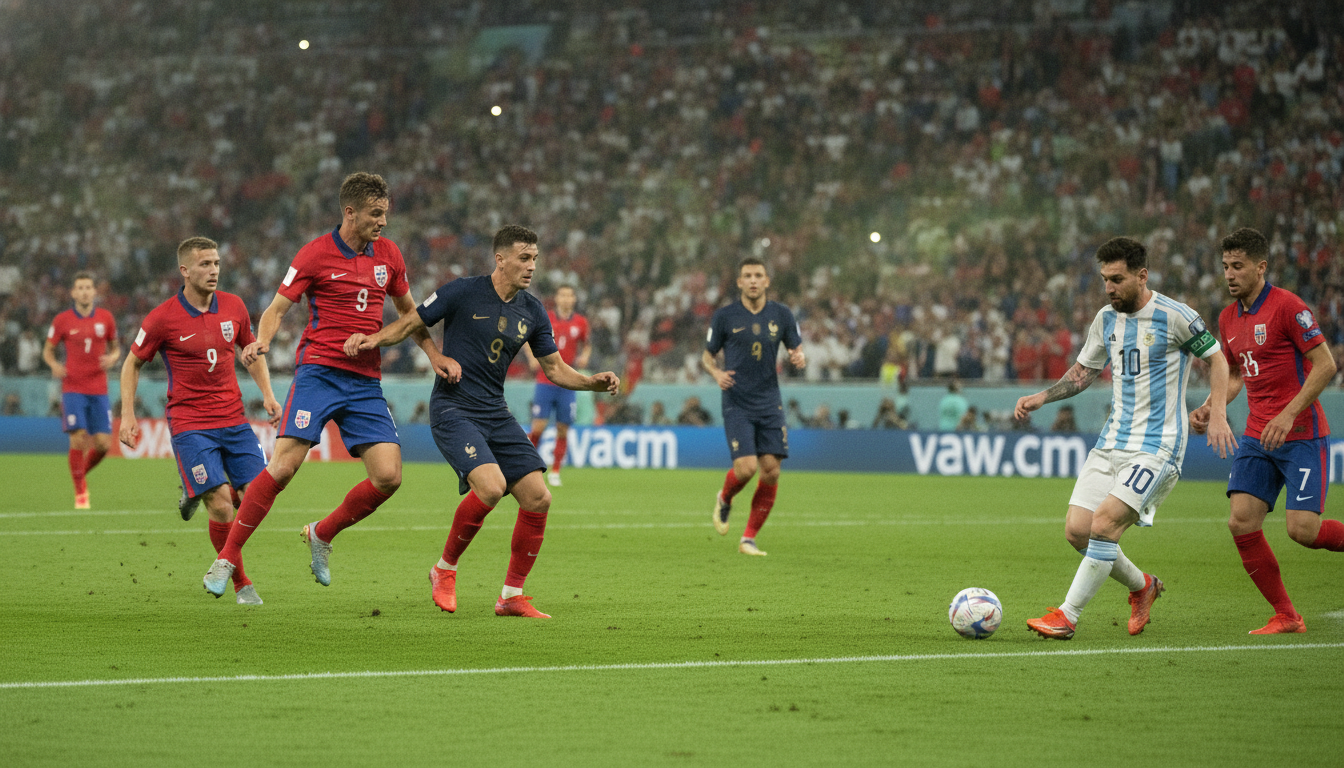
France and Norway are set to decide the Group I order as the 2026 World Cup group stage continues, and Lionel Messi’s Argentina are plotting a path through the newly expanded knockout bracket. The World Cup group stage in Canada, Mexico and the United States has produced drama and shifting permutations that will determine who meets whom in the round of 32 and beyond. Fans will be watching Friday’s Norway–France clash for the Group I decider, while Argentina’s draw and bracket position outline a concrete route that could lead Messi back to the final. (fifa.com)
Group I showdown: Norway and France to decide top spot
France and Norway head into their last group matches with contrasting momentum: France recovered with a win that secured progression, while Norway have ridden Erling Haaland’s scoring form to a dominant position. Both teams know topping Group I would deliver a more favourable opening in the round of 32 than finishing second or relying on third-place permutations. The group also includes Senegal and Iraq, a mix that has produced high-scoring games and a test of squad depth for the European giants. (fifa.com)
The immediate stakes are straightforward: the winner claims the Group I top slot and the cleaner bracket line that comes with it. France’s late win over Iraq was delayed and disrupted by severe weather but ultimately confirmed Didier Deschamps’s side into the knockouts, leaving the top spot for decision in the Norway meeting. Norway’s attacking profile has been driven by Haaland’s prolific scoring and a direct approach that has troubled Africa’s representatives in the group. Those tactical contrasts set up a decisive match with place and momentum on the line. (lemonde.fr)
What topping Group I would mean for the bracket
Under the 48-team format, topping Group I maps to a specific round-of-32 slot that avoids some heavy early opponents but can still pull in a dangerous third-placed side from across the board. The tournament’s bracket assigns the Group I winner to a match against one of the eight best third-placed teams from a cluster of groups, meaning the nominal reward of first place is tempered by the unknown identity of that third-placed qualifier. That uncertainty is significant: a top seed can still face an in-form side that underperformed in a tough group, making tactical preparation and squad rotation critical. (en.wikipedia.org)
Finishing second in Group I gives a different path, typically pairing the runner-up against a winner or runner-up from neighbouring bracket sections and often producing quicker meetings with seeded teams. The expanded field has multiplied potential pairings, so teams that manage to secure top spot will still need to navigate one extra knockout round compared with previous World Cups, but they will preserve the best possible pathway available inside their bracket quadrant. That strategic calculus is shaping how Deschamps and Solbakken approach lineup choices and minute management. (worldcuppath.com)
How Argentina can map a path to the final
Argentina sit in Group J and, as title holders, begin the knockout phase inside a bracket pre-mapped by FIFA’s round-of-32 schedule. Whether Argentina top Group J or finish second, their immediate opponent will come from a tightly defined set of groups — most likely a Group H side or a third-placed qualifier depending on final placings. From there the bracket narrows in a predictable way: a round-of-32 win advances a side to the round of 16, then the quarter-final, semi-final and the final at MetLife Stadium on July 19. That five-step knockout run makes the early group results vital to the shape of the entire campaign. (fifa.com)
Lionel Scaloni’s squad benefit from a favourable distribution of seeded sides across the bracket designed to separate the top pre-tournament seeds until the late rounds. That structure means Argentina are unlikely to meet other top-four seeds — such as France or England — until the semifinals at the earliest, provided they and those opponents each avoid upsets. The bracket therefore rewards consistent group-stage performance and reduces the chance of an immediate heavyweight clash, but it does not remove the need to beat elite opponents across five consecutive knockout fixtures. (worldcupwiki.com)
Key matchups Argentina could face in each knockout round
If Argentina top Group J as expected, their round-of-32 opponent will be determined by the combinatorial matchups assigned to Group J’s finishing positions, meaning they could face a runner-up from a neighbouring group or one of the better third-placed teams. A typical projection would see Argentina meet a Group H side early on, then face progressively tougher winners from adjacent bracket sections in the round of 16 and quarter-finals. Those adjacent sections include teams drawn from groups with strong European and South American presences, so the road to the final is likely to feature at least one marquee encounter before the semis. (ppr-www.fifa.com)
Beyond the round of 16 the bracket opens into potential quarter- and semi-final matchups with sides that have survived other bracket quarters — candidates commonly mentioned by analysts include Spain, Brazil, France or Portugal depending on how results fall. That means Argentina’s potential encounters will combine continental styles and tactical variety: from compact, disciplined European sides to explosive South American attackers. Each successive round increases the tactical complexity for Scaloni’s staff, who must prepare for multiple stylistic possibilities while managing fitness and suspensions. (skysports.com)
Tactical form and player fitness shaping the routes
Player form — above all Messi’s finishing and creative influence — will be decisive for Argentina, just as Haaland’s goals have defined Norway’s campaign and Mbappé’s returns could tilt France’s prospects. Early signs from the group stage show Messi continuing to influence games and Erling Haaland scoring at pace, trends that matter because individual hot streaks can decide single-elimination matches. Depth and rotation will also be crucial: the expanded tournament forces one extra knockout game compared with recent editions, increasing the premium on bench players who can change games in the later stages. (apnews.com)
Injury management and minutes played in the group stage are further variables that can alter the ideal route. Managers are balancing the desire to win the group with the need to preserve legs for what could be eight matches to the final, and disciplinary suspensions can reshuffle knockout calculations overnight. Coaching decisions about when to rest starters, who to deploy against defensive third-placed qualifiers, and how to adapt to opponents’ pressing patterns will all feed into whether a team’s theoretical route to the final becomes a practical one. (worldcuppath.com)
Scheduling, travel and weather as potential wildcards
The tri-national host plan spreads matches across wide distances in the United States, Canada and Mexico, and that logistical footprint introduces travel and recovery as factors in any long run to the final. Teams that win their groups in venues closer to subsequent knockout host cities will enjoy shorter transfers and slightly reduced recovery demands than those who must fly across time zones. Tournament scheduling and stadia allocations mean that even small differences in travel can compound across five or six knockout fixtures, especially in hot or storm-prone locations. (fifa.com)
Weather already played a role in Group I when France’s game was halted for more than two hours by thunderstorms, a disruption that tested they and the match officials’ ability to manage momentum and focus. Such interruptions and the physical wear from intense group matches can influence manager choices in the round of 32, particularly when teams have to prepare for unfamiliar opponents who enter as third-placed qualifiers with nothing to lose. The combination of travel, climate and mid-tournament interruptions is an under-appreciated factor that could tilt marginal knockout ties. (lemonde.fr)
Both the Group I decider and Argentina’s bracket position are now concrete storylines in a World Cup that rewards momentum and punishes complacency. Norway and France meet with the group crown at stake, while Argentina will convert its group results into a mapped knockout route that can be optimised with careful rotation, tactical planning and an eye on fitness. The next week of fixtures will determine which teams draw the clearest lines toward New Jersey and which will need to navigate stickier, more perilous paths.