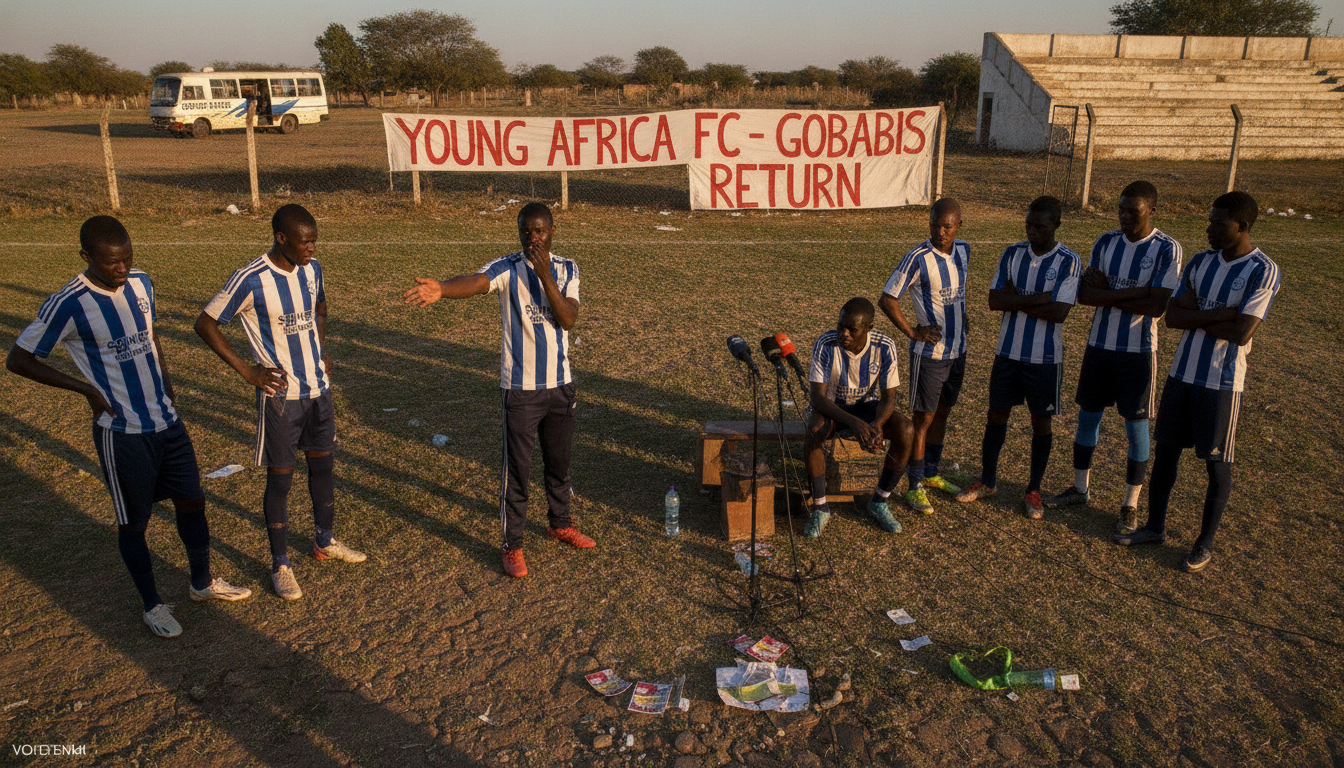
Young Africa FC admits worst NPFL season but vows rebound with Gobabis return
Young Africa FC admits a record low in NPFL 2025/26 but avoided relegation; founder Marley Ngarizemo promises return to Gobabis and summer reinforcements.


Young Africa FC founder Marley Ngarizemo has acknowledged that the club endured its poorest Namibia Premier Football League campaign in the 2025/26 season but confirmed the team escaped relegation and is already planning a rebound. Ngarizemo described the season as the worst in the club’s history, citing training disruptions and the challenges of operating away from their home base. He said the club recorded eight wins, nine draws and 13 defeats and will target structural changes ahead of the next campaign.
Owner calls 2025/26 the club’s worst season
Marley Ngarizemo did not mince words when assessing the campaign, calling it the club’s worst since its founding. He said the team failed to reach expected standards despite a roster that, on paper, included quality players. The blunt assessment underscores internal awareness at the club that results and preparation fell short of the mark.
Ngarizemo added that declining morale and inconsistent preparation contributed to underachievement on match days. He said the lack of a stable training base and limited daily field work forced the squad into an unbalanced preparation regime. That dynamic, he argued, produced performances that were below the club’s historical standards.
The founder noted personal stress and concern as results failed to follow the club’s plans, making the season difficult for both management and players. He flagged that unexpected poor runs have knock-on effects on confidence, selection and the ability to secure sponsors. Ngarizemo framed the season as a necessary reality check ahead of planned corrective measures.
Survived relegation but statistics show decline
Statistically Young Africa FC finished the season with eight victories, nine draws and 13 losses, a record Ngarizemo described as alarming for a club of its ambitions. The numbers left the team above the relegation zone, but the margin for error was thin and the overall points tally reflected inconsistency. Those results delivered survival but exposed weaknesses across attack, midfield control and defensive resilience.
Club officials have since studied match-by-match performance and identified lapses in the final third and set-piece defending as recurring issues. Analysts within the camp highlighted that the draw rate masked missed opportunities to convert narrow leads into full points. Management has signaled an intent to address those statistical deficiencies through targeted recruitment and tactical adjustments.
Ngarizemo emphasized that survival should not be celebrated as success, stressing that the club’s long-term objective remains upward mobility in the NPFL standings. He insisted that the off-season will be used to correct structural issues to avoid a repeat of this season’s precarious position. The conversation inside the club has shifted from immediate relief to sustainable recovery.
Training disruption in Windhoek blamed for poor form
A central grievance raised by the owner was the decision to base parts of the team in Windhoek, which he said undermined training consistency. Ngarizemo argued that players based in the capital were harder to monitor and control compared with those in Gobabis, where the club traditionally supervised rest and recovery. He maintained that the disparity in daily routines contributed to uneven fitness and preparation.
The club frequently found itself spending more time in gym work than on grass, according to the founder, disrupting the balance needed between strength training and on-field technical sessions. A shortage of suitable training fields in Windhoek forced coaches to adapt programs, often prioritizing conditioning over match-simulation. That compromise, Ngarizemo said, reduced the squad’s readiness for the tactical demands of competitive fixtures.
Coaches and players both flagged logistics and facility access as recurring obstacles during the season, prompting the leadership to consider a full return to Gobabis. Ngarizemo believes that re-establishing operations in the cattle town will restore the club’s traditional training rhythm and improve match preparedness. The move back home, he said, is central to the club’s plan to reset ahead of the next season.
Coaching staff and player development under review
While acknowledging a group of promising performers, Ngarizemo said the coaching team could have produced better results with stable training infrastructure. He identified experience gaps among some players and stressed the need for continued technical development and mental conditioning. The owner insisted that coaching plans must be aligned with daily access to the pitch and with a programme that prioritizes football training over gym time.
The club plans to conduct a detailed review of the coaching structure, including training schedules, scouting and player-support services. Ngarizemo indicated possible adjustments to the backroom staff and a renewed focus on bespoke development for younger squad members. Emphasis will be placed on converting promising talent into consistent performers who can execute the manager’s tactical approach.
Ngarizemo also highlighted individual standouts from the season while noting that even high performers had areas to improve. The club’s scouting and medical teams will work jointly to build individualized development plans aimed at addressing technical and physical shortcomings. The stated goal is to produce a more balanced, mentally resilient squad able to compete consistently in the NPFL.
Preparations tied to NPFL schedule and sponsorship clarity
Uncertainty over the start date of the 2026/27 NPFL season and the presence of a substantive sponsor is shaping the club’s immediate planning horizon. Ngarizemo said Young Africa FC will postpone major recruitment and logistic commitments until the league announces a confirmed kickoff and financial framework. That caution reflects the practical constraints on cash flow and the need to align contracts with a definitive calendar.
The founder underlined that the club remains committed to reinforcements but must ensure timing and budget suitability before finalizing signings. He suggested that once the NPFL clarifies dates and commercial backing, the club will move quickly to secure targets and optimize preseason work. This staged approach is designed to protect the club’s financial health while still improving the squad.
Ngarizemo appealed to league authorities and potential sponsors to provide clarity as soon as possible so clubs can plan training camps, trials and logistics with confidence. He warned that continued ambiguity increases operational risk and hampers recruitment efforts across the division. Young Africa FC is therefore taking a pragmatic stance until the governing body issues a formal schedule.
Outlook for 2026/27 and the promise to return to Gobabis
Looking ahead, the club is optimistic that returning to Gobabis will be a turning point that restores the support network and environment that historically produced better finishes. Ngarizemo invoked the club’s past season-ending form as evidence of its ability to recover when properly prepared. The planned move home is intended to re-establish parent club routines and strengthen community ties that feed club morale.
Recruitment will focus on players who can thrive in their preferred training environment and who add tactical versatility to the squad. Ngarizemo said the club will prioritize signings that address depth in key positions and bring a blend of experience and hunger. Investment in player welfare, recovery and on-field preparation will accompany any incoming transfers.
The founder concluded that while this season was a setback, it can be a catalyst for organizational improvements and clearer planning. Young Africa FC’s survival provides a platform, not consolation, upon which the club intends to build a more competitive and consistent campaign. The leadership’s immediate task is to align facilities, staff and signings ahead of a league timetable that remains uncertain.
Young Africa FC says its immediate priority is restoring day-to-day control over player training and recovery by moving back to Gobabis, and it will use the off-season to strengthen weak areas identified during the 2025/26 campaign.