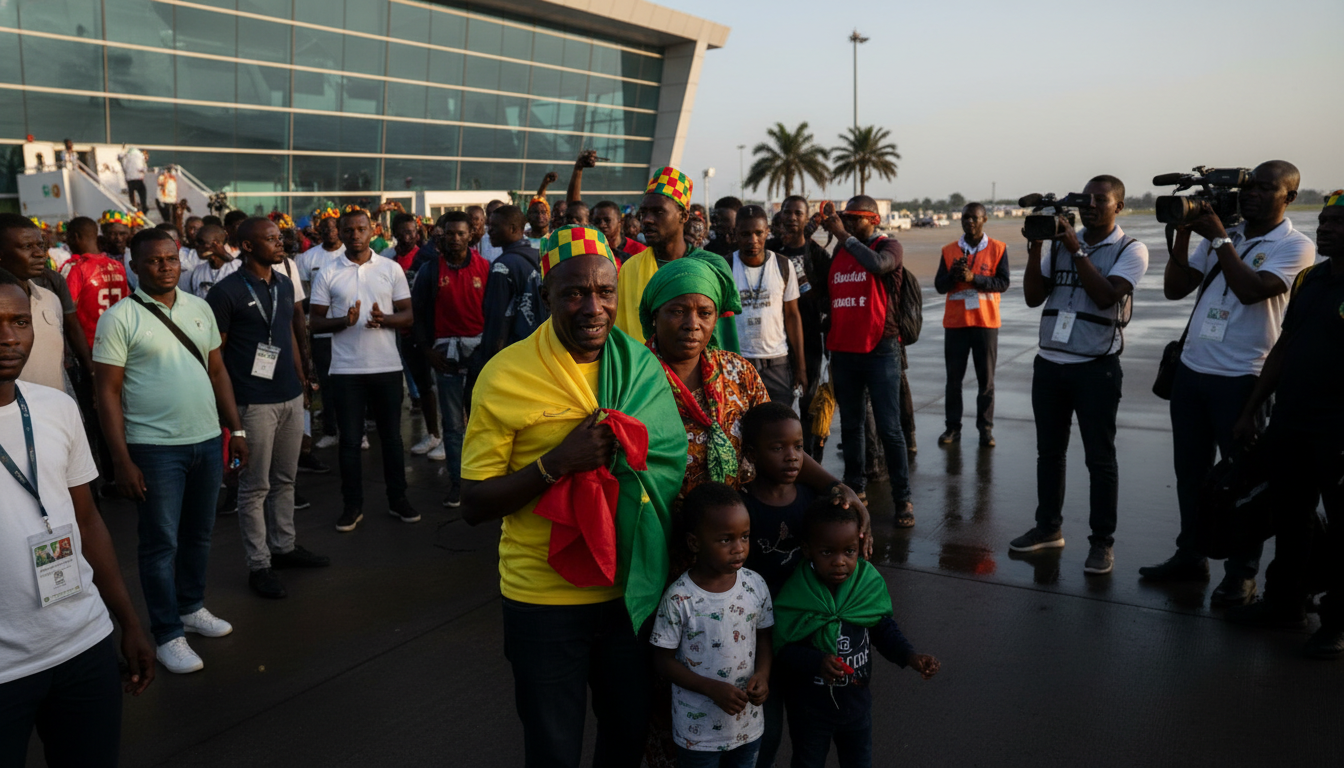
Senegalese supporters pardoned in Morocco return to Dakar after royal clemency
Senegalese supporters pardoned in Morocco returned to Dakar after King Mohammed VI granted them clemency on Eid al-Adha, a move welcomed by President Bassirou Diomaye Faye. The release of the 15 men concluded months of legal and diplomatic friction following the chaotic Africa Cup of Nations final.


Royal pardon granted on humanitarian grounds
The Moroccan royal court announced that King Mohammed VI issued a pardon for 15 Senegalese supporters on the occasion of the Muslim holiday of Eid al-Adha, citing humanitarian considerations. The statement referenced longstanding fraternal ties between Morocco and Senegal as a factor in the decision. The clemency followed earlier sentences handed down by Moroccan courts to supporters arrested after the incident at the final.
The pardon effectively ended the remaining custodial sentences for the group, allowing them to leave Morocco and return home. Moroccan officials framed the measure as an act to mend relations and to mark the holiday with an expression of goodwill. The royal court’s communiqué emphasized reconciliation and the historical connections between the two nations.
Arrival in Dakar and presidential welcome
The freed supporters arrived at Dakar’s international airport on Sunday and were met by President Bassirou Diomaye Faye, who publicly expressed relief at their return. Dressed in national colors, the president thanked Moroccan authorities for the decision and described the pardon as "imbued with clemency and humanity." He highlighted the emotional significance of the moment for families who had awaited news for months.
President Faye also used the occasion to praise the national team, calling them "two-time African champions" in remarks that underscored Senegal’s continued claim to the title. His remarks come amid a formal dispute over the official outcome of the tournament and an ongoing appeal at the Court of Arbitration for Sport. The reception at the airport was orderly, with officials and relatives present to greet the supporters as they disembarked.
Chaotic final in Rabat that sparked arrests
The arrests followed a tumultuous Africa Cup of Nations final played in Rabat that descended into violence after controversial decisions late in the match. A Senegal goal was disallowed and a stoppage-time penalty was awarded to the hosts, prompting protests from players and officials and violent reactions from some supporters. Projectiles were thrown and attempts were made to enter the pitch, bringing the game to a halt for more than 15 minutes.
When play resumed, Morocco missed the awarded penalty but later scored a late winner that left the match and its aftermath mired in controversy. Confederation of African Football (CAF) investigators and disciplinary bodies moved to sanction elements of both delegations and eventual administrative rulings altered the competition’s outcome. The episode prompted an intense debate across African football about officiating, governance and crowd control.
Legal outcomes, sentences and staggered releases
In the weeks after the final, Moroccan courts convicted 18 Senegalese fans on charges ranging from hooliganism to public disorder, issuing prison terms that varied in length. Three of the supporters serving the shortest sentences were released earlier in April, while the remaining 15 remained behind bars until the royal pardon. The group’s liberation resolved the final custodial cases tied to the post-match disturbances.
The legal process in Morocco proceeded under local criminal statutes and attracted sustained diplomatic attention from Senegalese authorities. Senegal had repeatedly urged fair treatment for its nationals and raised concerns about due process during legal proceedings. Moroccan judicial authorities maintained that sentences were imposed in accordance with the law, even as the royal pardon later removed the need for those terms to be completed.
Continental sanctions and the title reversal
Beyond criminal proceedings, the Confederation of African Football imposed disciplinary sanctions on both Senegal and Morocco for breaches of sporting regulations in connection with the final. CAF later ruled to strip Senegal of the Cup of Nations victory and awarded the title to Morocco with a 3-0 forfeit decision, a move that has been controversial and has drawn appeals. The federation cited violations of fair play principles and the disruption of the match when explaining its determinations.
Senegal has lodged an appeal with the Court of Arbitration for Sport in Switzerland, seeking to overturn the administrative ruling and recover the trophy it won on the pitch. Officials in Dakar said they expect the arbitration process to take several months and potentially up to a year before a final decision is handed down. The dispute has highlighted tensions within African football governance and raised questions about the mechanisms used to adjudicate high-profile tournament incidents.
Bilateral ties strained but avenues for reconciliation remain
The episode strained relations between Morocco and Senegal, even as both countries share deep historical, religious and social links. Senegalese nationals form one of the largest expatriate communities in Morocco, and the two states maintain extensive diplomatic and economic cooperation. Still, accusations of undue influence and online abuse directed at Senegalese players and officials amplified public anger and complicated efforts to de-escalate the situation.
Morocco’s decision to grant the pardon was framed by its royal court as an effort to heal wounds and restore fraternal ties, language that Dakar publicly welcomed. Senegalese leaders publicly thanked the Moroccan monarch for the clemency and emphasized the need to move forward constructively. Diplomats on both sides have indicated an interest in preserving broader collaboration even as football authorities pursue separate legal and regulatory paths to resolve the competition dispute.
What comes next for the team, supporters and the appeal
With the supporters home and serving no remaining custodial sentences, Senegalese authorities can focus on the ongoing legal appeal at the Court of Arbitration for Sport and on protecting their players from further harassment. The federation has signalled its intention to present a robust appeal record and to press for reinstatement of the title awarded on the field. Meanwhile, the returned supporters will undergo a period of reintegration and face local social and legal follow-up as needed.
CAF and national federations will also be under pressure to review crowd management practices and the enforcement of disciplinary codes to reduce the risk of similar incidents. African football stakeholders have called for clearer protocols for match officials, better stadium security measures and stronger lines of communication between teams and governing bodies. The arbitration process will be closely observed for precedent-setting rulings on how administrative penalties intersect with on-field results.
Diplomatic dialogue between Rabat and Dakar is likely to continue in the weeks ahead as both capitals seek to balance public sentiment and state-to-state cooperation. The royal pardon removed an immediate source of tension by allowing the last detained supporters to return, but the underlying disputes over sporting justice and governance remain unresolved. The outcome of the CAS appeal will be pivotal in determining the final official record of the tournament and may shape reforms across African football structures.
The return of the pardoned supporters marked a significant step toward easing a painful chapter for Senegalese fans and for relations with Morocco, yet the broader contest over the Cup of Nations title and the disciplinary fallout are set to occupy the region’s sporting and diplomatic agenda for months to come.