FIFA Forward funding boost could deliver up to $40m to Nigeria over 2027–2030 cycle
FIFA Forward funding is proposed to rise sharply, potentially delivering Nigeria up to USD 40 million across 2027–2030 to upgrade infrastructure, coaching and grassroots programmes.


FIFA outlines proposed Forward funding increase
FIFA has proposed raising its flagship Forward funding to USD 20 million per member association for the 2027–2030 cycle, a move positioned as part of a broader USD 10 billion development initiative. The proposal, which still requires approval from a majority of FIFA Member Associations and the FIFA Council, would more than double the current baseline allocation per association. For Nigeria this increase would form the backbone of a substantial opportunity to invest in long-term facilities, competitive preparation and talent pathways. The proposal also introduces a voluntary Fast-Forward capital window that could provide additional one-off funding for major projects.
Potential scale of funding available to Nigeria
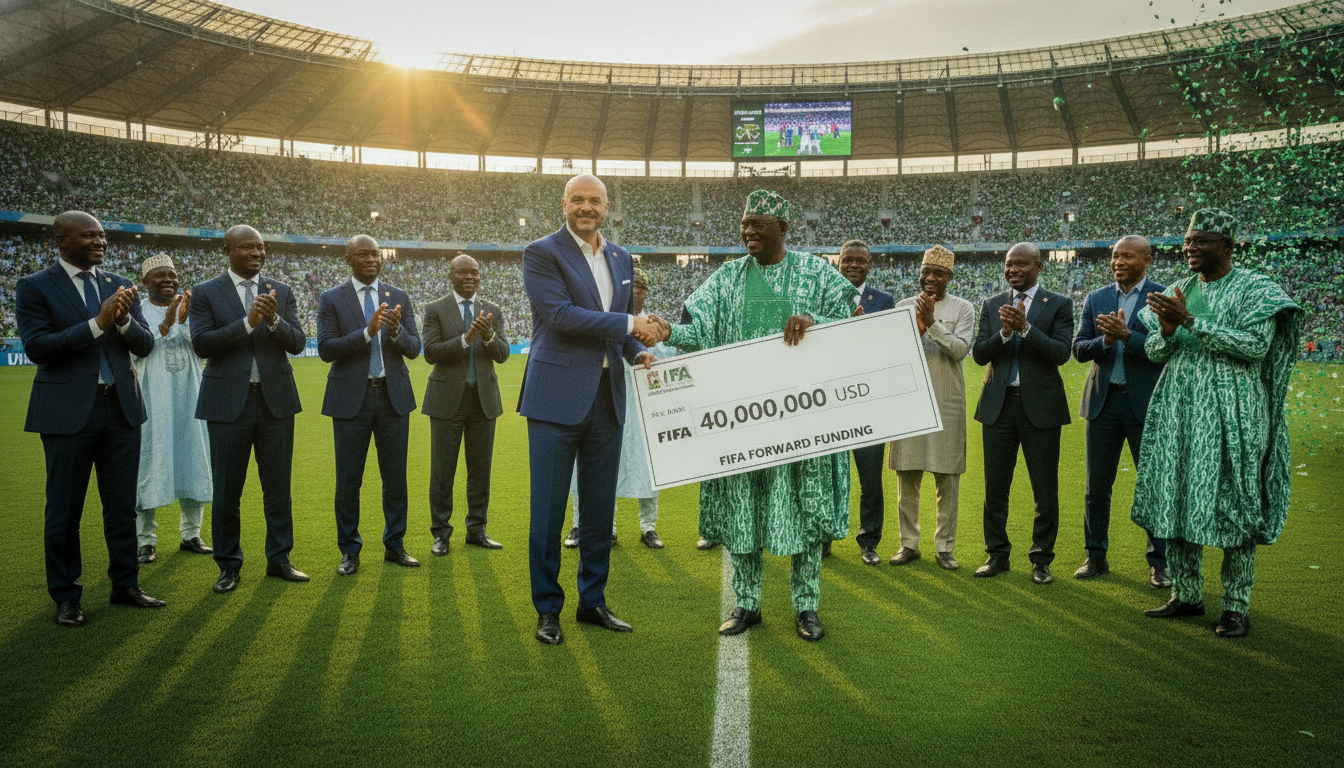
Under the proposal Nigeria would be eligible for USD 20 million in regular Forward funding over four years, representing an additional USD 12 million compared with the current baseline. On top of that, the country could opt into the Fast-Forward Programme for up to USD 20 million in capital funding for large-scale projects, bringing the total potential to USD 40 million for the 2027–2030 cycle. The Fast-Forward allocation is optional and subject to programme conditions, meaning actual disbursements will depend on project proposals, compliance and the federation’s appetite for large capital commitments. FIFA has signalled further rises for subsequent cycles, with suggested increases to USD 22 million for 2031–2034 and USD 24 million for 2035–2038.
Infrastructure priorities and national training centres
A primary target for the additional funding would be stadiums, national training centres and the renovation of existing facilities across Nigeria. The country has long faced challenges with inadequate and poorly maintained pitches, forcing teams to rely on temporary camps and substandard preparation venues. Well-directed Forward and Fast-Forward investments could create permanent bases for the Super Eagles, Super Falcons and age-grade teams, reducing recurrent costs and improving preparation consistency. To realise long-term value, any construction programme would need clear maintenance plans and community integration to avoid the common pitfall of abandoned facilities.
Grassroots expansion and regional development hubs
The proposed funds present an opportunity to rebuild Nigeria’s grassroots football system with structured regional hubs and youth competitions. Nigeria’s talent pool is deep, but many young players lack access to quality pitches, organised coaching and sustained scouting networks. Investment could establish regional development centres across the country’s six geopolitical zones, strengthen school and community leagues, and create a clearer progression path from grassroots to professional ranks. A focused grassroots strategy would also provide a pipeline for clubs and national teams, ensuring that infrastructure and programmes deliver measurable increases in participation and talent identification.
Women’s football and the Super Falcons pathway
FIFA explicitly identified women’s football as a key area for increased Forward funding, offering Nigeria a chance to expand and professionalise its female game. Additional resources could be deployed to build dedicated facilities for women, establish youth development programs, and improve the structure and competitiveness of domestic women’s leagues. For the Super Falcons, targeted investment in coaching, competition and talent pathways could help sustain Nigeria’s status as one of Africa’s leading women’s teams. Success will depend on ensuring that funds earmarked for women’s football are ringfenced and accompanied by performance metrics and calendar commitments.
Coaching, sports science and technical capacity building
The proposed funding framework would allow Nigeria to invest more heavily in coach education, sports science and technical infrastructure across all levels. Rather than relying primarily on foreign technical appointments, the Nigeria Football Federation could use resources to develop a domestic cohort of high‑level coaches with continuing education and certification. Investment in physiotherapy, nutrition, performance analysis and scouting would help bridge the gap with top international programs and raise the standard of player development. Sustainable capacity building requires long-term curricula, mentoring systems and partnerships with universities and professional clubs.
Implications for the NPFL and domestic competitions
While FIFA funding is not designed as a bailout for professional clubs, strategic investment can strengthen the environment in which the Nigeria Premier Football League and other domestic competitions operate. Better stadiums, upgraded training facilities and improved coaching at youth levels would translate into more competitive clubs and a healthier talent pipeline. Funds could support competition management, refereeing programmes and youth leagues that feed into club academies, but such spending must be carefully structured to avoid distorting domestic finances. Any improvement in domestic standards would likely have a positive knock‑on effect for club performance in continental competitions and the calibre of players available for national selection.
Governance, procurement and accountability challenges
The scale of the proposed funding amplifies a long-standing challenge for Nigerian football: ensuring transparent and accountable use of development resources. The potential gains will be undermined if allocations are consumed by administrative overhead, poorly conceived projects or incomplete infrastructure. To mitigate those risks, the NFF would need clear priorities, transparent procurement procedures, independent monitoring and measurable targets for every funded project. Strong governance mechanisms, including external audits and stakeholder reporting, will be essential to convert budget lines into durable development outcomes.
Timetable, approval process and next steps
The Forward funding increase and Fast-Forward Programme remain proposals until ratified by FIFA’s membership and relevant governing bodies. If approved, associations would plan for the 2027–2030 cycle and could submit capital project proposals for Fast-Forward consideration under conditions specified by FIFA. For Nigeria, early strategic planning will be critical: the federation should map immediate infrastructure needs, develop project proposals that meet FIFA’s eligibility criteria, and engage domestic stakeholders to ensure alignment with national development objectives. Effective project prioritisation will determine whether increased funding translates into meaningful change on the pitch and in communities.
The proposed FIFA Forward funding boost offers Nigeria a rare window to address persistent shortfalls in facilities, coaching and player development, but its success will hinge on robust planning and strict accountability. If the Nigeria Football Federation moves quickly to set clear priorities, establish independent oversight and commit to long‑term maintenance and talent pathways, the funding could transform preparation for national teams and revive grassroots football nationwide. Ultimately, converting promised dollars into sustainable football infrastructure and stronger domestic competitions will determine whether the investment leaves a lasting legacy for Nigerian football.