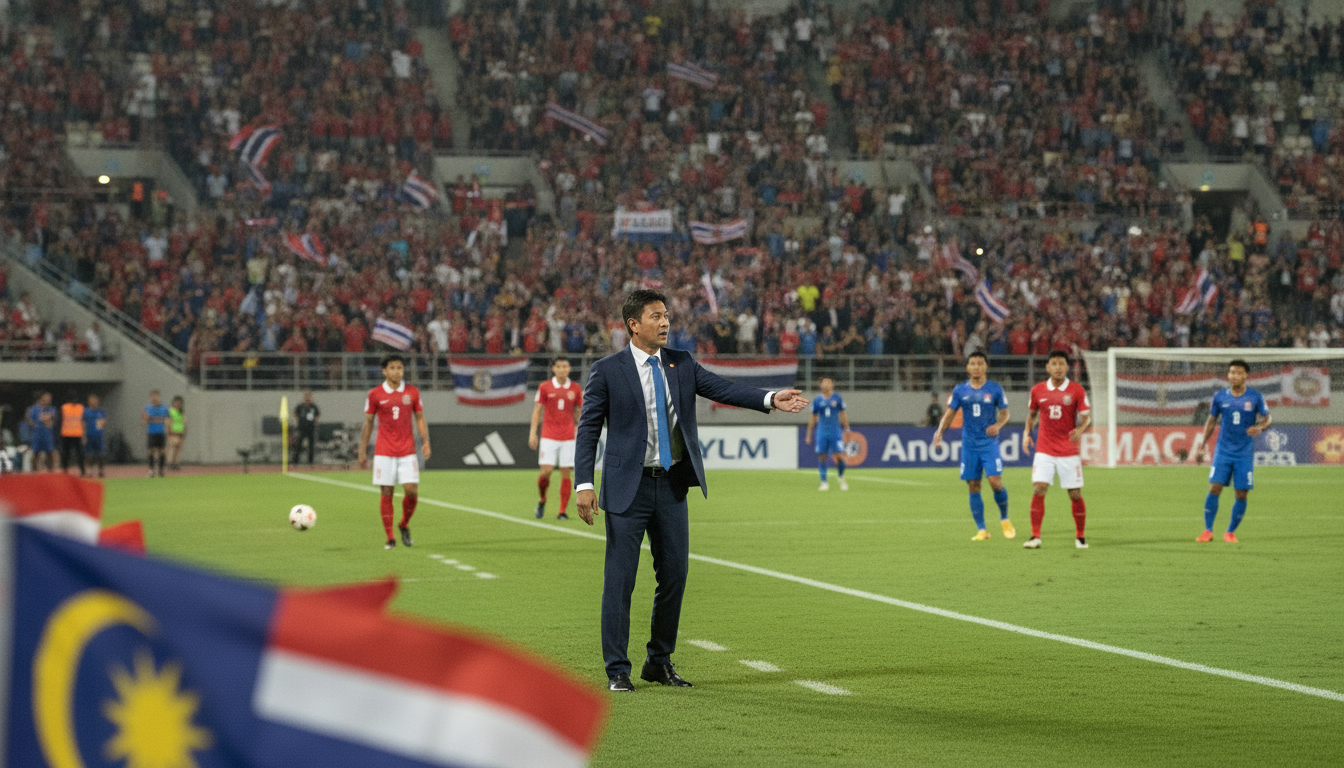
Malaysia vs Thailand: Tan Cheng Hoe returns to Rajamangala with Malaysia eyeing Group B advantage
Malaysia vs Thailand showdown in Bangkok preview: Interim coach Tan Cheng Hoe returns to Rajamangala as Malaysia seek a positive result to strengthen their path to the ASEAN Hyundai Cup™ semifinals. (156 characters)


Tan Cheng Hoe returns to Rajamangala Stadium for Saturday’s Malaysia vs Thailand Group B clash, revisiting the venue where he led Malaysia to a dramatic semi-final away-goal triumph in 2018. The interim coach, recalling that run and the narrow aggregate title loss that followed, said his motivation remains intact despite a packed schedule and concerns over player fitness. Malaysia arrive on the back of wins over Myanmar and Laos and will depend on strike form and squad cohesion to challenge Thailand on home soil.
Tan Cheng Hoe back at a familiar ground
Tan Cheng Hoe walked into Rajamangala with memories of a 2-2 draw against Thailand in the 2018 semi-final second leg that ultimately sent Malaysia through on away goals. Eight years on he framed the visit as emotionally resonant yet different, saying that the atmosphere and his commitment to the team remain constant. Now serving as interim head coach, he faces the immediate task of managing a squad through a compact competition schedule while extracting maximum performance each match.
Tan underlined that the players’ tactical understanding and combinations are improving with every outing, even if match fitness has been uneven. He acknowledged the physical toll from recent fixtures and stressed that preparation time has been limited due to the demanding calendar. Despite those caveats, Tan insisted his side will not approach Thailand with fear, emphasizing belief and competitive intent ahead of the Group B showdown.
Malaysia’s campaign form and squad dynamics
Malaysia started the tournament with consecutive victories, defeating Myanmar 2-1 before following up with a 4-0 win over Laos to place themselves in a strong position to advance. Captain Paulo Josué has been central to that positive start, contributing three goals and leading the frontline both in finishing and movement. The team has also benefited from the energy of Mohamadou Sumareh on the wing and the industrious displays of Pavithran Gunalan, who earned Hyundai Player of the Match honors against Laos.
The arrival of Wan Kuzain has added fresh options in attack and midfield, providing Tan with more tactical flexibility than earlier in the campaign. Conversely, an injury to the experienced Endrick has presented a setback; Tan described the knee problem as a blow but remained optimistic about the squad’s resilience. The blend of established performers and newcomers has given Malaysia attacking variety, though the coaching staff must balance that with recovery and rotation across fixtures.
Thailand’s home form and Hudson’s message to supporters
Thailand enter the match buoyed by a 5-0 victory over Laos in Vientiane a week earlier and a history of favourable results against Malaysia in the ASEAN competition. Head coach Anthony Hudson, who has overseen a team with technical quality and depth, has called on home supporters to create an intimidating atmosphere at Rajamangala. Hudson framed the stadium as a special venue where fan energy and belief can lift the players and influence momentum across 90 minutes.
Statistically, Thailand hold nine wins from 17 tournament meetings with Malaysia, an edge that speaks to historical dominance but not inevitability in a single fixture. Hudson emphasized ongoing work on fitness and progressive play while warning that Malaysia are well coached and pose a threat when given space. With the home crowd expected to fill the stands, Thailand will rely on both tactical execution and the margin that comes from familiar surroundings.
Tactical matchups and key player battles
The clash is likely to hinge on midfield control and wide play, where Paulo Josué’s link-up and chance conversion will be tested against Thailand’s defensive structure. Malaysia’s pace on the flanks through Sumareh and Pavithran creates opportunities to stretch the home side, while Wan Kuzain’s technical mobility offers an extra dimension in transition. Thailand, by contrast, will look to exploit possession and quick combinations among their technically gifted attackers to unsettle Malaysia’s backline.
Central midfield battles will determine the rhythm; whoever secures second balls and dictates tempo could swing the contest. Thailand’s cohesion in pressing sequences and their ability to recycle possession quickly present tactical challenges for an opponent that admits to partial fitness shortfalls. Set pieces and turnovers will also be decisive — small margins that often decide knockout-stage progression in regional tournaments.
Fitness, rotation and coaching decisions
Scheduling has become a central theme for both camps, with Malaysia openly conceding that several players are not at peak physical condition after a busy run of fixtures. Tan’s rotation options will be scrutinized if Endrick’s recovery is delayed, forcing tactical adjustments to preserve energy and maintain attacking threat. Managing minutes for key players while retaining competitive intensity is a delicate balance the coaching staff must strike in the final group matches.
Thailand may hold a slight freshness advantage, having played one fewer match in the group so far, but home expectation and the pressure to deliver will shape Hudson’s selection strategy. Both coaches will likely prioritise compactness and control in the early exchanges, before introducing attacking substitutions to influence the match late on. The ability to respond to in-game momentum shifts — through tactical tweaks or personnel changes — will be a significant test of coaching acumen.
Tournament stakes and historical context
This Group B encounter carries direct bearing on semifinal qualification and regional bragging rights, particularly after Malaysia’s group-stage elimination in the 2024 edition. A positive result for Malaysia would validate Tan’s interim stewardship and strengthen their claim to a top-two finish, while Thailand seek to consolidate their historical advantage and progress from the group phase. The competition’s 30-year history has produced tight contests between these neighbours, and recent form suggests another closely fought battle is likely.
Beyond the immediate table implications, the match offers a chance for players to stake claims for continued selection and for coaching staffs to assess depth under pressure. Small tactical wins here can ripple into knockout scenarios, where familiarity with opponents and match temperament often prove decisive. Both federations will view the fixture as a measure of progress and a barometer for regional pecking order heading into the latter stages.
The teams will meet at Rajamangala Stadium on Saturday, August 1, 2026, with Malaysia aiming to re-create the resilience and composure of past campaigns while Thailand seek to convert home advantage into another step toward the title. The encounter promises tactical intrigue, individual battles on the flanks and in midfield, and the kind of atmosphere that has defined Southeast Asian championship football for decades.