Bayern Munich vs PSG: Kompany’s free-scoring Bayern bring momentum into Champions League semi-final first leg
Bayern Munich vs PSG preview: Bayern arrive for the Champions League semi-final first leg with a record-breaking attack, momentum and tactical balance.


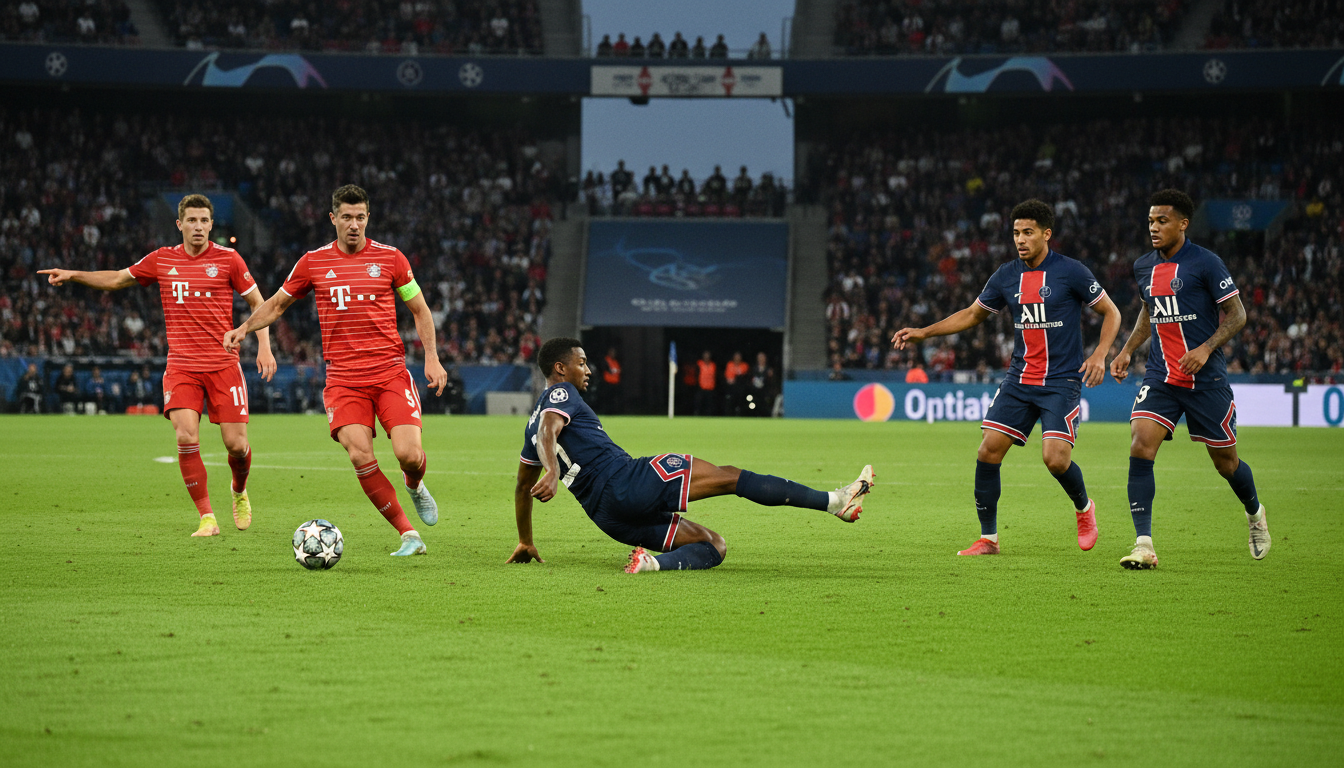
Bayern Munich head into the Champions League semi-final first leg against Paris Saint-Germain carrying a blistering attack and a growing sense of belief under Vincent Kompany. The matchup between Bayern Munich and PSG pits two of Europe’s most recognised offensive units against one another, with Bayern arriving on the back of a record-breaking domestic scoring run. How Kompany’s side deploys its front three and controls transitions will likely determine the outcome over the two legs. The tie promises high intensity, tactical nuance and pivotal individual battles across the pitch.
Bayern’s attacking form sets the tone
Bayern’s goal output this season has been exceptional, with the team averaging more than three goals per game in the Bundesliga during their record campaign. That scoring potency has been sustained through a mix of clinical finishing and fluid interplay between the forwards, allowing the team to punish both compact and open defensive shapes. Harry Kane remains the focal point for finishing chances, while Luis Díaz and Michael Olise offer pace and movement to stretch opposition defences.
The partnership among those attackers has produced a steady stream of goals and assists, and their combinations have repeatedly unlocked stubborn backlines. Bayern’s wide players often invite pressure before quickly switching play, creating pockets for through balls and late runs into the box. That dynamic makes them dangerous not only in sustained possession but also on rapid transitions where space opens up.
Kompany’s emphasis on attacking structure has given the front line clear patterns of movement without sacrificing unpredictability. The team’s ability to rotate positions and overload specific channels forces opponents into difficult choices about marking and covering. Against PSG, this variety will be essential to avoid allowing the French side to settle into a defensive rhythm.
Kompany’s tactical evolution and team structure
Vincent Kompany has built a side that can dominate possession yet accelerate decisively when the situation demands it, blending control with pace. Bayern’s build-up play frequently uses midfield rotation to create numerical advantages, then seeks to exploit half-spaces with diagonal passes or vertical switches. This balance between patience and urgency makes their attacking game multifaceted and harder to defend against.
Defensive organisation has also improved under Kompany as the season progressed, with the team showing better compactness and clearer roles when out of possession. Players have learned to maintain defensive shape while still providing outlets for quick counters, an equilibrium that will be tested by PSG’s forward threats. Tactical discipline in midfield and full-back positioning will be crucial to limit the number of direct opportunities PSG can create from transitions.
Kompany’s in-game adjustments and willingness to vary tempo have been notable in big matches, where he has alternated between proactive pressing and conservative containment. Those choices influence how the front three are used and how much risk Bayern are willing to take in possession. Against a side familiar with European knockout rhythms, Kompany’s tactical acumen will be under close scrutiny.
Key duels and individual matchups to watch
The individual contests between Bayern’s attackers and PSG’s backline will likely shape the opening leg, with Harry Kane’s hold-up play and finishing ability central to Bayern’s threat. Kane’s positioning and aerial presence will test the coordination of PSG’s central defenders, while his link-up play can free Díaz and Olise to exploit wide or inside channels. How PSG chooses to mark Kane — zonally or with tighter individual attention — will influence Bayern’s ability to build sustained attacks.
Luis Díaz’s directness and Michael Olise’s creativity present dual problems for the visiting defence, combining speed with the capacity to pick out intricate through-balls. Both players can create opportunities from seemingly limited spaces, and their movement in behind full-backs could force PSG to shift defensive responsibilities. The duels involving Bayern’s wide attackers and PSG’s full-backs will therefore be as important as central battles.
Midfield matchups will also be decisive, since control of the middle third determines how often Bayern can launch their high-velocity transitions. If Bayern’s midfielders win the second balls and neutralise PSG’s distribution, the visitors will face constant pressure. Conversely, if PSG succeeds in disrupting Bayern’s rhythm and forcing turnovers high up the pitch, the game could open in ways that favour the French side’s counter-attacking instincts.
Defensive improvements and persistent vulnerabilities
While Bayern have tightened defensively overall, they still exhibit vulnerabilities that PSG will aim to exploit, particularly on quick counters and set-pieces. Moments of individual lapse or miscommunication have occasionally produced dangerous situations, and against a team with PSG’s quality in transition those lapses can be costly. Maintaining concentration across the full 90 minutes will be a priority for Bayern’s defensive unit.
Set-piece defence has been an area Bayern have worked on, but occasionally remains a source of concern when facing taller or more physical opponents. Organisational clarity and clear marking assignments will be necessary to avoid conceding from dead-ball situations. PSG’s attacking personnel are adept at creating and capitalising on such moments, so Bayern must minimise those threats through structured preparation.
Bayern’s full-backs will face particular scrutiny given PSG’s ability to overload flanks and combine inside with outside runs. How Bayern manage these wide encounters — whether through compact wing defence or by inviting pressure and countering centrally — will affect the game’s balance. Consistency in tracking runs and denying simple switches of play will reduce the risk of PSG exploiting space in transition.
Momentum, recent results and psychological edge
Momentum has been a clear factor for Bayern, whose domestic run and notable comebacks have reinforced squad confidence ahead of this semi-final. The team’s record-breaking goal haul in the league has not only provided statistical proof of their form but has also emboldened players to trust their attacking patterns in high-stakes encounters. That belief can prove decisive in narrow moments when composure and conviction alter the match’s course.
A recent comeback after falling three goals behind in a domestic fixture exemplified Bayern’s resilience and capacity to respond under pressure, qualities that transfer well to two-legged knockout ties. Such matches strengthen collective conviction and reduce the tendency to panic when confronted with adversity. Experience in tight European fixtures further aids Bayern’s ability to manage the psychological demands of this stage.
PSG will bring their own confidence and quality, meaning the psychological edge is not predetermined. How both sides handle pressure moments—set-pieces, late chances, and officiating decisions—will factor into the tie’s tone. Bayern’s current momentum gives them a tangible platform, but converting that into an aggregate advantage requires discipline and consistent execution.
What Bayern must do to advance to the final
To progress past PSG, Bayern will need to control the rhythm of the game while limiting dangerous transitions from their opponents. Dominance in midfield and a willingness to vary attack modes—stretching play wide at times and probing centrally at others—will prevent PSG from settling into a single defensive system. Maintaining defensive discipline in moments of offensive ambition will reduce the likelihood of conceding swift counters.
Clinical finishing and efficiency in the final third are equally important; Bayern’s scoring figures have been impressive, but converting the right chances in a two-leg tie is what ultimately matters. Avoiding wasteful play in promising situations and staying composed inside the box will convert pressure into tangible scoreboard advantages. On the defensive end, tightening space for PSG’s creative players and commanding set-piece situations can blunt the French side’s most direct threats.
Finally, Kompany’s in-game management — substitutions that preserve balance, tactical tweaks to adapt to PSG’s adjustments, and the timing of pressing intensity — could determine which side carries the advantage into the second leg. Clear communication and adherence to the match plan will be essential, especially in a contest where small margins and single moments often decide outcomes.
Bayern enter the tie with one of Europe’s most potent attacks and a blend of confidence and tactical maturity, but overcoming PSG will demand both attacking ingenuity and defensive vigilance across the two legs.