Amokachi and Ikpeba urge private ownership as catalyst ahead of NNL Super Four
Daniel Amokachi and Victor Ikpeba urged greater private ownership and investment in Nigerian club football at the NNL Super Four draw, pressing the case for sustainable growth.
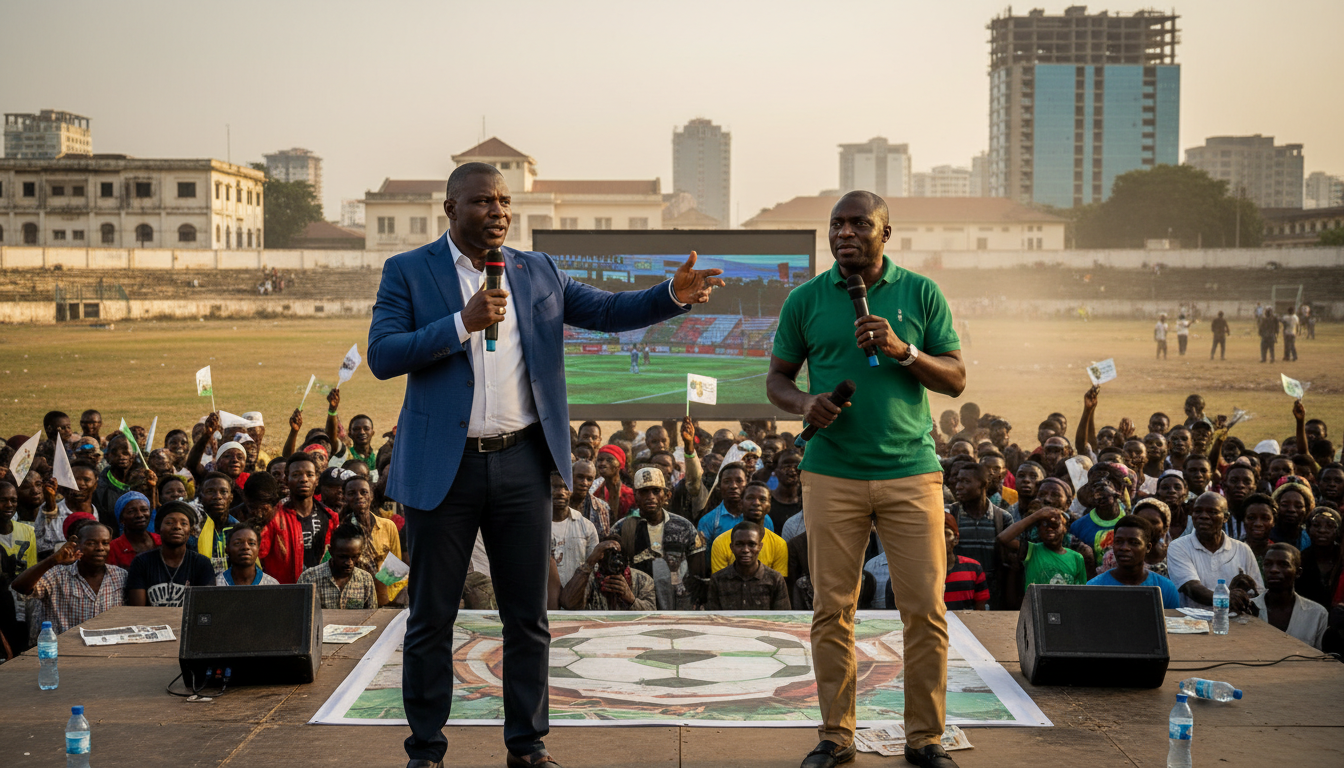
The NNL Super Four draw, held on April 24, 2026, at the Marriott Hotel in Ikeja GRA, brought former Super Eagles stars Daniel Amokachi and Victor Nosa Ikpeba into the spotlight as they called for increased private ownership to drive the development of domestic football. Their remarks came as the four clubs promoted to the Nigerian Premier Football League — Doma United, Sporting Lagos, Inter Lagos and Ranchers Bees — prepare to contest the NNL Super Four tournament. The competition will take place from May 4 to May 8, 2026, at Remo Stars Stadium in Ikenne and carries a ₦10 million prize for the overall champions.
Former internationals press private ownership as solution
Daniel Amokachi and Victor Ikpeba used the draw ceremony to argue that Nigerian club football needs more private investors to reach sustainable professional standards. Amokachi warned that football in the country has yet to be fully treated as a business and urged stakeholders to adopt commercial models that support long-term stability. Ikpeba reinforced the message by stressing the importance of domestic club structures and youth pathways, saying attention to the league will produce the next generation of stars.
Both men framed private ownership not merely as a source of funding but as a mechanism to provide professional governance, infrastructure investment and credible player pathways. Their interventions were positioned as a pragmatic response to current challenges in club financing and development across Nigeria’s football pyramid. The former players used their influence at the draw to call on entrepreneurs and sports managers to view clubs as viable assets that can deliver sporting success and social value.
Four promoted clubs underline shift toward private funding
The draw highlighted that all four teams promoted to the NPFL this season are privately owned, a development Amokachi and Ikpeba said should be celebrated and amplified. Ranchers Bees’ return to the top flight after almost 18 years was singled out as a notable example of what private backing can achieve when combined with committed club management. The other promoted sides — Doma United, Sporting Lagos and Inter Lagos — similarly represent newer models of club ownership that prioritize investment and professional structures.
Speakers at the event pointed to competition in the 2025/2026 NNL season as evidence that privately funded clubs are raising standards and forcing rival teams to improve. Amokachi described the season as highly competitive and said Ranchers Bees’ promotion was earned through resilience and stronger organizational support. Observers at the draw suggested that an increase in privately-owned teams could reconfigure the domestic landscape by introducing more predictable budgets, improved training facilities and professionalized matchday operations.
NNL Super Four set for Remo Stars Stadium, May 4–8, 2026
Organizers confirmed the NNL Super Four will be staged at Remo Stars Stadium in Ikenne from May 4 to May 8, 2026, with the four promoted clubs competing for the ₦10 million prize and the overall NNL championship. The condensed tournament will bring the promoted sides together for a final round of competition ahead of their debut NPFL campaigns, offering a competitive benchmark as they prepare for the top flight. The format and prize structure are intended to reward performance while providing exposure ahead of the new NPFL season.
Tournament officials and club representatives described the event as a useful test of squad depth, coaching approaches and club logistics ahead of NPFL challenges. For players, the Super Four offers an opportunity to acclimatize to higher-pressure fixtures and for managers to evaluate tactics against peers who will soon be league rivals. The Remo Stars Stadium venue, selected for its facilities, is expected to host all matches across the four-day schedule and to draw attention from local football stakeholders and media.
NSC and football leaders commend NNL organisation
The draw attracted senior sports officials, including National Sports Commission Director General Hon. Bukola Olopade, who lauded the NNL Board under chairman George Aluo for staging a polished event. Olopade described the draw as “classy and world-class” and pledged continued support from the NSC, framing the ceremony as a model for future league events. The delegation at the draw also included the NFF President Ibrahim Gusau, Adeboye Zulu Adeyinka — Special Adviser on Grassroots Sports to President Bola Tinubu — and Remo Stars Chairman Hon. Kunle Soname.
Organizers also highlighted the role of Toptier Sports Management, which has invested in the league and was praised for its transformative contribution. Officials said public-private collaboration at the league level has helped professionalize operations, from event staging to marketing and commercial partnerships. The visible presence of senior administrators at the draw underscored how the NNL’s higher profile is attracting institutional attention that could translate into more coherent support for club competitions nationwide.
Domestic focus seen as critical for player development
Victor Ikpeba emphasized that the domestic game must be prioritized if Nigeria is to continue producing international-quality players, recounting his own pathway through local leagues. He argued that a stronger, more professional domestic league system will expand opportunities for young talent and reduce overreliance on national team visibility as the sole measure of progress. Both ex-internationals advocated for investment in grassroots structures, coaching education and competitive exposure as essential complements to private club ownership.
Commentators at the draw said the alignment of private funding with grassroots priorities could create a virtuous cycle: better-resourced clubs would field improved academies, which in turn would supply a deeper talent pool for both club and national teams. The conference at the draw underscored the idea that success for the Super Eagles should be built on a thriving domestic league system capable of developing and retaining promising players. Participants urged stakeholders to adopt multi-year development plans rather than short-term fixes.
Challenges and considerations for a privately driven model
While the draw day advocacy focused on the benefits of private ownership, speakers acknowledged potential risks and the need for effective regulation and oversight. Concerns highlighted by club administrators included financial sustainability, transparent governance, and the equitable distribution of resources across regions. Observers noted that private owners can bring capital and expertise but that clear licensing standards and league governance are necessary to prevent instability if investment is withdrawn.
Officials at the event suggested that the NNL Board and football authorities must work in concert to set standards for club licensing, financial reporting and competitive fairness. The aim, they said, should be to create an enabling environment where private investment is encouraged but does not undermine long-term stability. The presence of senior NSC and NFF representatives at the draw signaled willingness to collaborate on frameworks that protect clubs, players and supporters while fostering commercial growth.
The NNL Super Four draw served as a focal point for broader debate about the future direction of Nigerian club football. As the promoted clubs prepare to contest the tournament in Ikenne from May 4–8, 2026, stakeholders will be watching to see whether private ownership can translate into sustained professional gains on and off the pitch.
The coming weeks will test how quickly promoted sides adapt to NPFL demands and whether the momentum generated by private investment and improved administration at NNL level will yield measurable improvements in player development, matchday experience and financial stability.