

Levante team news: Castro rules out Iván Romero, Carlos Álvarez, Primo and Elgezabal for Osasuna clash
Levante team news: Coach Luís Castro confirms multiple injuries ahead of Osasuna, ruling out Iván Romero, Carlos Álvarez, Primo and Elgezabal while Kareem is available.


Luís Castro delivered a sobering Levante team news update ahead of the club’s vital league meeting with Osasuna, confirming several absences through injury. The coach stressed that the immediate focus is the next match as the team navigates mounting pressure in the relegation fight. Castro also confirmed that Kareem completed a full week of training and is available, while others will miss the game.
Castro confirms multiple absences before Osasuna game
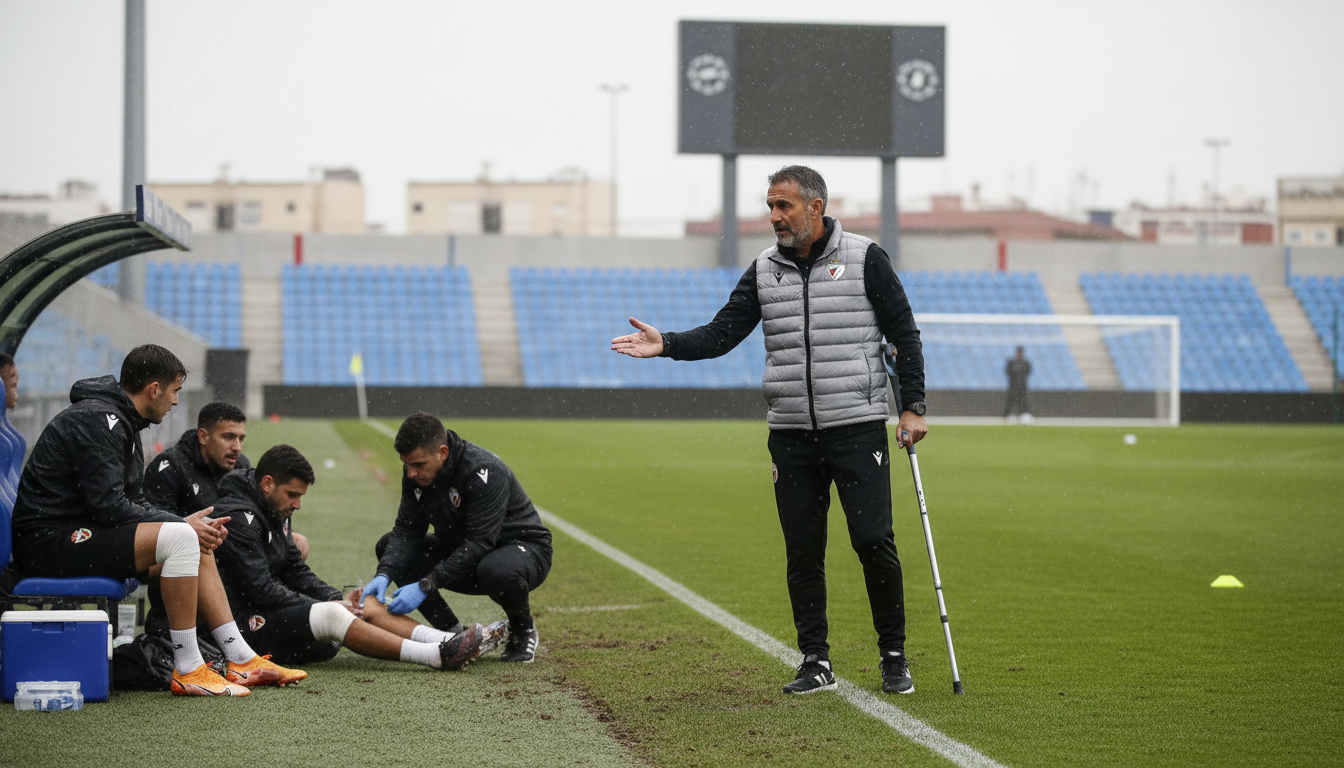
Luís Castro told reporters that the squad will be without Iván Romero, Carlos Álvarez, Primo and Elgezabal for the upcoming match, citing various muscular complaints and injuries. He emphasized that these absences were assessed during training and medical testing this week, informing selection decisions. The coach framed the situation as a challenge the team must manage while maintaining its competitive identity.
Castro underlined that dealing with players’ physical issues is part of the weekly routine at this stage of the season. He said Kareem participated fully in training and presents no restriction for selection, while Dela did not train and required tests to determine his availability. The manager presented the medical picture as mixed but insisted the squad still contains players capable of delivering required performances.
Detailed injury update: who is out and who is available
According to Castro, Iván Romero is sidelined with persistent discomfort that prevented him from completing sessions this week. Carlos Álvarez and Primo were both declared unavailable after the club’s medical staff evaluated their conditions, and Elgezabal will also miss the fixture. The coach was explicit that these players will not be considered for the Osasuna match because the team must prioritize their recovery.
Kareem, by contrast, "has done the week normally" and is ready for selection, Castro said, distinguishing his case from those who missed training. Dela did not take part in training and underwent tests on the day of the press conference; the final decision on him will hinge on how he feels. Castro made clear that every selection will be based on medical advice and players’ sensations in the hours before kickoff.
Squad depth and rotating solutions, with Brugué’s role highlighted
Castro pointed to the team’s depth as a mitigating factor, noting the need for multiple solutions when several players are unavailable. He singled out Roger Brugué as a veteran presence and a potential tactical solution, praising his offensive attributes and leadership. Brugué, the manager said, has been reintegrating slowly after a long layoff and can provide an attacking edge and morale boost.
The coach stressed the importance of having "many possible solutions" in attack and midfield to cope with absences without abandoning the club’s playing identity. He described Brugué not just as a substitute option, but as a captain figure who can influence the match both on and off the ball. Castro indicated that players returning gradually are being managed carefully to avoid setbacks and to maximize their impact when they do play.
Tactical flexibility: how Castro plans to adapt systems
Castro emphasized that Levante’s system is dynamic rather than fixed, and that the team adjusts defensive and offensive shapes depending on space and opponent. He explained that the side alternates between a back five and a back four in defense and varies the number of deeper midfielders in attack to control transitions. The coach framed tactical adjustments as a function of identity: adaptations should respond to opponents without sacrificing core principles.
The manager acknowledged that injuries constrain selection, but he insisted that the team will preserve its preferred characteristics irrespective of personnel changes. Castro argued that understanding the opposition — in this case Osasuna’s forwards and pressing style — is important, yet the club will not discard its own approach completely. He stressed the balance between preparation for a specific opponent and maintaining what defines Levante’s way of playing.
Response to the Villarreal defeat and squad morale
Castro addressed the heavy defeat at Villarreal with measured remarks, describing the result as harsher than the performance warranted but acceptable as part of the season’s learning curve. He suggested that sometimes a single negative display concentrates all misfortune into one game, and that the team must now move forward. The coach urged continuity in effort as Levante chases the objective ahead of several decisive fixtures.
He insisted the squad has trained with intensity during the week and that morale remains focused on collective response rather than recrimination. Castro praised the players’ commitment and said they are prepared to fight through the adversities that have accumulated. The manager framed the Osasuna match as a necessary test of resilience after a tough result away.
Match stakes and Castro’s mindset ahead of a ‘final’
Castro repeatedly described the upcoming fixture in terms reserved for must-win matches, calling it "a final" and underscoring that pressure is inherent to the sport. He said the only workable response to constant scrutiny is to prepare professionally and perform on matchday, and that if players find pressure intolerable, professional football may not be the right career. The coach declared his intent to approach the game with a single objective: to win.
He also spoke plainly about the cumulative effect of the relegation battle on decision-making and preparation, stressing that each week brings fresh urgency. Castro emphasized that the team will adopt an attacking posture if circumstances allow, and that belief in their own superiority in specific facets can bring them closer to victory. He framed the immediate horizon as decisive, with no allowance for distraction.
Luís Castro concluded his remarks by reiterating the central message he repeated to his squad: the most important thing is the match that comes next, and every member of the group must give maximum effort. He underlined the coaching staff’s responsibility to prepare adaptable plans and to pick a lineup that can both contain Osasuna’s strengths and exploit available spaces. Castro’s final tone was resolute, focused on performance and recovery rather than narratives.
Levante heads into the encounter with the away challenge of filling gaps left by multiple absences while preserving tactical identity and competitive hunger. The team will rely on fit players such as Kareem and depth options like Roger Brugué to absorb the impact of the injuries. For fans and officials, the match now marks a critical moment in Levante team news as the club seeks points and momentum in a demanding stretch of fixtures.
The fixture against Osasuna will therefore serve as both a tactical examination and a psychological measure of Levante’s capacity to respond to setbacks, and Castro’s selection on matchday will reveal how the squad’s available resources are deployed.