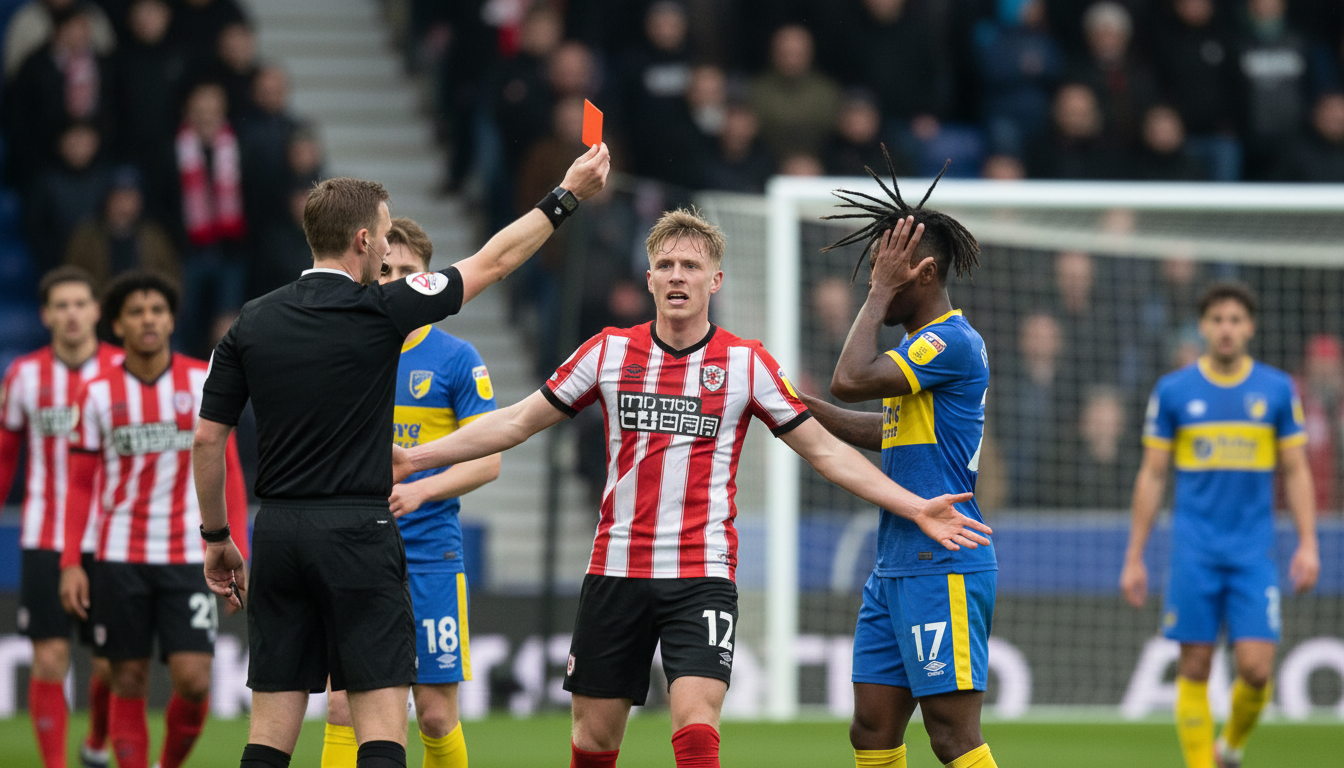
Dan Ballard red card upheld as Sunderland appeal rejected after Molineux incident
Sunderland’s appeal against Dan Ballard’s red card for pulling Tolu Arokodare’s hair has been rejected, upholding the sanction after the 1-1 draw at Molineux on May 7, 2026.


Dan Ballard’s straight red for what referees deemed violent conduct was sustained after a review, leaving Sunderland without the defender for upcoming fixtures and provoking debate over the application of the rules.
Referee decision and disciplinary outcome
A straight red was shown to Dan Ballard during Sunderland’s 1-1 draw at Wolves after match officials concluded the contact constituted violent conduct, specifically for pulling an opponent’s hair during a challenge. The dismissal removed Ballard from the contest and triggered an automatic disciplinary process under the competition’s regulations.
Sunderland lodged an immediate appeal against the sending-off, arguing the contact was incidental and that Ballard had attempted to grab a shirt rather than the player’s hair. That appeal was examined and ultimately rejected by the relevant disciplinary body, meaning the original sanction will stand and any standard match suspension for violent conduct is likely to be imposed.
Manager Regis Le Bris voices surprise at ruling
Sunderland manager Regis Le Bris expressed his disbelief at the outcome, telling reporters that the incident was not a deliberate act of violence and that any hair contact was accidental. “I think Ballard tried to grab the shirt and unfortunately long hair got caught,” Le Bris said, underlining the club’s view that there was no malicious intent.
Le Bris also described the interpretation of the rule as unclear, suggesting that the decision sets an uncomfortable precedent for how similar incidents will be judged going forward. His comments reflect a broader frustration in the game when split-second physical contact is interpreted differently by match officials and disciplinary panels.
How the incident unfolded at Molineux
The incident occurred during a tightly contested period of the match at Wolves’ Molineux Stadium, with both sides vying for control of midfield and possession. As the play developed, Ballard and Tolu Arokodare became entangled in a duel that culminated in the referee intervening and awarding a red card to the Sunderland defender.
That moment altered the balance of the game and left Sunderland to adapt their tactics for the remainder of the contest, with the sides ultimately finishing level at 1-1. The dismissal dominated post-match attention and overshadowed other talking points from the fixture, with focus shifting from the result to the disciplinary ruling.
Appeal process and the panel’s decision
Sunderland followed established procedure by filing an appeal against the red card shortly after the match, seeking to overturn what the club regarded as a harsh ruling. Appeals of this nature are typically reviewed by an independent panel or disciplinary commission tasked with determining whether the on-field decision should be upheld or rescinded.
After considering the match footage and the arguments presented by the club, the panel concluded there was sufficient evidence to sustain the red card, rejecting Sunderland’s appeal. The decision to uphold the sanction effectively closes that stage of the process, though it leaves open the question of whether the club will pursue any further recourse within the league’s disciplinary framework.
Rule interpretation and hair-pulling as violent conduct
Under the established Laws of the Game and domestic disciplinary guidelines, deliberate contact that endangers an opponent or constitutes violent conduct can merit a straight red card. Incidental contact is treated differently, but where hair is pulled or caught and the panel judges the action to be avoidable or reckless, it may be classified as violent conduct.
The Ballard case highlights how fine the margin can be between accidental entanglement and punishable action, and it underscores the degree of interpretation involved in disciplinary decisions. Referees and disciplinary panels must assess intent, force and the context of contact, a process that can produce differing outcomes even from the same footage.
Implications for Sunderland’s squad and season
With the red card upheld, Ballard faces suspension that will affect Sunderland’s defensive options for upcoming matches, potentially forcing the manager to alter selection and tactical plans. The timing of the suspension could be significant depending on the club’s remaining fixtures and any interest in late-season objectives, whether that be a playoff push or consolidation of league position.
Beyond the immediate unavailability of a first-team defender, the decision may prompt Sunderland to review coaching guidance on physical engagement and to discuss with officials the clarity of interpretations that can lead to match-changing dismissals. The club’s confidence in the appeals process may also be tested as it considers how best to protect its players’ interests in future contentious incidents.
Sunderland’s unsuccessful appeal over Dan Ballard’s red card has been met with surprise from the club, leaving questions about rule interpretation and the consequences for both the player and the team moving forward. The decision will now form part of the wider conversation about how on-field contact is judged and how similar cases should be handled in the future.